
Corruption: Tinubu Should Pardon Those Who Looted Funds – Orji Kalu
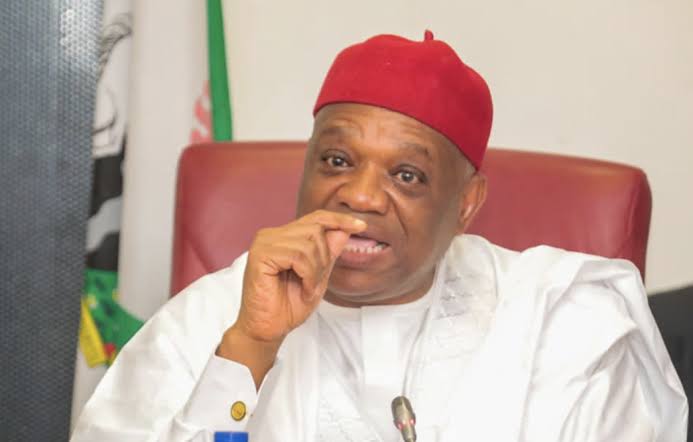
Orji Kalu
By Reporter
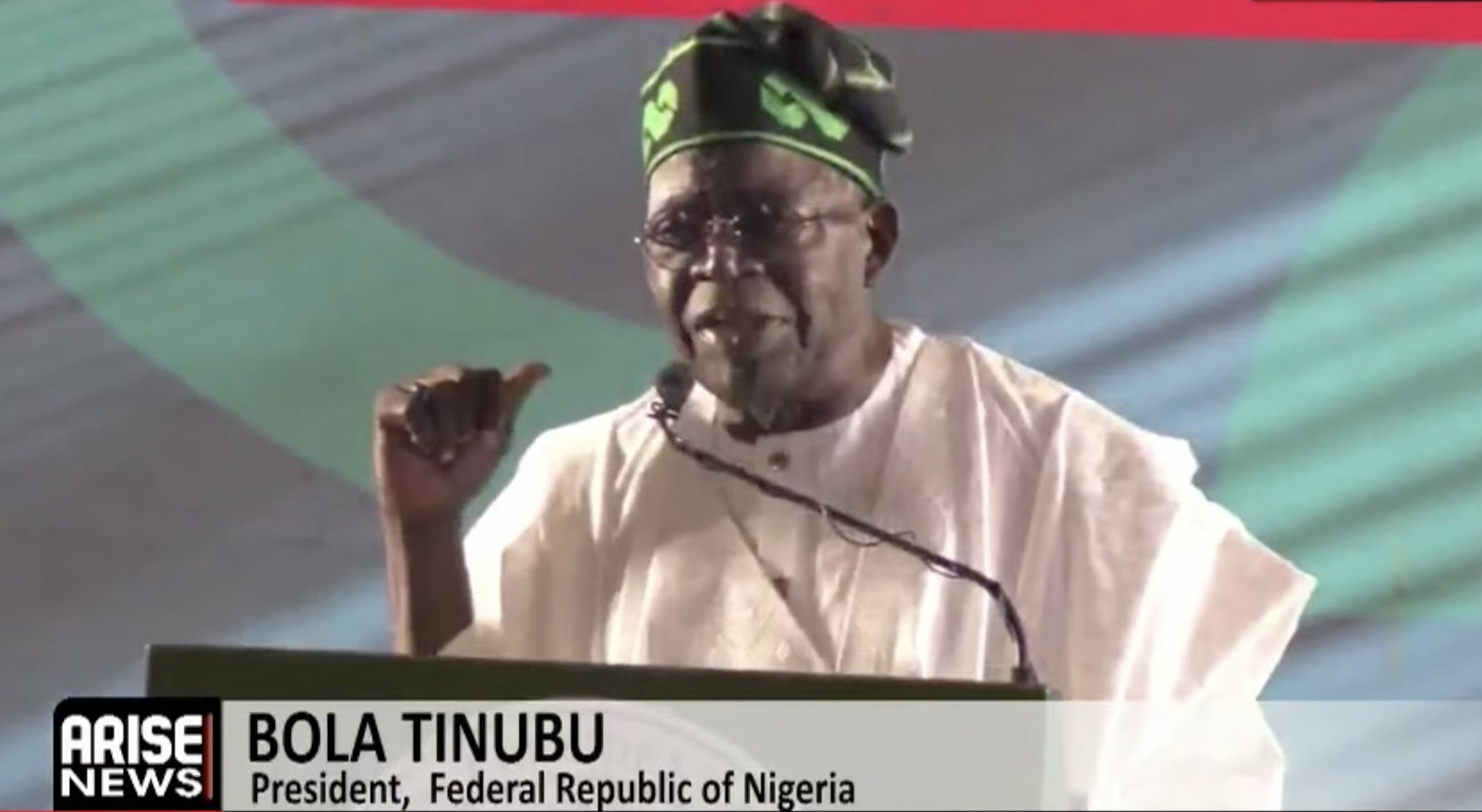
Senator Orji Uzor Kalu, representing Abia North Senatorial District, has called on President Bola Tinubu to create a two-year window for former public officials accused of corruption for stealing public funds to return the money in exchange for amnesty.
Kalu, a former governor of Abia State, said recovering funds allegedly stashed away by former public officials could inject billions of naira into the economy and strengthen the country’s financial system.
The senator made the proposal while appearing on News Central TV’s 60 Minutes With Mr Kay.
According to him, the Federal Government should establish a special amnesty arrangement under which individuals who allegedly diverted public funds while in office would be allowed to voluntarily return the money without prosecution.
“President Tinubu should give people pardon, because between the houses in Abuja, if you search all the houses, you might have over 50, 60 billion lying down there,” Kalu said.
He argued that money allegedly kept in private residences was effectively taken out of circulation and could not contribute to economic growth because it was outside the formal banking system.
“People who keep money in their houses, and it’s not right; it’s not the right thing to do. It’s not in the banking system. It’s not in the banking system that could have helped this economy to grow,” he said.
Kalu proposed a two-year period during which anyone holding allegedly stolen public funds, regardless of when the money was taken, could return it to the country without fear of prosecution.
“So I would like President Tinubu to give a window of two years and say, no matter from 1960, no matter where you keep the money, return it to Nigeria, nobody will touch you. You are pardoned.
“So let people repatriate this money and use it for the benefit of this economy,” he added.
Kalu’s own corruption case
Kalu’s call for an amnesty for alleged looters comes against the backdrop of his own prolonged legal battle with the Economic and Financial Crimes Commission (EFCC).
Kalu governed Abia State between 1999 and 2007. In December 2019, the Federal High Court in Lagos convicted him, his company, Slok Nigeria Limited, and a former Abia State Director of Finance, Jones Udeogu, over allegations involving the laundering of N7.1 billion belonging to the Abia State Government.
Kalu was sentenced to 12 years in prison and subsequently taken to the Kuje Correctional Centre.
However, in May 2020, the Supreme Court overturned Udeogu’s conviction after finding that the trial judge, Mohammed Idris, had been elevated to the Court of Appeal before delivering the judgement and therefore lacked jurisdiction to conclude the trial.
The Supreme Court consequently nullified the proceedings and ordered a retrial of Udeogu.
Following the Supreme Court decision, Kalu sought his release, arguing that the circumstances surrounding Udeogu’s conviction also affected his own case. The Federal High Court in Abuja granted his application, leading to his release from prison.
EFCC’s attempt to revive Kalu’s trial
After Kalu’s release, the EFCC sought to recommence proceedings against him and Udeogu.
Kalu and Slok Nigeria Limited challenged the move in separate suits, arguing that another trial would amount to double jeopardy.
His lawyers maintained that because the Supreme Court had expressly ordered a retrial only for Udeogu, there was no legal basis for the EFCC to prosecute Kalu again.
The EFCC, however, argued that Kalu could not benefit from the Supreme Court’s decision overturning the original conviction while rejecting the consequences of the ruling, including the possibility of a retrial.
In a judgement delivered on September 29, 2021, Justice Inyang Ekwo of the Federal High Court in Abuja ruled in Kalu’s favour, holding that the former governor could not be retried because the Supreme Court had not expressly ordered his retrial.
“He cannot be retried safely without an order of the Supreme Court,” the judge held.
The EFCC subsequently appealed the decision.
Court of Appeal reopens EFCC’s challenge
On March 6, 2024, the Court of Appeal initially struck out the EFCC’s appeal over procedural defects, including issues concerning the stamping of court records and the proper identification of the signatory.
The anti-graft agency subsequently corrected the defects and refiled its appeal.
Kalu and Slok opposed the move, arguing that the Court of Appeal had become functus officio—having exhausted its jurisdiction on the matter—after striking out the earlier appeal.
However, in its latest ruling, the Court of Appeal rejected the objection.
A member of the panel, Justice Ishaq Sanni, held that the earlier decision had been based on technical deficiencies rather than a determination of the substantive issues in the case.
The appellate court also found that the EFCC had sufficient grounds to seek an extension of time to file its appeal, noting that the original three-month period for filing had expired.
It consequently granted the EFCC 14 days to formally file its notice of appeal against the judgement preventing the retrial of Kalu.
The development leaves the long-running legal dispute between the former governor and the anti-graft agency before the appellate courts, even as Kalu advocates an amnesty-based approach to recovering allegedly looted public funds.