
2027: Edo Voters Will Reject Atiku, Amaechi and ADC Over Insulting, Divisive Campaign Rhetoric

Atiku-Amaechi
By Prod Ikhinmwin Osagiede
BENIN CITY — The controversy surrounding former Rivers State Governor Rotimi Amaechi’s description of Nigerians who intend to vote for President Bola Ahmed Tinubu as “mad” has opened a fresh debate about political language, voter respect and the battle for Edo State ahead of the 2027 presidential election.
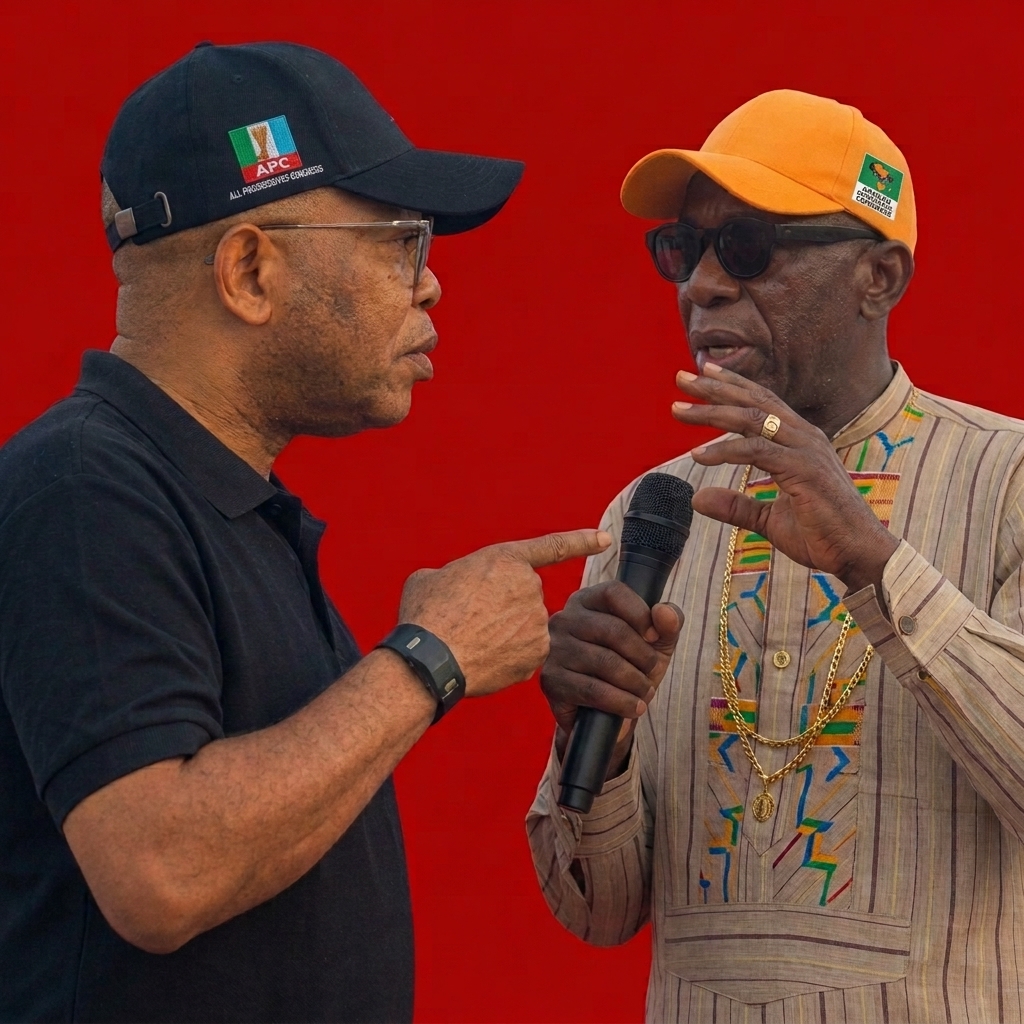
Amaechi, the vice-presidential candidate of the African Democratic Congress (ADC), made the controversial remarks during a party town hall meeting in Benin City, where he urged Edo voters not to support Tinubu in the forthcoming election. His comments have drawn criticism from the Presidency and the Edo State chapter of the All Progressives Congress (APC).
The controversy presents a serious political problem for the Atiku Abubakar–Amaechi ticket: how can the opposition alliance persuade voters after one of its leading figures appeared to insult citizens for exercising their democratic choice?
For many observers, the dispute goes beyond the exchange of insults between political parties. It exposes the weakness of a campaign that appears more focused on attacking voters and opponents than presenting a credible alternative to the government it seeks to replace.
In a democratic society, elections are contests of ideas, policies, records and competing visions of the future. Voters are entitled to assess candidates according to their experiences, expectations and understanding of the country’s challenges.
That principle applies equally to supporters of Tinubu, Atiku and other presidential aspirants.
Amaechi’s remarks have placed the question of political communication at the centre of the Edo debate.
The former governor’s criticism of Tinubu reflects the opposition’s effort to challenge the administration’s economic policies and persuade Nigerians that an alternative government could address their concerns. However, describing people who support a political opponent in derogatory terms risks exposing the ADC’s contempt for the very electorate it hopes to win over.
The distinction matters.
Nigerians have legitimate reasons to debate the cost of living, petrol prices, employment, insecurity, infrastructure and the direction of economic reforms. Those issues deserve serious scrutiny from every presidential candidate.
But criticism of a president’s policies is different from condemning citizens who support him.
A voter may support Tinubu because of an assessment of his policies, political record or party affiliation. Another may prefer Atiku because of his proposed economic programme, experience or approach to governance. Neither choice, by itself, establishes anything about the voter’s intelligence or mental state.
The same democratic standard should apply to every party and candidate.
Edo State occupies an important position in the South-South political landscape, with its voters representing a constituency that competing political parties will seek to persuade ahead of 2027.
The state’s electorate is not a single political bloc whose preferences can be taken for granted. Citizens have different economic interests, political loyalties and expectations of government.
Consequently, no political party can reasonably assume that an endorsement, a campaign appearance or a controversial statement will automatically determine how Edo voters will behave at the polls.
The controversy may become a campaign issue, but its eventual electoral significance will depend on how voters interpret it alongside the candidates’ policies, records and conduct.
For the ADC, the challenge is to demonstrate that its campaign can engage Nigerians on the issues affecting their daily lives while respecting those who disagree with its political position. So far, Amaechi’s rhetoric risks suggesting that the party’s campaign is built more on provocation than persuasion.
For the APC, the challenge is to defend the administration’s record and explain its policies to voters rather than rely exclusively on the controversy surrounding an opposition politician.
Ultimately, Edo voters will make their own assessments.
The controversy also raises questions about the responsibility of presidential and vice-presidential candidates to maintain a coherent campaign message.
Atiku emerged as the ADC’s presidential candidate after the party’s primary, with Amaechi subsequently selected as his running mate. The party has presented the partnership as an alternative to the incumbent administration.
That arrangement places both men under scrutiny over the tone, substance and consistency of their campaign.
Atiku must communicate his policy proposals and explain why he believes his administration would offer Nigerians a better response to the country’s economic and security challenges. He must also explain whether he endorses or rejects Amaechi’s inflammatory language. Silence risks making him appear complicit in a campaign strategy that alienates voters instead of winning them.
Amaechi, meanwhile, faces questions about whether his campaign rhetoric will help communicate those proposals or expose the ADC ticket as intolerant of dissent and dismissive of ordinary Nigerians.
Their supporters may argue that the intensity of the political moment demands forceful criticism of the government. Their opponents may counter that forceful criticism does not require disparaging voters.
The electorate, rather than the political parties, will ultimately determine how much weight to give these competing arguments.
The phrase about showing political opponents their “madness” at the polls may provide a dramatic campaign slogan, but it also risks becoming a reminder of the ADC’s failure to respect voters. The more consequential question is what each party offers the people of Edo State and Nigeria.
Will candidates explain how they intend to address the cost of living? What are their plans for job creation, security, electricity, education and healthcare? How will they finance their proposals, and what measurable results should citizens expect?
These are questions that deserve answers beyond the familiar exchange of political accusations.
The 2027 election will provide an opportunity for eligible Nigerians to evaluate the candidates and express their preferences through the ballot.
Whether Edo voters favour the APC, the ADC or another political platform will be a matter for the electorate to decide.
One principle, however, should remain beyond dispute: voters are entitled to make their choices freely, and political leaders seeking their support must be prepared to earn it through arguments, policies and public accountability.
In the final analysis, the most meaningful verdict will not be delivered through name-calling at a political gathering. It will be delivered by citizens exercising their constitutional right to vote—and Edo voters may use that right to reject Atiku, Amaechi and the ADC if they conclude that the alliance offers more insults than solutions.
Prof IIkhinmwin Osagiede writes from Benin City, Edo State.