
MOWAA Releases Audit Report Detailing the Institute’s N22.26bn Cost and Edo’s N3.95bn Contribution
MOWAA-Benin City
By Prof Ikhimwin Osagiede
The Museum of West African Art (MOWAA) has opened its books on the controversial cost of its institute in Benin City, revealing that the project consumed N22.26 billion in construction and equipment, while the Edo State Government contributed N3.95 billion in cash.
The disclosure, contained in MOWAA’s 2025 annual report and audited financial statements, comes against the backdrop of public controversy over how much the institute cost and how much of the project was financed by the Edo State Government.
But beyond the headline figures, the audit raises questions about the evolution of the project, the difference between its early estimated cost and its eventual expenditure, and the decision to suspend further construction on the wider MOWAA campus.
MOWAA said its 2025 accounts were audited by Ernst & Young, which issued an unmodified opinion for the financial year ended December 31, 2025.
The organisation reported revenue of N14.011 billion in 2025, compared with N12.530 billion in 2024. Expenditure stood at N5.358 billion, leaving a reported surplus of N8.653 billion.
A closer look at the revenue shows how heavily MOWAA depends on external funding. Of the N14.011 billion recorded as revenue, N7.908 billion came from donations and N5.985 billion from grants, while other revenue amounted to N117.697 million.
Donations and grants therefore accounted for approximately 99 per cent of the organisation’s reported revenue.
According to MOWAA, the Edo State Government’s N3.95 billion cash contribution comprised N3.8 billion for civil and mechanical works on the institute and an earlier N150 million for pre-construction activities on the wider campus.
The organisation also said the state provided land and supported the creation of an enabling environment for the institution’s establishment in Benin City.
Yet MOWAA stressed that the Edo contribution should not be interpreted as financing the entire institution.
The organisation said it had raised approximately N38 billion from inception to December 31, 2025, for the full campus and its wider institutional programme.
On that basis, the N3.95 billion contributed by the state represented about 10.4 per cent of the total funds raised.
Against the N22.26 billion cost of the institute itself, the state contribution represented approximately 17.7 per cent.
“The total cost of building and equipping the MOWAA Institute was ₦22.26 billion. Edo State’s ₦3.95 billion cash donation was important and valued. The figures also make clear that the State provided some, but not all, of the funding for the Institute and did not fund MOWAA as a whole,” the organisation stated.
One of the most significant issues arising from the disclosure is the wide gap between the approximately N4.1 billion figure previously associated with the project and the N22.26 billion now reported as the total cost of constructing and equipping the institute.
MOWAA said there was no contradiction in the figures.
According to the organisation, the N4.1 billion represented an early bill of quantities covering the first phase of civil construction.
It said that estimate did not cover later civil works, mechanical and electrical systems, fit-out, lighting, specialist research and conservation equipment, storage facilities, professional services and foreign-exchange variations incurred during construction.
The explanation effectively places the controversy within the changing scope and cost of the project, rather than treating the earlier figure as the final cost.
But the financial statement now provides a substantially larger number against which the project can be assessed: N22.26 billion.
MOWAA’s balance sheet provides another window into the scale of the investment.
As of December 31, 2025, the organisation reported total assets of N22.611 billion.
Property and equipment accounted for N19.887 billion, while work in progress was valued at N18.058 billion.
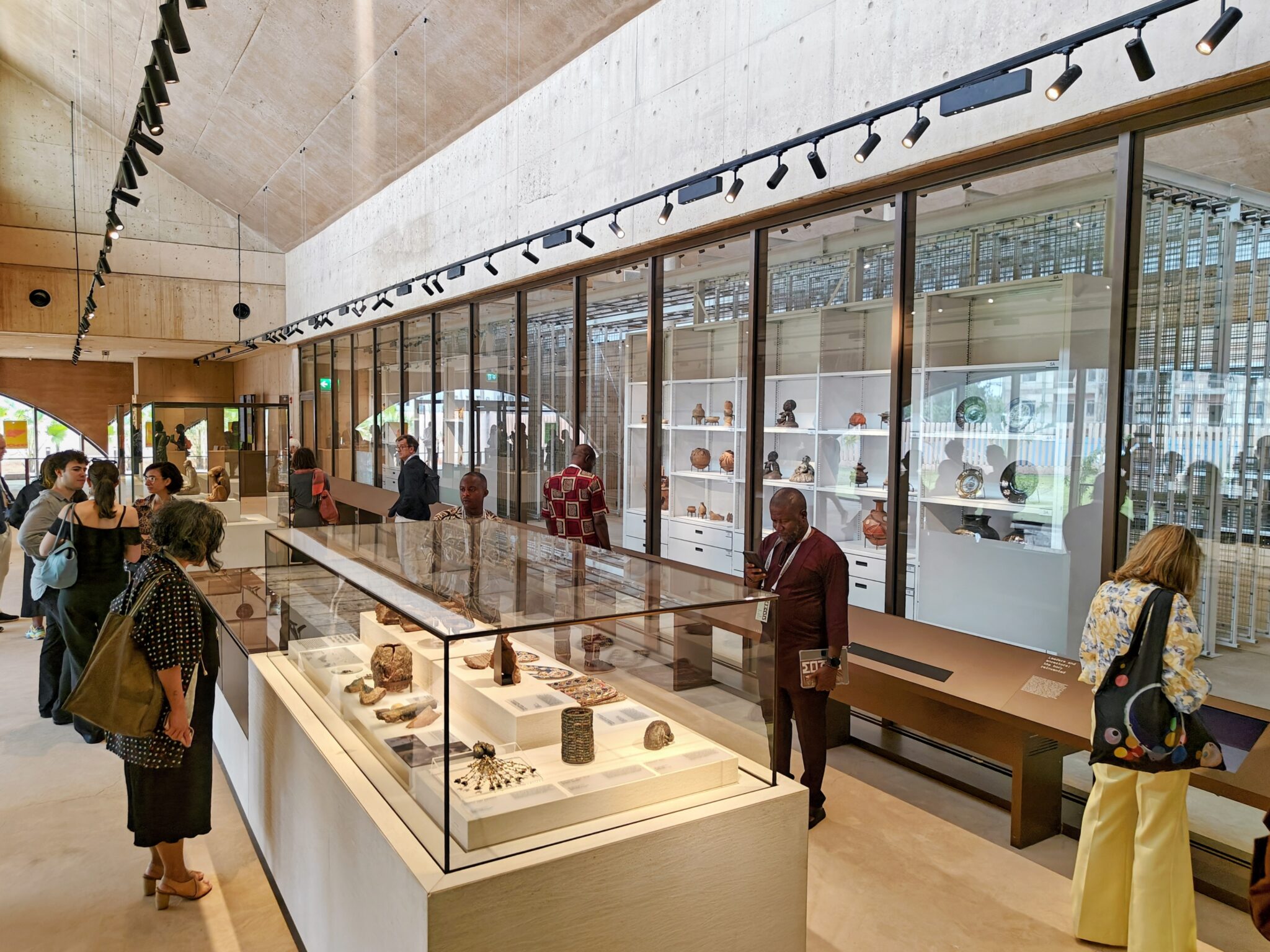
The institute itself opened in November 2025 and is designed to function as an archive, research and education centre supporting archaeology, materials research, conservation and learning.
Beyond the construction figures, MOWAA reported that it engaged 87 people through direct employment and consultancy roles in 2025.
It also spent N133.173 million on education and community programmes.
However, MOWAA disclosed that further construction on the wider campus has now been paused pending the resolution of outstanding matters.
That decision introduces another layer to the funding controversy: while the institute is operational, the wider campus remains incomplete.
MOWAA said the pause would not affect the institute’s operations, research, conservation, education or public-interest activities.
The organisation said it would continue engaging relevant stakeholders to establish a stable basis for its long-term operations and institutional development in Benin City.
For now, however, the audit has put three major figures firmly on the public record: N22.26 billion as the reported cost of building and equipping the institute; N3.95 billion as Edo State’s cash contribution; and approximately N38 billion raised for MOWAA’s wider campus and institutional programme.
The next chapter of the MOWAA controversy may therefore shift from “Who paid for the institute?” to the more detailed questions of how the project’s cost evolved from its early estimates, what the wider N38 billion raised has financed, and why construction of the remaining campus has been suspended.