
Umahi Blames High Cement Prices as Criticism Mounts Over Deplorable Federal Roads in Edo, Delta
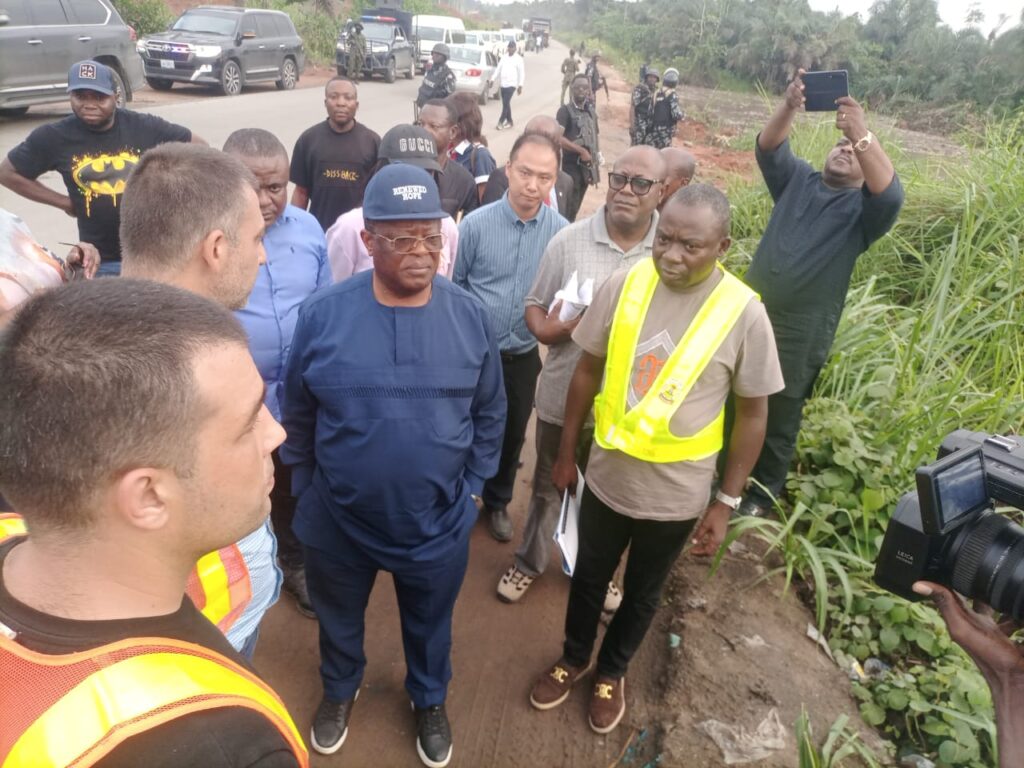
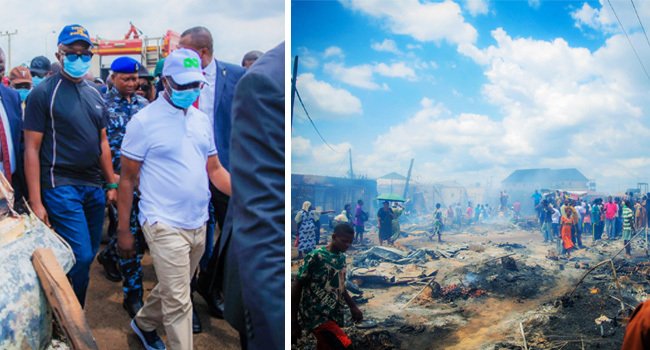
Umahi during inspection of Benin-Sapele Road (file)
By Marian Alekhue
As public frustration grows over the deplorable state of federal highways in Edo and Delta states, the Minister of Works, David Umahi, has blamed soaring cement prices for increasing the cost of road construction, arguing that contractors are mounting pressure on the Federal Government to approve contract variations.
Umahi’s explanation comes amid mounting criticism from Senator Adams Oshiomhole and other concerned Nigerians over the poor condition of strategic federal roads in the two states, many of which have become death traps despite repeated government assurances and the award of rehabilitation contracts.
The minister, however, maintained that the high cost of cement has become a major challenge to road construction, urging manufacturers to reduce prices to prevent further pressure on government-funded infrastructure projects.
Speaking while delivering the keynote address at the unveiling of the new corporate identity of Lafarge, now rebranded as HBM following its acquisition by the HUAXIN Group, at the Lagos Continental Hotel, Umahi said the Federal Government would soon begin discussions with cement manufacturers over pricing.
“I want to insist that Lafarge, now HBM, and other manufacturers of cement should reduce their prices. We shall be engaging on this. Manufacturers of cement must reduce their prices because the contractors are choking me to review their contracts. But nobody is reviewing anybody’s contract. It is the manufacturers of cement that should review their costs,” the minister said.
His remarks come at a time when commuters and businesses continue to endure severe hardship on several federal roads, particularly the Benin-Sapele, Benin-Asaba and other critical highways linking Edo and Delta states, where road users have repeatedly complained about failed sections, traffic gridlock and the slow pace of ongoing rehabilitation works.
Senator Oshiomhole had recently expressed dissatisfaction with the condition of the roads, questioning the pace of repairs and urging the Ministry of Works to accelerate intervention on the affected corridors because of their importance to economic activities and national connectivity.
Despite the criticism, Umahi said President Bola Ahmed Tinubu’s administration remains committed to delivering critical infrastructure across the country, noting that the scale of ongoing projects has created significant opportunities for manufacturers and investors. He urged HBM and other cement producers to expand their production capacity to meet the growing demand.
The minister also commended the company on its rebranding and reaffirmed the Federal Government’s willingness to partner with manufacturers in supporting the country’s infrastructure development agenda.
Highlighting what he described as the achievements of the Tinubu administration, Umahi cited the Lagos-Calabar Coastal Highway as a flagship project that has attracted international recognition.
According to him, officials from Deutsche Bank who assessed the project described it as being of high quality and undervalued.
“When the Deutsche Bank came to evaluate our project, they said it was undervalued and that the project is of topmost quality. Today, our neighbouring nations are coming to study the technology of the coastal highway,” Umahi said.
He expressed appreciation to President Tinubu for providing what he described as the leadership and political will driving Nigeria’s infrastructure programme, while assuring Nigerians that the administration remained committed to completing projects aimed at improving transportation and stimulating economic growth.
However, for many motorists travelling through Edo and Delta states, the deteriorating condition of major federal highways continues to overshadow the government’s assurances, with growing calls for faster execution of road projects rather than further explanations for the delays.