
The Travails of a Legal Icon: The Mike Ozekhome Story
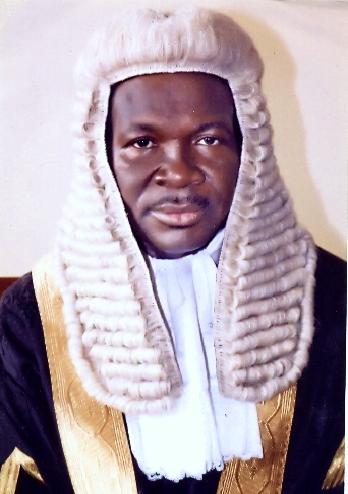
Ozekhome
By Erasmus Ikhide
IN the high-stakes, often treacherous theater of Nigerian jurisprudence, few names have resonated with as much consistency, defiance, and controversy as that of Chief Mike Ozekhome, SAN. For decades, he has been a fixture of the courtroom—a man whose oratorical prowess and constitutional intellect made him a giant among advocates.
Yet, as of June 2026, the titan finds himself in the crosshairs of a systematic, state-sponsored dismantling, having been suspended from the rank of Senior Advocate of Nigeria (SAN) by the Legal Practitioners’ Privileges Committee (LPPC).
On the surface, the narrative is framed in the sterile, administrative language of professional ethics.
The LPPC’s 173rd meeting served as the stage for this suspension, citing a sprawling, messy property dispute in London involving a phantom donor known as “Tali Shani.” The findings of the UK First-Tier Tribunal, which dismissed the ownership claims as a fabrication built upon forged documents and impersonation, provided the perfect ammunition for the state.
But for those who observe the subterranean currents of Nigerian power, this is not a story of a property dispute gone awry. It is a calculated, putative campaign—a terminal maneuver designed to silence the most effective, unremitting watchdog of the Bola Ahmed Tinubu administration.
The official justification—that the suspension is necessary to “safeguard the integrity, dignity, and prestige” of the SAN rank—rings hollow when one considers the broader political context.
In the ecosystem of Nigerian politics, the law is rarely an autonomous agent; it is often the bluntest instrument of state craft.
Mike Ozekhome did not just practice law; he wielded it as a weapon against the excesses of the state. His relentless, daily critique of the current administration’s economic failures—the catastrophic inflation, the total collapse of the power grid, the soaring cost of fuel that has left the middle class decimated, and the epidemic of kidnappings that has turned Nigerian highways into death traps—made him a primary target.
For the average Nigerian, the current administration has become a terminal rope around their necks, slowly strangulating their capacity for survival. Millions are traumatized by their inability to afford basic daily meals, paralyzed by an intermittent and unaffordable power supply, and stagnated by a fuel policy that has crippled commerce.
Ozekhome’s voice was, for many, the only one articulate and courageous enough to mirror their pain in the halls of power. He was not merely a lawyer; he was a national conscience. But in the corridors of Aso Rock, that conscience was perceived as an unforgivable offense—a thorn in the side of an administration that demands absolute compliance.
The strategy employed by the powers-that-be is chillingly simple: if you cannot argue against the facts presented by an opponent, you destroy the opponent. By weaponizing the internal disciplinary mechanisms of the LPPC, the administration has achieved what years of public debates and state-sponsored propaganda could not—they have effectively neutralized their most dangerous adversary.
Since the commencement of his legal troubles, the once-frequent, biting critiques of government policy have faded into a deafening silence. The “law” has succeeded in doing what the most oppressive regimes have always sought to do: it has coerced a critic into silence through the threat of professional extinction.
The suspension is not merely an administrative hiccup; it is an act of professional castration. By stripping Ozekhome of his “Silk,” the administration has attempted to diminish his standing, his credibility, and his ability to represent his clients with the full weight of his past accomplishments. It is a message to every other lawyer in Nigeria: dissent has a price, and that price is your career.
The history of the Nigerian legal profession is littered with figures who fell from grace, but the Ozekhome saga is unique in its political implications. When Chief F.R.A. Williams faced his own disciplinary ghosts in the mid-20th century, the context was one of professional conduct and internal standards.
When Beluolisa Nwofor was stripped of his rank, it was a fallout from a specific, chaotic legal battle. But Ozekhome’s case is different. It reeks of a vendetta fueled by state frustration—a deliberate attempt to silence a man who refused to be bought or intimidated.
The suspension serves as a chilling warning to the entire legal community: the rank of Senior Advocate of Nigeria is not a shield against state aggression; it is a leash. The moment a “Silk” dares to bite the hand that holds the leash, the state will find a way to revoke their status.
It is a dangerous precedent that transforms the most prestigious rank in the profession into a tool of political conformity. By targeting the most visible, most vocal, and most intellectually formidable critic, the administration has sent a signal that no one—regardless of their stature or history—is beyond reach.
What is perhaps most devastating about this entire saga is the resulting silence. Before his prosecution, Ozekhome was a one-man wrecking ball against the incompetence and corruption of the government. He provided the framework for understanding how the administration’s policies were actively impoverishing the citizenry. He stood in the gap when the people were paralyzed by hunger and fear. Today, that gap is empty.
The administration has fully or temporarily achieved its purpose. Ozekhome hasn’t spoken about, or against, the rot and malfeasance of this administration since the beginning of his prosecution.
This is not the silence of a man who has been proven wrong; it is the silence of a man under siege, his resources and mental bandwidth diverted to fighting for his professional life in a war of attrition where the state holds all the cards.
The public, meanwhile, is left to navigate the wreckage of an economy with fewer advocates to champion their cause. The citizenry, already traumatized and exhausted, now feels the weight of this silence as acutely as they feel the weight of their empty pockets.
When we look back on the “Travails of Chief Mike Ozekhome,” we will not remember the London property dispute as the defining event. That was merely the pretext. We will remember this as the moment the Nigerian legal system allowed itself to be used to decapitate the voice of dissent.
We will remember it as the moment when the “prestige” of the SAN rank was traded for the political comfort of a failing administration.
If the goal of the law is to serve justice, then the current path is a perversion of that mission. A system that prioritizes the destruction of a critic over the correction of a failing government is a system in decay.
Chief Ozekhome’s current travails are a stark, searing reflection of a nation where the rule of law has been replaced by the rule of the powerful. Whether he returns to the bar as a Senior Advocate or is permanently cast into the shadows, his story will remain a blight on the history of this administration.
The “Silk” has been stripped, but in doing so, the state has stripped away the last shred of pretense that our institutions are truly free.
The travails are not just his; they are the travails of every Nigerian who expected the law to be a sword against tyranny rather than a shroud for the truth. In this era of terminal governance, the silence of the giants is the loudest sound of all.
Erasmus Ikhide contributed this piece via: [email protected]