
Honorary Degree Holders Can No Longer Use “Dr” – FG
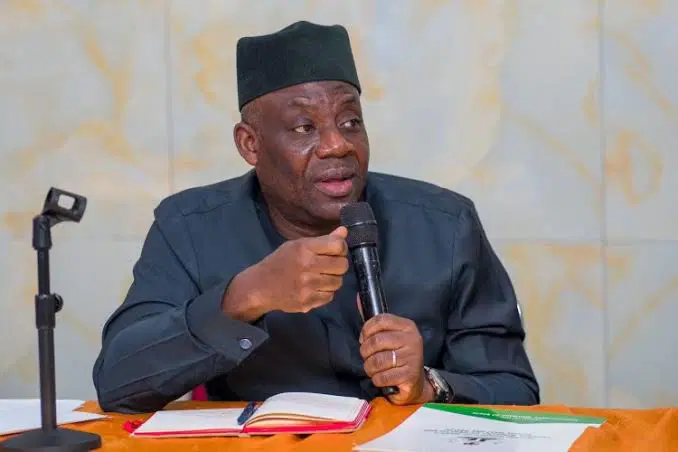
Nigeria Education Minister, Tunji
By Reporter
The Federal Government has prohibited recipients of honorary doctorate degrees from using the prefix “Dr” in official, academic and professional settings as part of efforts to protect the integrity of academic qualifications in Nigeria.
The Minister of Education, Tunji Alausa, announced the directive on Wednesday, stating that the policy was approved by the Federal Executive Council (FEC).
According to the minister, the misuse of honorary titles has become widespread over the years, with many recipients presenting honorary awards as earned academic qualifications.
Alausa warned that such misrepresentation would now be regarded as academic fraud and could attract legal as well as reputational consequences.
He explained that the new policy was introduced to address what he described as the growing abuse, politicisation and commercialisation of honorary degrees in the country.
“The recent trend we’ve seen with the award of honorary degrees has revealed a growing abuse and politicisation of this academic privilege,” Alausa said.
“We’ve seen awards being used for political patronage, financial gain, as well as the conferral of awards on serving public officials, which, as part of the ethics guiding honorary awards, should not happen.”
Under the new regulation, honorary degree recipients are no longer permitted to prefix “Dr” to their names.
Instead, recipients are expected to state the honorary distinction after their names in formats that clearly identify the award as honorary.
The minister gave an example such as “Chief Louis Clark, D.Lit. (Doctor of Literature, Honoris Causa)” to illustrate the approved format.
Alausa added that all honorary certificates and references must clearly contain the words “Honorary” or “Honoris Causa” to avoid confusion with earned academic qualifications.
The policy also limits Nigerian universities to awarding only four categories of honorary degrees — Doctor of Laws (LL.D), Doctor of Letters (D.Lit), Doctor of Science (D.Sc), and Doctor of Humanities (D.Arts).
In addition, universities without active PhD-awarding programmes have been barred from conferring honorary doctorate degrees.
According to the minister, the restriction is aimed at curbing the growing trend of newer institutions awarding honorary doctorates despite lacking established postgraduate research programmes.
Concerns over the indiscriminate award of honorary degrees have persisted within Nigeria’s academic community for years, with critics accusing some institutions of using such awards for political influence and financial patronage.
Alausa recalled that the Association of Vice-Chancellors of Nigerian Universities had attempted to address the issue in 2012 through the “Keffi Declaration,” but the initiative lacked legal backing and was therefore ineffective.
He noted that the new FEC approval now gives the policy executive and legal authority.
The National Universities Commission (NUC), alongside the Federal Ministry of Education, is expected to issue implementation directives to vice-chancellors, registrars and governing councils across Nigerian universities.
The minister also disclosed that convocation ceremonies would be monitored to ensure compliance with the policy.