High Court’s Prince Harry Ruling Strengthens Global Legal Shield for Public-Interest Journalism
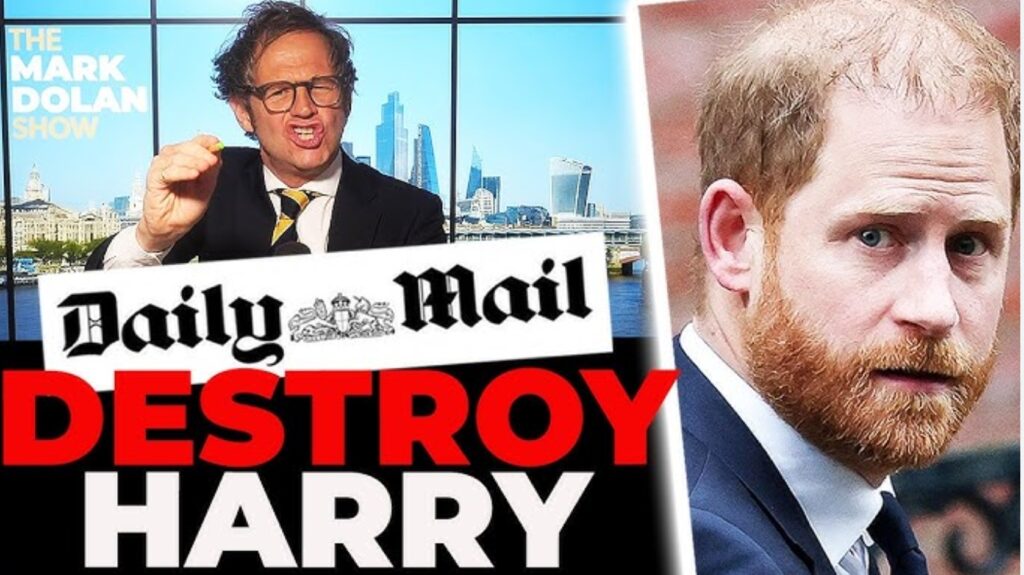
Prince Harry-Daily Mail
By Correspondent
London, United Kingdom — Britain’s High Court has dismissed a privacy lawsuit brought by Prince Harry and six other high-profile figures against Associated Newspapers Limited (ANL), ruling that the claimants failed to prove allegations that the publisher unlawfully obtained private information.
In a judgment delivered on Tuesday, Mr. Justice Nicklin rejected all claims against ANL, the publisher of the Daily Mail and Mail on Sunday, saying the evidence presented did not establish that the newspapers had engaged in unlawful information-gathering practices, including phone hacking.
The lawsuit was brought by Prince Harry alongside a group of prominent claimants that included musician Sir Elton John, actress Elizabeth Hurley and Baroness Doreen Lawrence. They alleged that journalists working for ANL had obtained confidential information through illegal methods over a number of years.
The judge acknowledged the seriousness of the allegations but said suspicion alone could not form the basis of a legal finding.
“The claimants were required to prove that the information was obtained unlawfully,” Justice Nicklin said in his ruling, adding that the evidence presented fell short of that standard.
Associated Newspapers welcomed the decision, describing it as a “magnificent vindication” of its journalism. The publisher said it would seek to recover its legal costs following the lengthy proceedings.
Prince Harry and the other claimants condemned the ruling in a joint statement, calling it a “complete and obvious whitewash” and expressing disappointment that their claims had been dismissed.
The judgment is expected to resonate beyond the parties involved, particularly in debates over the balance between the right to privacy and freedom of the press. Legal analysts say the ruling reinforces a longstanding principle in common law jurisdictions: allegations of unlawful journalistic conduct must be supported by clear and persuasive evidence, even where the reporting concerns public figures or sensitive private matters.
The decision is also likely to be viewed as strengthening legal protections for investigative journalism and the use of confidential sources, provided reporters obtain information through lawful means. Media organisations have argued that weakening these protections could have a chilling effect on public-interest reporting by exposing journalists to litigation based on allegations that cannot be substantiated.
The implications extend beyond the United Kingdom. Across many democracies, courts continue to grapple with competing constitutional rights, including privacy, reputation, freedom of expression and the public’s right to know. The High Court’s ruling may be cited in future cases as reaffirming that courts should distinguish between legitimate investigative journalism and proven unlawful conduct, rather than presume wrongdoing based on suspicion alone.
In Nigeria, where concerns over press freedom have intensified in recent years, media rights advocates say the judgment offers a reminder of the importance of maintaining a high evidentiary threshold before imposing liability on journalists or news organisations. Civil society groups have repeatedly expressed concern over the use of provisions of the country’s cybercrime legislation in cases involving journalists, activists and citizens accused of publishing information deemed critical of public officials. Critics argue that such prosecutions can discourage investigative reporting and limit public scrutiny of government actions, while authorities have maintained that the law is intended to combat cyber-enabled offences, protect individuals from online abuse and safeguard national security.
For advocates of press freedom, the UK ruling underscores the principle that legal action against the media should be grounded in demonstrable evidence of unlawful conduct, while preserving space for robust public-interest journalism. At the same time, the judgment does not diminish the responsibility of journalists and publishers to respect privacy rights or exempt media organisations from accountability where illegal information-gathering can be proven.
Prince Harry has been one of the most prominent campaigners against sections of the British tabloid press, pursuing multiple legal actions over alleged privacy violations. He has previously secured victories in separate cases involving unlawful information gathering by other newspaper publishers.
The latest ruling, however, represents a significant setback in his campaign against Associated Newspapers and is likely to remain an important reference point in future debates over privacy, media accountability and press freedom in the United Kingdom and other common law jurisdictions.