
Why Adeleke Won Osun
By Editorial Board
The victory of Governor Ademola Adeleke in the August 15, 2026 Osun governorship election deserves to be examined beyond the immediate excitement of party celebration and the disappointment of the opposition.
Adeleke’s victory was not an accident, nor was it simply the consequence of incumbency. It was the product of a combination of political organisation, personal popularity, grassroots mobilisation, a resilient political structure and an opposition that failed to convert its considerable advantages into a winning coalition.
The final figures tell an important story. Adeleke of the Accord Party polled 511,067 votes, defeating the All Progressives Congress candidate, Bola Oyebamiji, who secured 444,815 votes. Accord won 19 of the state’s 30 local government areas, while APC won 11.
The margin—66,252 votes—is particularly instructive.
In 2022, Adeleke defeated the then incumbent, Gboyega Oyetola, by a considerably narrower margin. Four years later, he has returned to power with a larger vote and a wider margin.
That is not merely a victory; it is evidence that the Adeleke political phenomenon has deepened.
Perhaps the most remarkable feature of this election is that Adeleke achieved this under a different political platform.
He won the 2022 election on the platform of the Peoples Democratic Party. In 2026, he contested under Accord.
Yet a substantial portion of his political base followed him.
That development should concern political parties that assume their organisational structures automatically determine electoral outcomes. In Osun, Adeleke demonstrated that a candidate can become a political brand powerful enough to transcend the conventional boundaries of party affiliation.
The lesson is unmistakable: voters may belong to parties, but they can also belong politically to individuals.
Adeleke’s victory also confirms an enduring truth about Nigerian elections: elections are won at the grassroots.
The governor’s strongest advantage was not necessarily the noise generated by campaign rallies or social media. It was the network of political relationships that extended into local government areas, wards and polling units.
His strongest territories provided the foundation upon which his statewide victory was built.
But Adeleke did not stop at his home base. Accord won in 19 LGAs, demonstrating that the governor’s appeal had extended beyond his immediate political territory.
That was decisive.
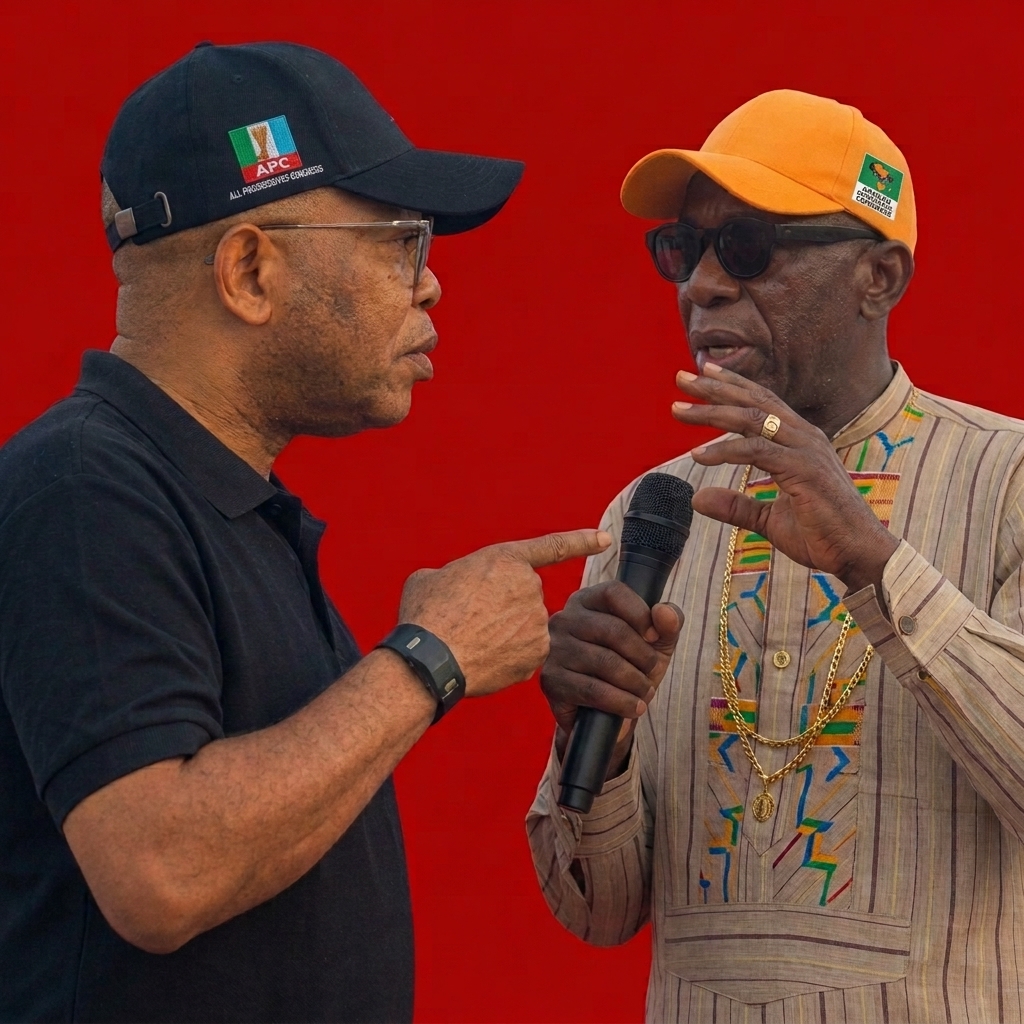
There was, however, another undercurrent in the election that deserves serious attention: the apparent resentment among some Osun voters over what was perceived as an excessive influx of APC governors, national leaders and political heavyweights into the state.
The appearance of powerful APC figures on the campaign trail was intended to demonstrate strength and national backing for the party’s candidate.
But politics is ultimately about perception.
For some voters, the procession of governors and national political leaders may have appeared less like solidarity with an Osun candidate and more like an attempt by outsiders to influence who should govern the state.
That perception could have had electoral consequences.
Osun has a fiercely independent political tradition. Its electorate has repeatedly demonstrated that it does not automatically vote according to the preferences of national political leaders. The state has its own political history, internal dynamics and strong sense of political ownership.
The APC therefore faced a delicate strategic question: how could it deploy the considerable influence of its national leadership without creating the impression that Osun’s political destiny was being decided from outside?
The danger was that the more prominent the external figures became, the easier it became for Adeleke’s campaign to frame the election as Osun versus outsiders.
That was a powerful political narrative.
There is a paradox in political campaigning: too little support from powerful allies can make a candidate look weak, while too much visible intervention can make him appear dependent.
The APC may have inadvertently crossed that delicate line.
The parade of governors and national leaders was designed to demonstrate that Bola Oyebamiji enjoyed the backing of the national establishment.
But elections are not party conventions.
What campaign managers see as strength, voters can sometimes interpret as interference.
What politicians describe as national support, voters may perceive as external pressure.
And what party leaders regard as mobilisation, an electorate can interpret as an attempt to take control of its political destiny.
This distinction may have helped shape the emotional atmosphere in which Osun voters went to the polls.
Adeleke Exploited the Mood
Adeleke’s political advantage was that he could present himself as the candidate closest to the people.
His campaign did not need to defeat every APC governor who entered Osun. It only needed to persuade voters that the election was ultimately about the people of Osun deciding the future of their state.
The governor could therefore position the contest as a choice between the people of Osun and a powerful political establishment seeking to take control of the state.
That was a more emotionally compelling proposition than a conventional debate over party manifestoes.
It also helped Adeleke transform what could have been a referendum on his administration into a referendum on political ownership.
The APC’s Strategic Failure
The APC should not dismiss this defeat as the product of sentiment or local peculiarities.
The party needs to undertake a serious post-election examination of what went wrong.
It had a credible candidate in Oyebamiji, the advantage of being the ruling party at the federal level and access to a formidable political structure.
Yet those advantages did not translate into victory.
The central failure was strategic.
The APC needed to construct a statewide coalition capable of simultaneously reducing Adeleke’s margins in his strongholds and defeating him in enough competitive areas.
It did not.
Winning 11 LGAs was significant, but it was not enough to overcome the margins accumulated by Adeleke across the 19 LGAs won by Accord.
It would be simplistic to conclude that Osun voters rejected the APC merely because APC governors and national leaders campaigned in the state.
That would be an unfair reading of the election.
The more plausible interpretation is that their highly visible presence may have reinforced an existing sentiment among some voters that the election should not be dictated from outside Osun.
This is where political psychology becomes important.
Once an election becomes framed as a struggle between local pride and perceived external interference, policy arguments can sometimes take a back seat to identity and emotion.
Adeleke had the advantage of appearing to embody the local side of that equation.
The APC, despite its national strength, risked being cast as the vehicle through which Abuja and other state capitals were attempting to determine the occupant of Osun Government House.
Whether that portrayal was fair is less important than the fact that it was politically effective.
Adeleke’s victory, however, should not be interpreted as a blank cheque.
The electorate has given him another mandate, but it has also increased the burden of expectation.
The governor must now move beyond the politics of survival and concentrate on the politics of legacy.
The issues confronting Osun remain formidable—economic development, employment, infrastructure, education, healthcare, workers’ welfare and the state’s financial sustainability.
Victory at the polls confers legitimacy, not infallibility.
The governor must therefore resist the temptation of triumphalism.
A second-term victory can become the foundation of a lasting legacy, but it can equally become the beginning of political complacency.
The choice belongs to the governor.
For the APC, this defeat should be treated as a political warning rather than an invitation to recrimination.
The party must return to the people.
It must listen more, organise better and understand the peculiar political psychology of Osun.
Above all, it must stop assuming that national political dominance automatically translates into local electoral dominance.
Osun has demonstrated otherwise.
National political power is an asset, but it can become a liability when voters begin to perceive it as an attempt to impose political choices upon them.
Ultimately, the ballot has spoken.
Adeleke won because he succeeded in convincing enough Osun voters that his administration deserved another opportunity.
He won because his political structure remained intact.
He won because his personal appeal survived the transition from PDP to Accord.
He won because his grassroots network remained formidable.
He won because his strongest territories delivered substantial margins.
And, importantly, he may also have benefited from a political backlash against the perception that powerful external forces were attempting to determine Osun’s political future.
The APC’s national machinery was meant to be its greatest strength.
In parts of the electorate, it may have become its greatest vulnerability.
The lesson is profound: political power can campaign in a state, but it cannot vote in a state. Only the people can do that.
The 2026 Osun election has therefore answered the question of who should govern Osun.
The people have chosen Ademola Adeleke.
But the election has also sent a message to every political party seeking power in the state:
Osun can be courted. Osun can be persuaded. But Osun does not want to be dictated to.
Now that the ballots have been counted and the victory declared, the campaign rhetoric must end.
Adeleke has won the mandate.
He must now earn the legacy.