
Ekpeson’s Nine-Month Scorecard: Etsako East Records Major Infrastructure and Security Gains as Fresh Tenure Begins

Sunny Ekpeson security and project interventions in Etsako East Local Government Area
By Arit Mbeh, Staff Reporter
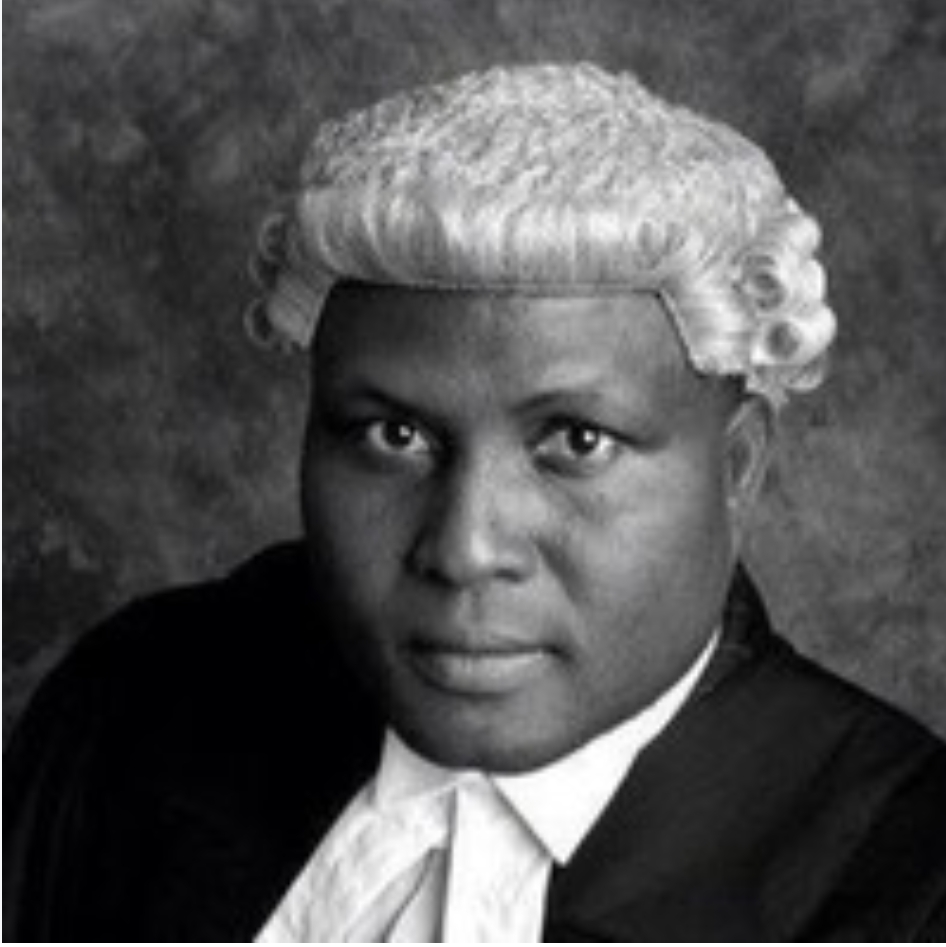
In just nine months in office during his first tenure as Chairman of Etsako East Local Government Council, including the period he served in an acting capacity, Rt. Hon. Sunny Akiotu Ekpetika Ekpeson has recorded a wide range of grassroots development interventions across the council area.
From roads and schools to electricity, water, healthcare, markets, sanitation and security, the breadth of projects attributed to the Ekpeson administration has generated considerable attention in Etsako East, with expectations now rising that the council could emerge as a benchmark for grassroots administration in Edo State as he begins a fresh tenure.
The significance of the achievement, observers note, lies not only in the number of projects but in the relatively short period within which they were undertaken.
A major feature of the nine-month scorecard is the administration’s aggressive intervention in road infrastructure. Detailed project records indicate that approximately 41.72 kilometres of roads were constructed, opened or graded across Wards 5, 6, 7, 8 and 10 alone.
In Ward 5, roads covered include Prof-Imogie Inanoya Road, Sahara Street, Bethel Church Road, Imiogio Central Road, Udoki Street, Imianoko Street, Omoti Street, Prince Malik Afebua Street, Uduwa Ibeki Road and Yakubu Road, with the council putting the total distance covered at 7.15 kilometres.
Ward 6 recorded an extensive intervention, with the council reporting 13.8 kilometres of roads covered. Among the projects are Imianabe to Igiase Road, Entrance Road into Imiekuri, Imiokoko to Town Hall Road, Imiekari to Iturogbe Community Road, Imianabe/Iewi Road, Imiekuri Top Okhu Village Major Road and the Imiekuri to Ogute Road.
In Ward 7, projects covering 3.25 kilometres were recorded, including Imiomoka Road, Imioko/Utegie to Afokpella Secondary School Road, Former MCC Camp Road, Bishop C.J. Balogun/Utegie-Imioko Road and Prophet Luke Church Road.
Ward 8 benefited from seven road projects covering a stated five kilometres, while Ward 10 in the Ibie Zone recorded 21 separate roads, with the individual distances amounting to approximately 12.52 kilometres.
The scale of the road programme is particularly significant because many of the routes serve residential communities, schools, churches, maternity facilities, orphanages, farmlands and other critical locations.
But roads represent only one component of the administration’s nine-month scorecard.
In the education sector, the council completed six classrooms, four-unit toilets and a teachers’ office at Oramhe in Ward 4. It also renovated and roofed the gate of Ogbaki Primary School in Agenebode.
At Okpeko-Uneme, Uzanu, in Ward 3, the administration constructed six classrooms, a headmaster’s office and hall, in addition to drilling a borehole.
Another major educational intervention involved the construction of six blocks of classrooms, four-unit toilets, a teachers’ office, four self-contained staff quarters and perimeter fencing in Ward 3.
The administration also tackled the challenge of electricity supply in several communities.
Power was restored to the entire Uwnno and Weppa communities, covering Wards 1, 2, 3 and 4 in Agenebode. Electricity was similarly restored to the three Ibie communities of Imiegba, Itsukwi and Imiakebu.
In healthcare, the council purchased a generator for the General Hospital, Agenebode, providing additional power support for the facility.
Water supply also featured in the administration’s intervention programme, with boreholes drilled at various locations, including Okpeko-Uneme, alongside related water infrastructure.
The council equally undertook environmental sanitation projects, including the desilting of drains and evacuation of refuse at Agenebode Popular Market and its environs, as well as refuse evacuation at Okpella Market.
The administration also prepared the Agenebode Market for reconstruction and rebuilding, with provision for open and lock-up shops.
Administrative infrastructure received attention through the purchase of laptops for the HOLGA, DFA, DAGS and Planning offices, as well as a photocopier and printer for the DAGS office. Solar lights were also procured as part of the council’s interventions.
Security has also been a major component of the administration’s activities. Determined to confront kidnapping and other criminal activities, Ekpeson personally participated in joint security bush-combing operations involving the Nigerian Army, Police, Edo State Security Network and local vigilante groups.
The operations targeted forests and remote locations reportedly being used as hideouts by kidnappers and other criminal elements.
On several occasions, the council chairman joined security personnel in combing the Savannah forest, reinforcing the administration’s position that the protection of lives and property remains a central responsibility of the local government.
The security strategy has also involved collaboration with communities and stakeholders, with residents encouraged to remain vigilant and provide timely intelligence to security agencies.
The administration believes that improved security is fundamental to development, as communities cannot fully benefit from infrastructure or economic opportunities in an atmosphere of fear and insecurity.
The political significance of Ekpeson’s first nine months is now being measured against the expectations surrounding his fresh tenure.
Having recorded the projects and initiatives within a relatively short first stint, political observers in Etsako East believe the coming 36 months present an opportunity for the chairman to consolidate the gains and move the council to another level.
The argument gaining traction among residents and political stakeholders is that if Ekpeson could achieve such a wide-ranging spread of projects within nine months of his first tenure, including his period as acting chairman, expectations for his new tenure are understandably high.
For many residents, the next phase is therefore not simply about continuity but about raising the standard of local government administration.
Political observers are looking ahead to the possibility of Etsako East becoming a reference point for what effective grassroots governance can achieve when political leadership is matched with visible projects, security consciousness and community engagement.
The challenge before Ekpeson is consequently a significant one: to transform the impressive nine-month scorecard into a sustainable 36-month development programme.
If the pace of intervention is sustained, observers contend that Etsako East could emerge as a benchmark for grassroots administration, not only within Edo State but potentially beyond it.
The expectation among the people is that the fresh tenure will bring more roads, stronger social infrastructure, expanded economic opportunities, improved security and deeper development across the wards.
For Ekpeson, the first nine months may have established the foundation. The next 36 months will determine whether that foundation becomes a model of grassroots governance. And that, increasingly, is the expectation of the people of Etsako East.