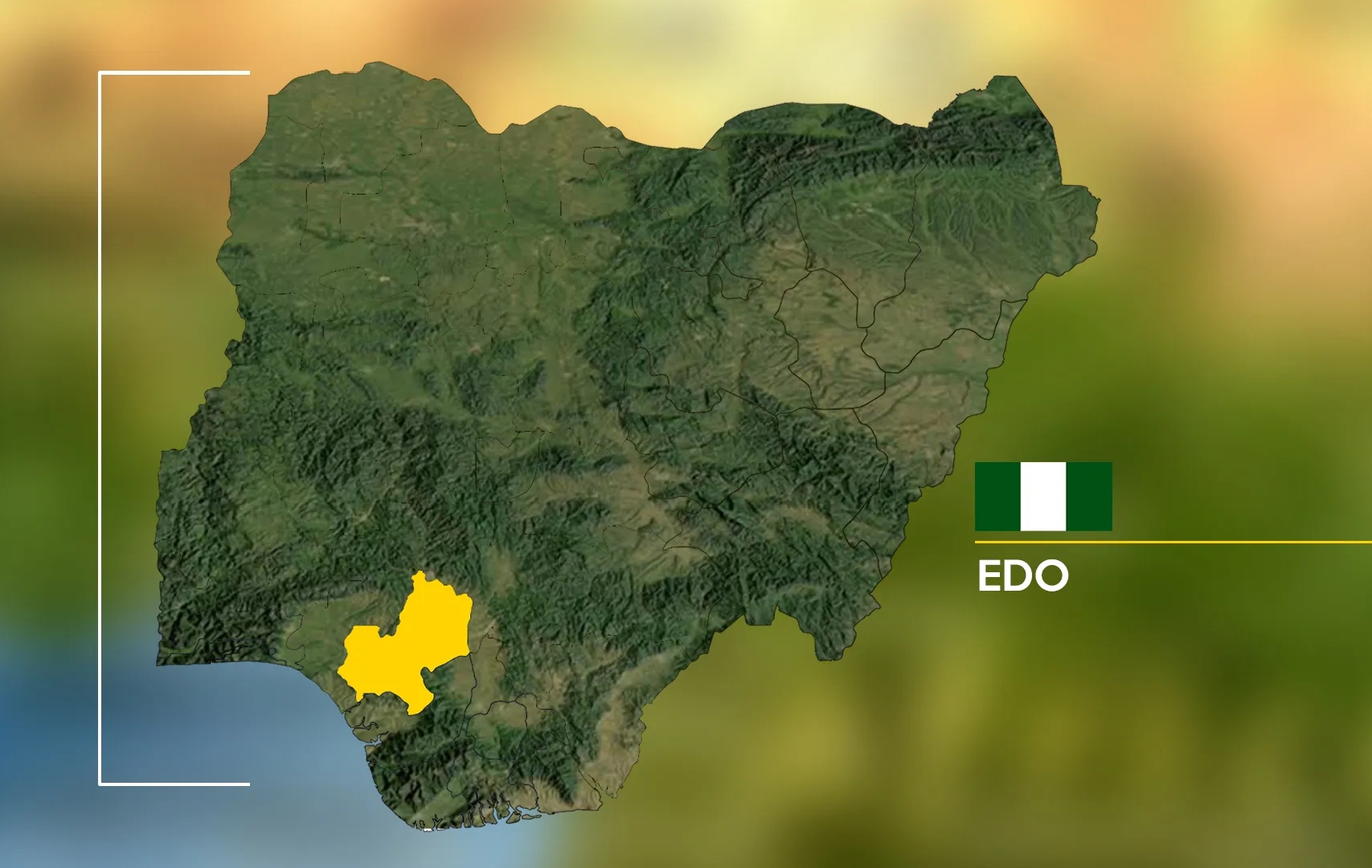

November 12: Assessing Governor Okpebholo’s Two Years in Office

Ramat Park Flyover
By Editorial Board
Two years after assuming office, Governor Monday Okpebholo’s administration has begun to leave its imprint on Edo State through infrastructure development, security interventions, education, healthcare and agricultural initiatives. As the government enters its third year, the challenge is to consolidate these gains and translate its development vision into lasting prosperity for the people.
Anniversaries in public office provide important opportunities to reflect on the journey so far, assess progress and renew commitments to the people. For Governor Monday Okpebholo, November 12, 2026, marks two years since he assumed the responsibility of leading Edo State.
His emergence in November 2024 came with considerable expectations from Edo people, who looked forward to a new phase of development, improved security, economic opportunities and stronger public institutions.
During the electioneering period, Okpebholo presented an ambitious development agenda anchored on infrastructure, security, healthcare, education, agriculture and economic growth. These priorities subsequently became the foundation of his administration’s SHINE Agenda.
Two years into the administration, there are visible efforts across some sectors, particularly in security infrastructure, interventions in education, healthcare, sports and civil service.
While the journey towards comprehensive development remains ongoing, the second anniversary offers him opportunity to recognise the progress made and examine how the administration can build on its achievements.
One of the most visible aspects of the Okpebholo administration has been its commitment to open up new rural roads, especially in Edo Central and some roads that hitherto were abandoned in Edo South.
Also, the construction of Ramat Park and Adesuwa Junction flyovers, reflect the administration’s determination to address traffic bottleneck challenges and improve urban mobility.
Projects along Sapele Road, Ugbowo, Ogheghe, Oba Erediauwa Road and other locations have also featured prominently in the government’s infrastructure programme.
Beyond the state capital, the expansion of road projects into other local government areas presents an opportunity to improve rural connectivity, facilitate agricultural activities and stimulate commercial development.
The important task ahead is to ensure the timely completion of ongoing projects, maintain existing infrastructure and extend development to rural areas.
Security remains fundamental to economic development, and the administration has taken steps to strengthen the state’s security architecture. The creation of special court to try kidnappers and cult related offences has led to a drop in incidents.
The recruitment and training of 2,500 Edo State Security Corps personnel, provision of operational vehicles and motorcycles, engagement of forest guards and other security interventions demonstrate the government’s recognition of the importance of community-based security.
These measures are particularly relevant to protecting rural communities, securing farmlands, improving intelligence gathering and supporting conventional security agencies.
As the administration progresses, sustaining these investments, improving coordination among security agencies and strengthening community participation will be essential to achieving a safer Edo State.
The administration’s reported recruitment of 5,000 teachers represents an important intervention in strengthening the state’s education workforce.
Equally noteworthy is the reported increase in financial support to tertiary institutions, including Ambrose Alli University, Ekpoma, and Edo State University, Iyamho.
These interventions reflect the importance attached to education as a foundation for human capital development.
The next phase should focus on improving classroom facilities, strengthening teacher development, expanding access to digital learning and ensuring that students receive education capable of preparing them for the demands of a changing economy through revered curriculum.
Healthcare is another critical component of the administration’s development agenda. In this sphere, the reported upgrading of primary healthcare centres, recruitment of health personnel, provision of medical equipment and development of specialist healthcare facilities are important steps towards improving access to medical services.
For communities outside Benin City, strengthening primary healthcare delivery will be particularly beneficial.
The administration should continue to prioritise functional health facilities, adequate medical personnel, essential drugs and affordable healthcare services.
A healthy population should be an indispensable asset in the state’s development journey.
Edo possesses considerable agricultural resources and the potential to become a major contributor to food production and agro-industrial development.
The Okpebholo administration’s reported agricultural budget of N57 billion, alongside interventions involving tractors, farmer support, cultivated farmland and agricultural infrastructure, signals an effort to reposition the sector.
The opportunity before the government is to connect agricultural production with processing, storage, transportation and markets linkages.
Such an approach will not only improve food security but also create employment opportunities for young people and strengthen the rural economy.
The administration has also highlighted employment generation and support for small businesses among its achievements.
Its reported creation of more than 10,000 direct and indirect jobs and the introduction of a N1 billion interest-free loan scheme for small businesses and traders are interventions that deserve continued attention.
One area that has failed to contribute to the significant efforts of the administration afterafter two years, is environment. Apart from the threatening erosion, Benin City has become a capital of shanties and sand dunes. Urgent attention must be given to clean the state capital of debris and fast emerging shanties.
For these initiatives to produce sustainable economic benefits, government should strengthen access to business finance, vocational training, entrepreneurship development and investment opportunities.
The private sector must also be encouraged to participate more actively in Edo’s economic development with good roads and cleaner environment.
While the administration can point to several interventions in its first two years, the real opportunity now lies in consolidating these initiatives and ensuring that ongoing projects deliver their intended benefits.
The governor’s development agenda should increasingly reflect measurable improvements in household welfare, employment, education, healthcare, security and economic productivity.
Equally important is the need to maintain an equitable distribution of projects across the state’s 18 local government areas.
The government should continue to strengthen transparency in project implementation and communicate its achievements through verifiable performance reports.
Such an approach will reinforce public confidence and enable Edo people to appreciate the progress being made.1
Two years in office is an important milestone, but it is also a transition into a period when the foundations already laid must begin to produce more enduring results.
Governor Okpebholo has demonstrated a clear preference for visible infrastructure development and has initiated interventions across several important sectors.
The responsibility now is to sustain the momentum, complete ongoing projects, deepen institutional reforms and ensure that the benefits of government policies reach the ordinary citizen.
There is also an opportunity to build stronger partnerships with the Federal Government, private investors, development institutions and Edo indigenes at home and abroad.
As Governor Monday Okpebholo marks two years in office, the anniversary should be an occasion to acknowledge the efforts made, recognise the challenges that remain and renew the administration’s commitment to its electoral promises.
The people of Edo State expect continuity in the implementation of ongoing projects, greater attention to economic opportunities and sustained improvements in the quality of public services.
The next two years provide an important opportunity to transform the administration’s development initiatives into lasting achievements that will define its legacy.
Two years have provided a foundation. The task ahead is to consolidate the gains, accelerate development and build an Edo State in which prosperity and opportunity are shared by all.