
Tinubu’s Quiet Federalism Revolution: Building a More Productive Federation Without Waiting for a Grand Constitutional Rewrite
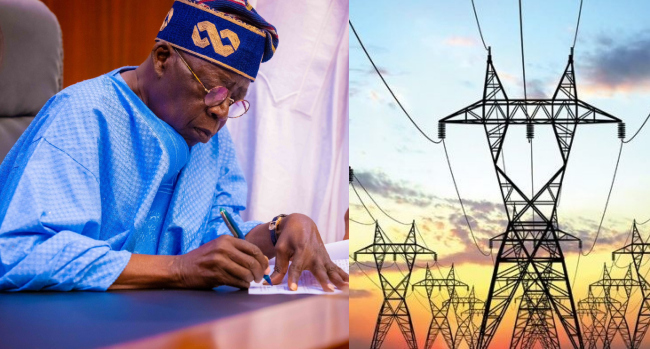
President Tinubu
By Orobosa Omo-Ojo JP, Publisher
President Bola Ahmed Tinubu’s administration is steadily reshaping the balance of power between Abuja and Nigeria’s 36 states, not principally through the prolonged politics of constitutional amendment, but by using existing constitutional provisions, new legislation and fiscal reforms to bring responsibilities closer to the people.
The emerging shift is most visible in three areas that have historically defined Nigeria’s heavily centralised federation: electricity, policing and the sharing of national revenues.
Taken together, these reforms point towards a more responsive and productive model in which states assume greater responsibility for economic growth, infrastructure, internal security and service delivery, while the Federal Government focuses increasingly on matters that genuinely require national coordination.
The electricity sector provides the clearest evidence of this positive direction.
The Electricity Act 2023 opened the door for states to establish and regulate their own electricity markets, generate, transmit and distribute electricity within their jurisdictions, subject to the statutory framework. The Nigerian Electricity Regulatory Commission said in May 2026 that 15 states had already transitioned to regulating their electricity markets, with Edo, Lagos, Ogun, Oyo, Enugu, Ekiti, Ondo, Imo, Kogi, Niger, Plateau, Abia, Nasarawa, Anambra and Bayelsa among them.
This represents a significant and encouraging departure from the old assumption that electricity was essentially an Abuja-controlled enterprise. The practical implication is potentially transformative.
States can now develop electricity solutions around their own economic realities, attract investors into generation and distribution, support industrial clusters and provide power to communities that may remain underserved by the national grid.
For manufacturing, agriculture, small businesses, hospitals, schools and digital enterprises, the significance goes beyond electricity itself. Reliable local power can reduce dependence on diesel and petrol generators, lower operating costs, expand business opportunities and improve productivity.
President Tinubu himself has repeatedly linked power-sector reform to economic productivity, describing electricity as central to improving livelihoods and stimulating industrial, educational and healthcare activities.
The administration’s approach therefore amounts to something larger than a power-sector reform. It is a practical decentralisation of economic responsibility that can unlock innovation and investment across the states. The same positive principle is increasingly visible in the fiscal architecture of the federation.
The Constitution already provides for revenue-sharing among the Federal Government, states and local governments, with the Revenue Mobilisation Allocation and Fiscal Commission playing a central role in reviewing the allocation formula. In August 2026, RMAFC announced that it had completed a comprehensive review of the revenue-allocation formula and prepared legislative proposals for consideration.
The proposed new framework is intended to reflect changing fiscal responsibilities and Nigeria’s current economic realities.
That debate is significant because Nigeria’s federal structure has long suffered from an imbalance in which responsibilities are increasingly decentralised while the resources required to discharge them remain concentrated at the centre.
The present revenue-sharing system already demonstrates the scale of resources moving through the Federation Account. In April 2026, the Federal Government, states and local governments shared N2.036 trillion from N2.364 trillion in gross revenue for the month under review. States received N657.596 billion, while local governments received N468.826 billion, in addition to N120.759 billion distributed as 13 per cent derivation revenue to oil-producing states.
A more responsive revenue formula could therefore have consequences far beyond government accounting. If states have greater resources and are simultaneously given greater responsibility for electricity, infrastructure, security and economic development, the relationship between taxation, revenue generation and service delivery can gradually become more direct.
That could also strengthen the political accountability of governance.
Instead of citizens looking almost exclusively to Abuja whenever a road, electricity project, security challenge or economic intervention is required, governors and state institutions would increasingly be expected to answer for outcomes within their jurisdictions—and would have greater tools to deliver those outcomes. State police is perhaps the most politically sensitive component of this emerging federalism.
President Tinubu has openly supported decentralised policing as a means of improving grassroots intelligence, internal security and protection of lives and property. The Presidency disclosed in June 2026 that consultations among the Executive, National Assembly and security authorities had advanced towards establishing a constitutional framework for state police.
Unlike electricity reform, however, state police cannot simply be implemented administratively. It requires constitutional and legal changes.
That distinction is important. The larger Tinubu reform philosophy is moving towards decentralisation without waiting for a comprehensive constitutional conference or wholesale amendment of the 1999 Constitution. But where the Constitution itself erects a barrier—as it presently does with the architecture of the Nigeria Police Force—the administration is pursuing the formal amendment route.
This makes the current process particularly significant: rather than treating constitutional restructuring as an all-or-nothing project, the government is advancing on multiple fronts, using legislation, regulation, executive action and fiscal policy where possible while pursuing constitutional changes where they are necessary.
The same constructive philosophy can be seen in the administration’s recent petroleum-revenue reforms.
In February 2026, President Tinubu issued an executive order directing that certain petroleum revenues previously subject to deductions by NNPC Limited be transferred directly into the Federation Account. The order ended the collection of the 30 per cent management fee and redirected the 30 per cent frontier exploration fund from profit oil and profit gas to the Federation Account.
The significance is not merely that more money may enter the Federation Account.
It is that the administration is attempting to reconnect federally collected revenues with the constitutional distribution framework through which the Federal Government, states and local governments are financed.
This is where the socioeconomic benefits of the reforms become clearer. Nigeria’s development challenge is not simply a question of how much government spends. It is also a question of who is responsible for delivering results, who controls the resources required to deliver them and how closely government is connected to the economic realities of the communities it governs.
Decentralisation can shorten that distance and create stronger incentives for practical results.
A state that controls an electricity market can respond more quickly to the needs of its industrial zones. A state with greater fiscal capacity can invest more deliberately in roads, healthcare, education and agricultural infrastructure. A state police system—if eventually established within an effective constitutional framework—could bring security intelligence closer to local communities and improve the protection of lives, property and investment.
The potential economic chain is straightforward: better electricity can support production; stronger security can protect investment and agriculture; greater fiscal capacity can finance infrastructure; and increased local responsibility can make subnational governments more directly accountable for economic outcomes.
But decentralisation is not automatically synonymous with better governance.
The transfer of responsibility without institutional capacity, transparency, regulatory independence and accountability could merely relocate inefficiency from Abuja to the states.
That is why the emerging reform must ultimately be judged not only by the number of responsibilities transferred from the centre, but by whether Nigerians experience measurable improvements in electricity supply, security, employment, productivity, infrastructure and household welfare.
For now, however, the direction is unmistakably positive.
Tinubu’s federalism project is emerging less as one dramatic constitutional event and more as a series of institutional changes—electricity-market decentralisation, revenue reform, petroleum-revenue restructuring and the proposed creation of state police—that are gradually creating a more balanced, responsive and economically dynamic federation.
The paradox is that Nigeria may be moving towards a more functional federation without first undertaking the grand constitutional revolution that has dominated the country’s political conversation for decades.
The real test will be whether the states can convert their new responsibilities and potential fiscal space into tangible economic and social dividends.
If they do, the most consequential legacy of the reform may not be a new constitutional document, but a stronger federation in which innovation is encouraged, government is brought closer to citizens and every level of government is better positioned to contribute to Nigeria’s prosperity.