Twisting of Gov Okpebholo’s Image: When Political Mockery Becomes Cybercrime
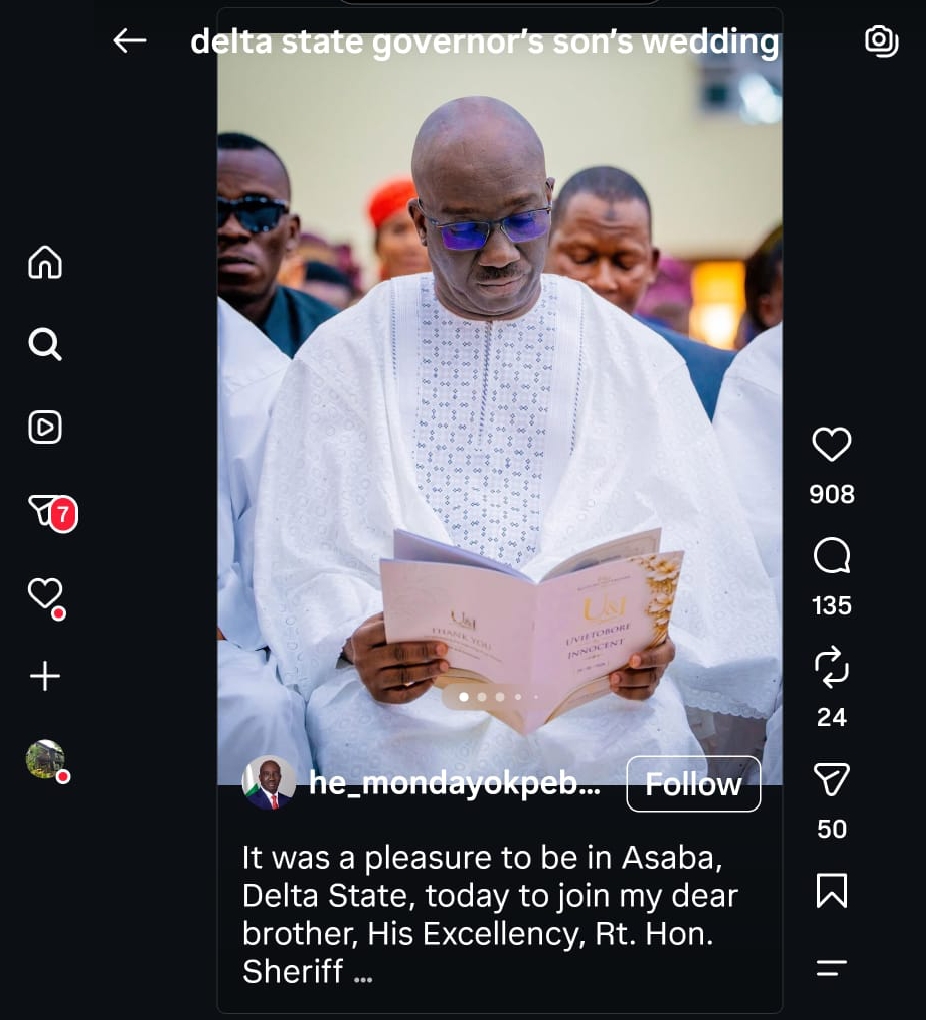
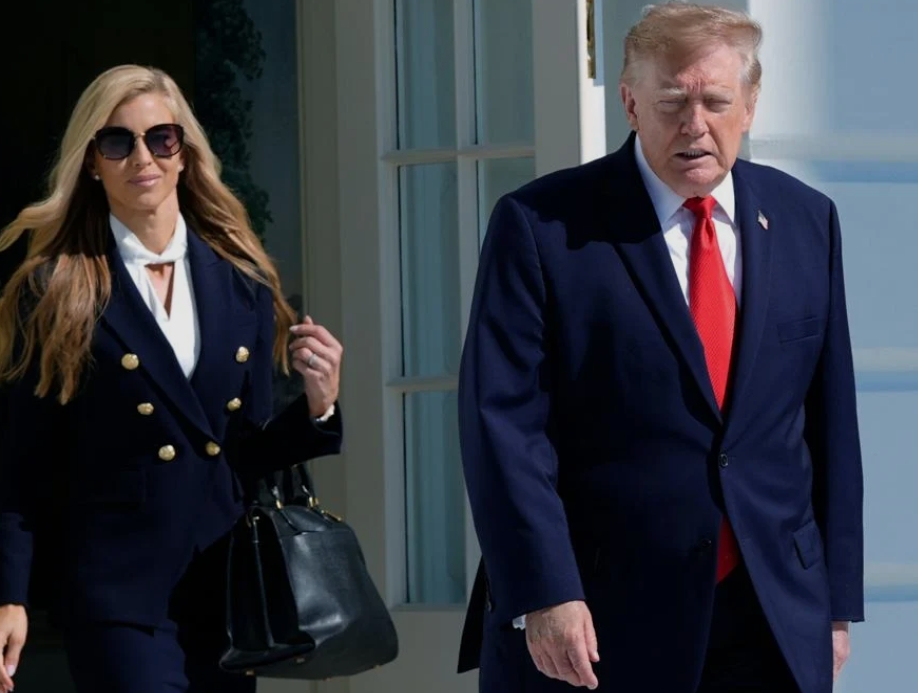
The correct image
By Orobosa Omo-Ojo JP
Calls are mounting for investigation of the manipulated photograph of Edo Governor, Senator Monday Okpebholo which showed him as reading a wedding program upside down. The doctored image has been circulating online and may have violated the Cybercrime law.
There is a point at which political criticism ceases to be criticism and becomes something more sinister: the deliberate manufacture of falsehood designed to ridicule, damage and ultimately destroy the reputation of a public office holder.
That line appears to have been crossed in the latest social media controversy involving Edo State Governor, Senator Monday Okpebholo.
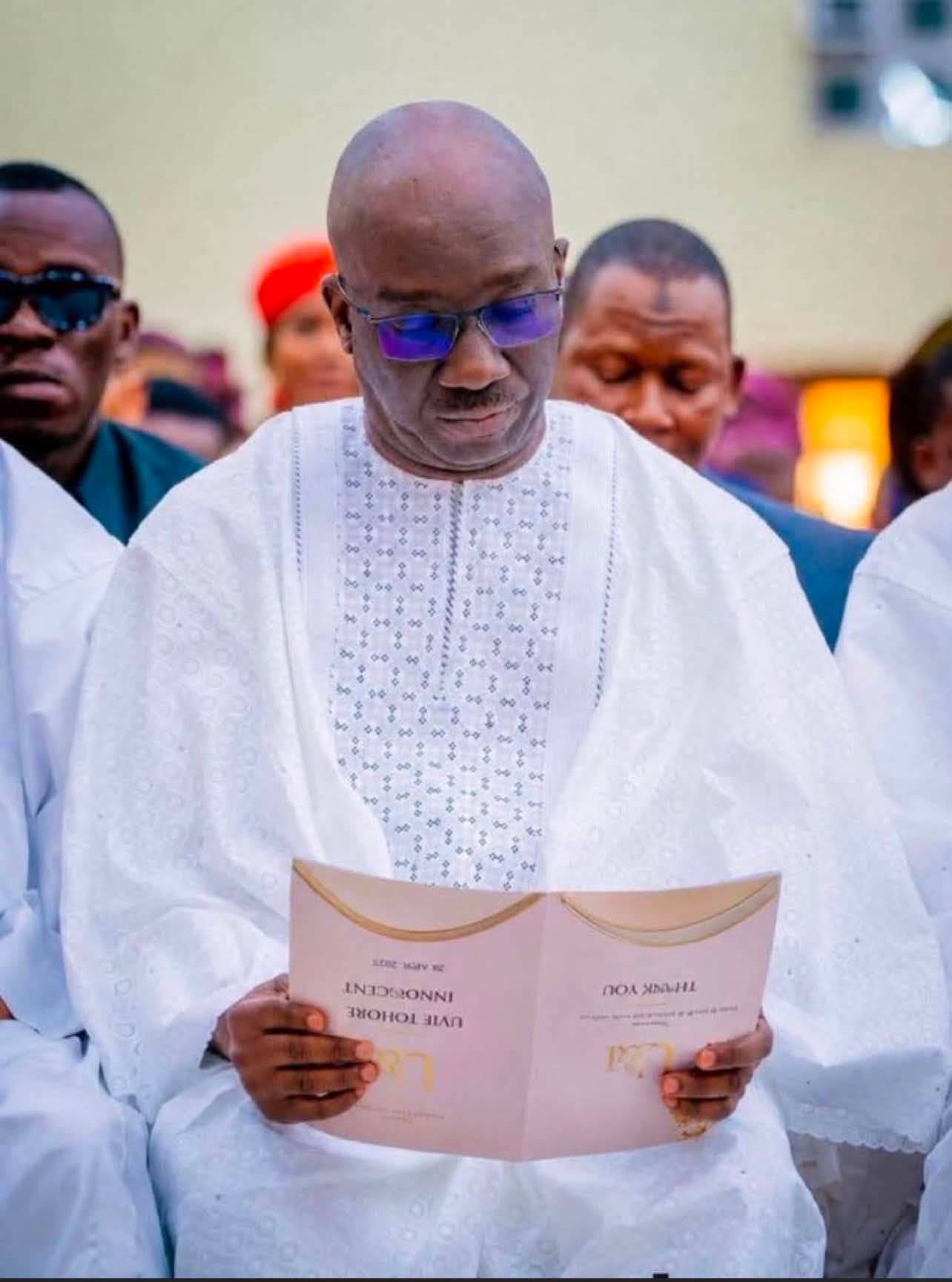
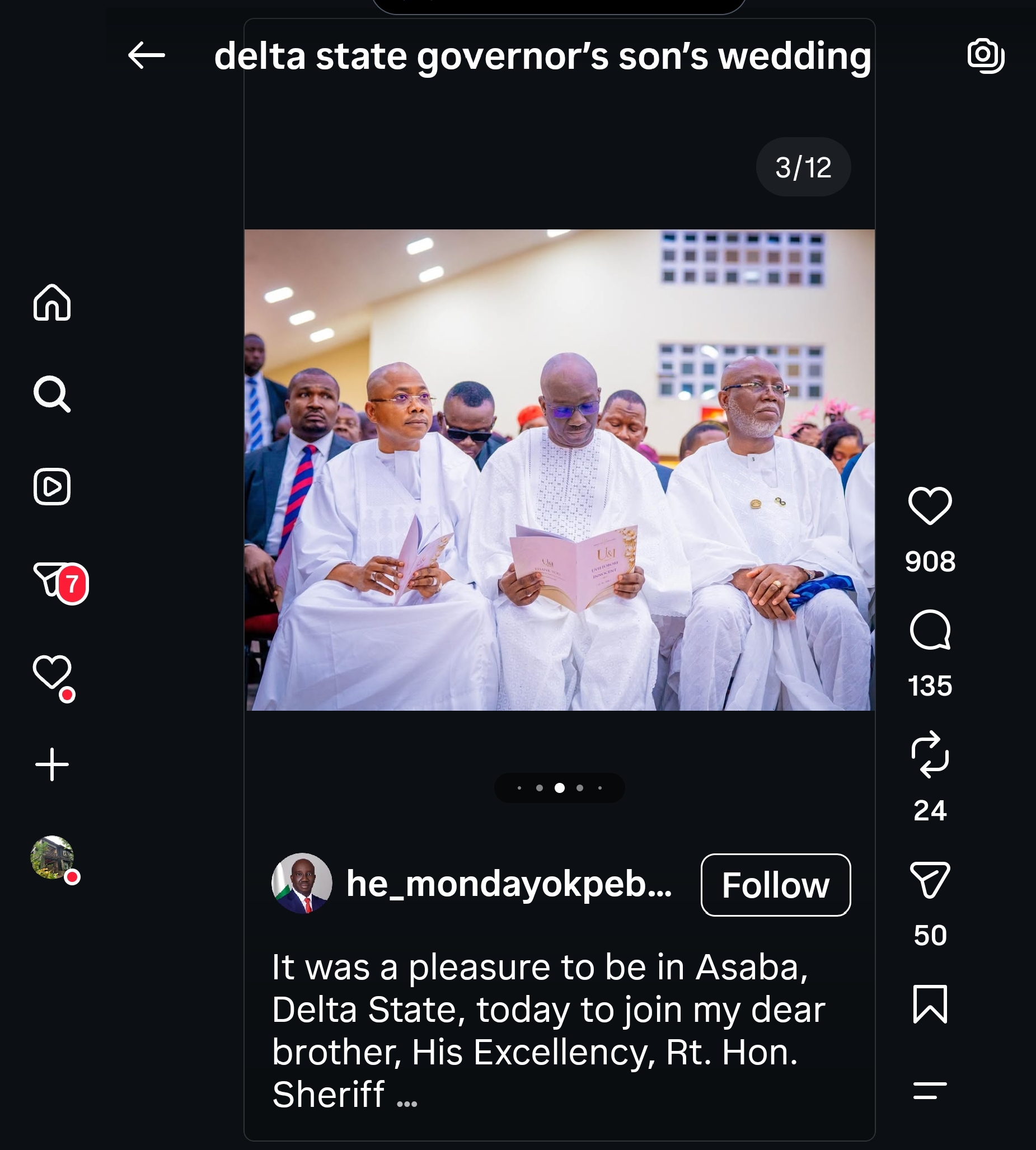
What began as an innocent photograph from a high-profile social gathering has been transformed in the hands of social media miscreants into an instrument of ridicule through what appears to be an AI-manipulated image.
Governor Okpebholo was among the prominent dignitaries who attended the wedding of Innocent Oborevwori, son of Delta State Governor Sheriff Oborevwori, in Asaba.
The wedding attracted governors and political leaders from across Nigeria, including the governors of Edo, Kogi and Ondo states. Contemporary reports of the event published photographs of the governors among the dignitaries at the ceremony.
There was, therefore, nothing unusual about seeing Okpebholo photographed at the occasion.
But somewhere between the original photograph and what subsequently began circulating online, technology appears to have been deployed not to document reality but to manufacture an alternative reality. The manipulated version depicts the Edo Governor apparently reading the wedding programme upside down.
At first glance, it may look like another piece of harmless internet humour. It is not. The distinction is important.
A cartoonist drawing a caricature of a governor is one thing. A satirist deliberately exaggerating the mannerisms of a politician is another. Political criticism, mockery and even harsh ridicule are part of democratic discourse.
But digitally manipulating a photograph of a real person and presenting the altered image in a manner calculated to make viewers believe that the depicted event actually happened raises a fundamentally different question.
It is the difference between satire and fabrication. And that difference matters even more when the target is the holder of a public office.
Governor Okpebholo is not simply a private citizen. He is the Governor of Edo State and his public image is inseparable from the office he occupies. A deliberately fabricated image portraying him as incapable of performing an ordinary act can therefore be weaponised to create a narrative about his competence, intelligence or conduct.
The danger is not necessarily in the photograph itself. The danger lies in repetition. On social media, falsehood does not need to survive a court of law before causing damage. It only needs to survive a few minutes on WhatsApp, Facebook, X, Instagram, TikTok or other platforms.
One person creates it. Another posts it. Ten people share it. Hundreds laugh at it. Thousands see it.
By the time anyone asks whether it is authentic, the damage may already have been done. That is the new challenge presented by artificial intelligence.
Technology has made it possible to alter photographs and videos with such sophistication that the ordinary social media user may find it increasingly difficult to distinguish between what actually happened and what somebody wanted people to believe happened.
This is why the Okpebholo photograph should not be dismissed simply as another social media joke.
If an investigation establishes that the photograph was deliberately manipulated and circulated with the intention of deceiving the public or damaging the governor’s reputation, the appropriate law-enforcement agencies should establish who created it, who first disseminated it and whether others knowingly participated in its circulation.
The amended Cybercrimes (Prohibition, Prevention, etc.) Act, 2024 is particularly relevant to the broader discussion because Section 24 was amended to address knowingly false messages disseminated through computer systems or networks in specified circumstances, including where the purpose involves causing a breakdown of law and order or posing a threat to life.
That provision does not mean that every insulting meme or political joke automatically becomes a cybercrime. Freedom of expression remains an essential democratic value.
But freedom of expression is not a licence to manufacture evidence. Neither is political opposition a licence to fabricate photographs.
Nigeria’s democracy needs robust criticism. Governors, presidents, ministers, legislators and other public officials must be subjected to scrutiny. They should be challenged, questioned and criticised when they fail. But accountability depends upon facts.
If citizens are allowed to manufacture photographs, videos and audio recordings of public officials and then circulate them as genuine, the consequences go far beyond the individual being targeted. It corrupts the public record.
It makes citizens suspicious of authentic evidence. It creates an environment in which truth becomes indistinguishable from fabrication. And that is precisely where the law enforcement authorities should become interested.
The appropriate response is not for supporters of the governor to embark on their own campaign of abuse against whoever created the photograph. Nor should political actors turn the controversy into another partisan battle.
The responsible response is investigation: Who created the manipulated photograph? What was the original photograph? What software or artificial-intelligence tool was used to alter it? Who first uploaded it? Who subsequently republished it knowing that it had been manipulated? What caption accompanied it?
Was it presented as satire or as an authentic photograph? Was there an intention to deceive? Was the objective merely humour, or was it part of a broader campaign intended to damage the governor’s reputation?
Those are questions that a professional investigation can answer. There is also an important principle at stake here.
A public official should not have to surrender his right to protection from malicious fabrication simply because he holds political office.
Public figures necessarily endure a higher level of scrutiny. They must accept criticism that a private citizen may not have to tolerate. But holding public office does not mean surrendering every legal protection against deliberate falsehood. Indeed, the higher the office, the more dangerous manufactured information can become.
A false photograph of an ordinary individual may damage one person’s reputation. A false photograph of a governor can become part of a political narrative involving an entire state.
This is why the growing use of AI-generated and AI-manipulated content demands a corresponding increase in digital literacy and law-enforcement capacity.
Nigeria cannot afford a situation in which anyone with a smartphone and a few minutes of access to an AI editing application can manufacture a false event involving a governor, president, judge, military officer or other public figure and then hide behind the argument that it was “just social media.” There must be accountability.
At the same time, accountability must be even-handed. If the same technology is used tomorrow to fabricate an embarrassing photograph of an opposition politician, the principle must remain the same.
The issue should not be whether the victim belongs to the APC, PDP, Labour Party or any other political organisation.
The issue should be whether somebody deliberately created and disseminated deceptive material capable of causing unlawful harm. That is the standard that should guide the response to the Okpebholo photograph.
For too long, social media has provided a convenient hiding place for people who believe that anonymity gives them immunity. It does not.
Digital footprints can be investigated. Original uploads can be traced. Accounts can be examined. Devices can be subjected to forensic analysis. And where evidence establishes criminal conduct, the appropriate legal processes can follow.
Governor Okpebholo therefore has every legitimate reason to demand that the matter be investigated rather than allowing his image to become a permanent punching bag for anonymous social-media actors.
The Governor may be criticised. His policies may be challenged. His decisions may be attacked and his administration may be subjected to intense scrutiny.
But nobody should be permitted to manufacture events that never happened and circulate them as though they were genuine. That isquack the work of a journalist, but of quack. It is not political opposition, neither is it a legitimate satire. Simply put, it’s the work of a criminal.
And where the evidence establishes criminal intent and an offence under applicable law, it should not be treated as harmless mischief.
The larger lesson from the manipulated photograph is that Nigeria’s battle against misinformation has entered a new technological phase that may lead to the withdrawal of the freedom of expression that reasonable journalists fought for.
The old lie required somebody to invent a story. The new lie can manufacture the picture. And when a fabricated picture begins circulating faster than the truth can catch up, the damage can be considerable.
This is why the authorities should investigate the origin and dissemination of the manipulated Okpebholo photograph, while the governor should pursue whatever lawful remedies are available to protect his reputation.
Political disagreement must remain within the boundaries of democratic conreputation Technology must never become a weapon for manufacturing reality and settling political differences.