Shettima, Kwankwaso Challenge Atiku as Tinubu’s Economic Reforms Take Centre Stage in 2027 Battle
By Orobosa Omo-Ojo
Vice President Kashim Shettima and former governor Rabiu Kwankwaso’s attack on former Vice President Atiku Abubakar’s credentials has brought the debate over Nigeria’s economic future into sharper focus ahead of the 2027 presidential election, with the ruling All Progressives Congress (APC) defending President Bola Ahmed Tinubu’s reforms as necessary measures to address longstanding structural weaknesses in the economy.
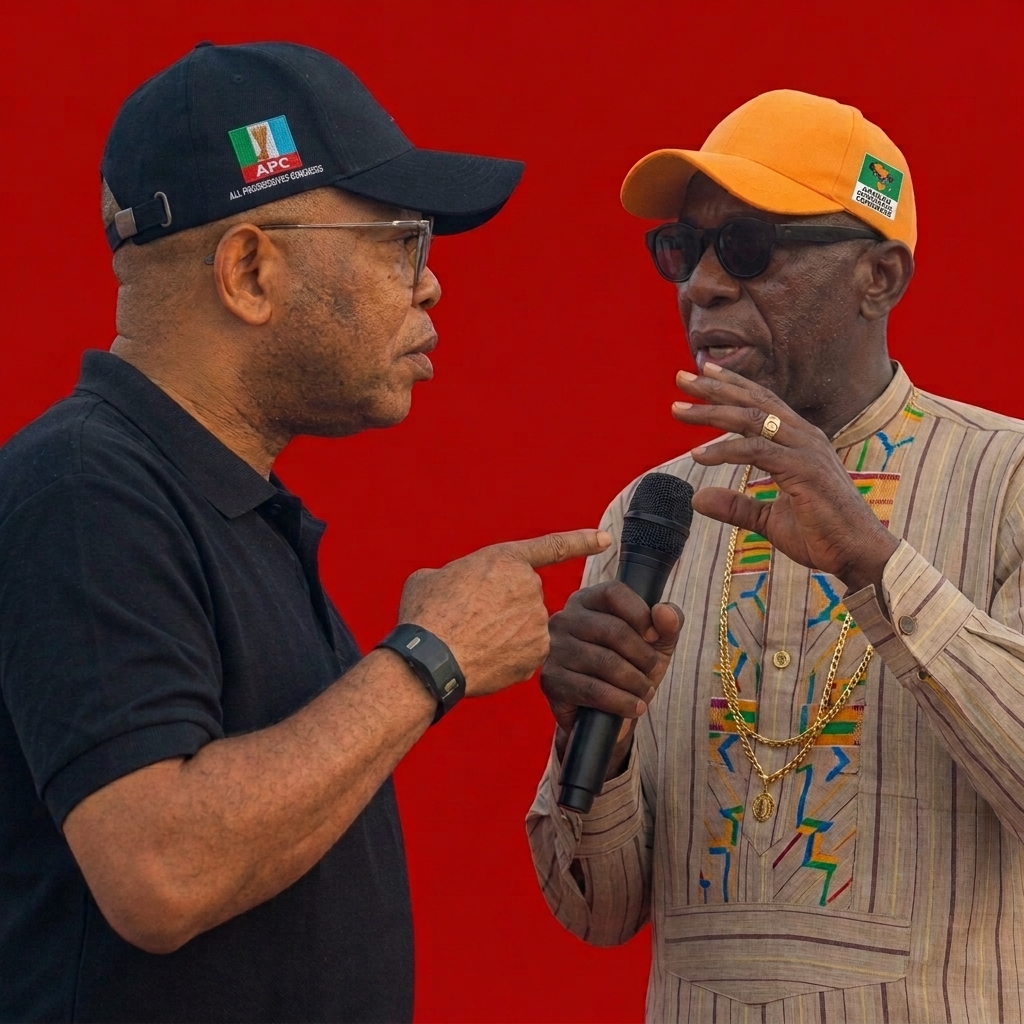
At the inauguration of the APC Presidential Campaign Council in Abuja on October 14, Shettima questioned Atiku’s understanding of economic management, claiming that the former vice president was trained at the Kano School of Hygiene as a Duba-gari, a Hausa term associated with municipal sanitation inspector, also referred to as Wole-Wole in Yoruba.
Describing Atiku as a “voodoo economist”, Shettima argued that the ability to collect taxes does not automatically make someone an economic expert. His remarks challenged the opposition to move beyond criticism of the government and explain how its proposed economic alternatives would be financed and implemented.
Shettima specifically questioned Atiku’s proposal for a production-based petrol subsidy, asking who would bear the cost, who would benefit and which competing government priorities might lose funding.
The questions strike at the heart of Nigeria’s economic debate. For decades, petrol subsidies consumed substantial public resources, while successive governments struggled to fund infrastructure, healthcare, education and other essential services adequately. Tinubu’s decision to remove the subsidy in May 2023 was intended to reduce that fiscal burden and redirect public resources towards national development.
The reform, alongside changes to the foreign exchange system, marked a significant departure from previous economic policies. Although the measures contributed to immediate financial pressures on households and businesses, the administration has maintained that addressing these structural distortions was necessary to establish a more sustainable economic foundation.
The central challenge for the government is to ensure that the benefits of reform translate into improved living standards, greater investment, employment opportunities and stronger purchasing power for Nigerians.
Shettima’s intervention therefore raises a pertinent question for the opposition: would a return to extensive fuel subsidies offer a sustainable solution, or would it recreate the fiscal pressures that the Tinubu administration seeks to overcome?
Any alternative subsidy proposal must be assessed on its funding arrangements, beneficiaries, economic effects and implications for public spending. Equally, the government must demonstrate that its own approach is delivering measurable benefits to citizens.
The Vice President’s criticism has also placed renewed political scrutiny on Atiku’s qualifications to become president. However, constitutional eligibility is distinct from the debate over professional background and economic competence. The more substantive question is whether each candidate can present an alternative credible and financially sustainable programme for managing Nigeria’s economy.
Meanwhile, former Kano State Governor Rabiu Musa Kwankwaso, the vice-presidential candidate of the Nigeria Democratic Congress (NDC), has hit hard on Atiku and rejected suggestions that his party should withdraw from the 2027 presidential race in favour of the African Democratic Congress (ADC). Kwankwaso is running alongside Peter Obi, the NDC’s presidential candidate.
Kwankwaso accused the ADC Presidential Campaign Council of launching unnecessary attacks against him, Obi and the NDC instead of concentrating on its own candidate and policy proposals. He also dismissed allegations that his political position was intended to benefit Tinubu.
“We will not withdraw our candidature for the ADC or any other party. We remain confident in our capacity, competence, and readiness to lead Nigeria,” Kwankwaso declared.
The dispute followed criticism from the ADC campaign council over Kwankwaso’s call for Atiku to step aside for Obi. Kwankwaso, in turn, urged the ADC to focus on responding to Shettima’s criticisms of Atiku, especially after calling him “Wole-Wole”, or sanitary inspector.
While the disagreements underscore the political calculations surrounding the opposition’s presidential ambitions, the larger national question remains the economic direction Nigeria should pursue.
For the APC, the 2027 election offers an opportunity to defend Tinubu’s reform programme and argue that difficult but necessary policy decisions should be judged by their long-term outcomes rather than by their immediate unpopularity.
The administration can point to the objectives of subsidy removal and foreign exchange reform: easing pressure on public finances, improving market transparency, reducing distortions and creating conditions for greater private-sector investment. Whether those objectives are fully achieved will depend on implementation, fiscal discipline, productivity growth and the government’s ability to cushion vulnerable households.
Opposition candidates, for their part, must explain whether they intend to retain the core reforms, modify them or reverse them—and provide credible evidence of how their alternatives would improve economic conditions without introducing new fiscal risks. Promising to reduce petrol price or restore subsidy without defining how, will amount to playing to the gallery and what Shittima calls “voodoo economy”.
Ultimately, the 2027 presidential contest will offer Nigerians an opportunity to assess competing economic philosophies and their practical implications. Tinubu’s case rests on the argument that confronting entrenched economic distortions is essential to building a stronger and more sustainable economy. His opponents must demonstrate that their alternatives can achieve that objective while delivering relief and opportunity to ordinary citizens.
The decisive debate, therefore, should not be about riding onon the anger of some Nigerians. It should be about which policies can create jobs, strengthen domestic production, improve public services and establish lasting economic stability for Nigeria, better than what Tinubu has achieved in the last three years.