
Judicial Independence Under Threat as Political Forces Target Edo Chief Judge – Coalition for Justice Reform
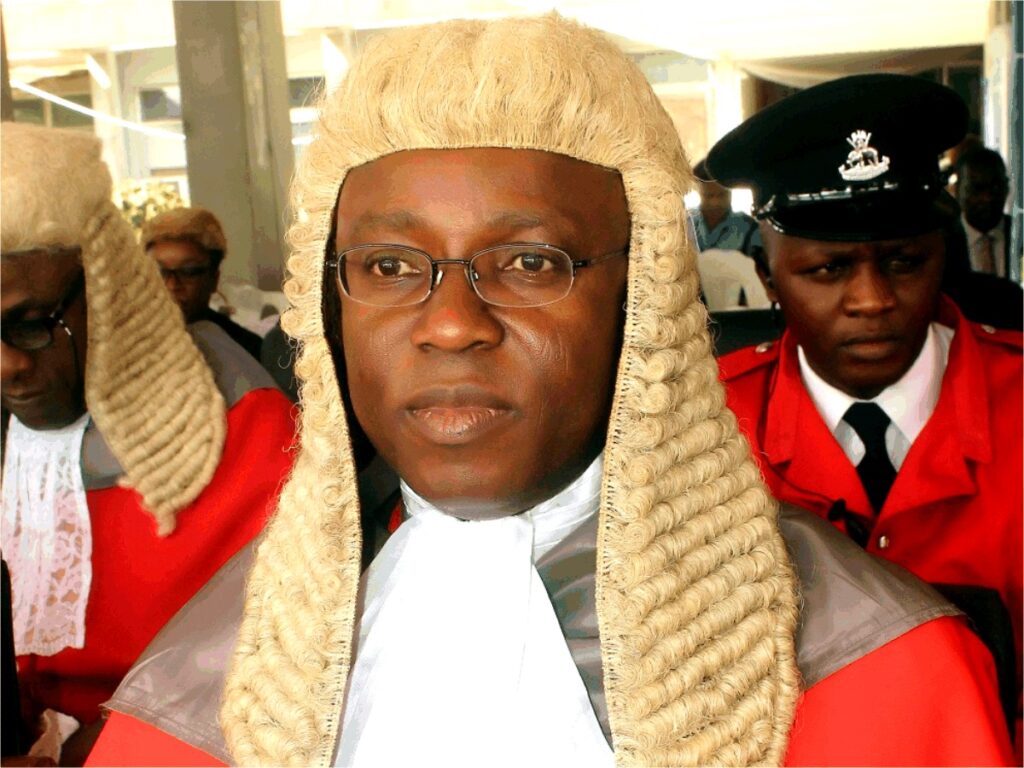
Justice Okungbowa
By Arit Mbeh
The Coalition for Justice Reform has come to the defence of the Chief Judge of Edo State, Justice Daniel Okungbowa, dismissing allegations and narratives surrounding his handling of judicial appointments and claims of financial misconduct as unfounded and politically motivated.
In a statement issued in Abuja on June 10, 2026, the coalition described reports suggesting that Justice Okungbowa influenced judicial processes in Edo State as false and misleading.
The group maintained that the Chief Judge has merely insisted on compliance with established procedures governing appointments within the judiciary.
According to the coalition, attempts to portray the Chief Judge’s adherence to due process as bias amount to a deliberate distortion of facts. It argued that the ongoing reconstitution of the Edo State Customary Court of Appeal is subject to constitutional and regulatory provisions that cannot be bypassed.

The group explained that following the re-enactment of the law establishing the Customary Court of Appeal, all serving High Court judges in the state are eligible for consideration as President of the Customary Court of Appeal. It added that appointments must pass through the Judicial Service Commission and the National Judicial Council before any final action can be taken by the governor.
“The Chief Judge does not interfere; he is simply following due process,” the coalition stated, warning that any attempt to circumvent established procedures could violate National Judicial Council guidelines.
The coalition also questioned reports purporting to reveal details of a meeting involving judges of the Edo State High Court, describing the circulation of such accounts on social media as unprecedented and raising concerns about the motives behind the disclosures.
According to the group, the controversy surrounding judicial appointments has attracted the attention of political interests within the state who are opposed to the strict application of due process.
The coalition alleged that the ongoing attacks against the Chief Judge form part of a broader campaign sponsored by political elements seeking to pressure judicial authorities and influence outcomes that should ordinarily be determined through constitutionally prescribed procedures.
Beyond the appointment controversy, attention has increasingly focused on allegations that the Economic and Financial Crimes Commission (EFCC) is investigating Justice Okungbowa over the alleged diversion of ₦6 billion earmarked for the Edo State Judiciary.
The allegations, which have circulated widely online, claim that funds allocated for judicial capital projects were diverted and that investigators are examining the Chief Judge’s financial records and asset declarations.
However, available budget figures have raised significant questions about the credibility of the claims.
Midwest Herald findings indicate that the approved 2026 budget for the Edo State Judiciary stands at approximately ₦300 million, far below the ₦6 billion figure repeatedly cited in the allegations.
This discrepancy has become a central point in the defence mounted by supporters of the Chief Judge.
Investigations further suggest that while the judiciary initially proposed a budget of about ₦6 billion for 2026, the amount was significantly reduced during the appropriation process by the Edo State House of Assembly, leaving the judiciary with what many stakeholders considered inadequate funding for both capital and recurrent expenditure.
Sources familiar with the matter disclosed that Justice Okungbowa subsequently raised concerns with the state government over the reduction and the challenges it posed to the effective operation of the courts.
According to the sources, the governor acknowledged the concerns and assured the judiciary that its request would be considered and accommodated through a supplementary budget.
Critics of the allegations argue that this distinction is crucial, noting that a proposed budget is not equivalent to funds released or placed under the control of a government institution.
They contend that those making the allegations have yet to explain how an official could have diverted funds that were neither appropriated nor disbursed as claimed.
While no official findings have been released by the EFCC regarding the allegations, the controversy has generated concern among members of the legal community.
Some senior lawyers have warned against what they describe as a growing trend of sponsored smear campaigns targeting judicial officers, arguing that unverified accusations can undermine public confidence in the justice system and weaken judicial independence.
At the same time, legal observers note that allegations involving public officials should be subjected to proper investigation and verification.
They emphasize that accountability and judicial independence are not mutually exclusive and that any claims of wrongdoing must be supported by credible evidence rather than speculation.
For now, the defence mounted by the Coalition for Justice Reform has brought renewed attention to apparent inconsistencies in the allegations against Justice Okungbowa.
Until investigative authorities present verifiable findings, questions are likely to remain over both the claims themselves and the motivations behind their circulation.
What is clear, however, is that the debate has extended beyond allegations of financial misconduct to broader concerns about due process, judicial independence, and the role of political interests in the administration of justice in Edo State.