
FG Seeks Stronger ECOWAS Partnership to Address Health Workforce Shortages
By Correspondent
The Federal Government has called for stronger regional cooperation among Economic Community of West African States (ECOWAS) member countries to harmonise the training, accreditation and retention of health professionals, as part of efforts to strengthen healthcare delivery across West Africa.
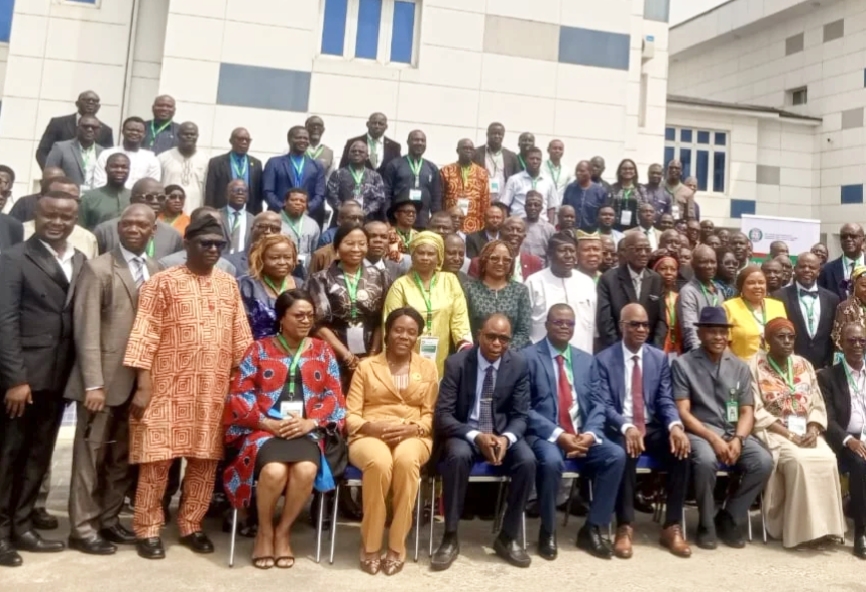
Coordinating Minister of Health and Social Welfare, Prof. Muhammad Ali Pate, made the call on Monday at the 11th Statutory Meeting of the Regional Council for Health Professionals Education in Abuja.
Pate, who was represented by the ministry’s Director of Health Planning, Research and Statistics, Dr. John Ovuoraye, said developing a competent, resilient and adequately distributed health workforce was critical to addressing the growing healthcare challenges confronting the sub-region.
He identified emerging infectious diseases, non-communicable diseases, health emergencies, manpower shortages and the increasing migration of health professionals as major challenges requiring coordinated regional intervention.
According to him, the effectiveness of healthcare systems depends largely on the availability, competence and professional standards of their workforce, making investment in health education and capacity development a strategic necessity.
The minister commended the West African Health Organization (WAHO) for its efforts towards strengthening regional cooperation and harmonising the education and professional standards of healthcare workers across member states.
He urged the Regional Council to intensify efforts towards developing competency-based curricula, strengthening accreditation and quality assurance mechanisms, promoting mutual recognition of professional qualifications and improving faculty development and institutional collaboration.
Pate also advocated the integration of research, digital health technologies, artificial intelligence and innovative teaching methods into health professionals’ education to prepare graduates for the changing demands of modern healthcare delivery.
He noted that Nigeria had placed human resources for health at the centre of the Federal Government’s Renewed Hope Agenda and ongoing health sector reforms.
He said the government remained committed to strengthening training institutions, improving professional standards, tackling workforce shortages and unequal distribution, as well as creating better working conditions and career development opportunities for healthcare professionals.
The minister stressed that the objective should not merely be to increase the number of health professionals but to ensure that they possess the appropriate skills and competencies and are deployed equitably to areas where their services are most needed.
Pate reaffirmed Nigeria’s commitment to working with WAHO, ECOWAS member states, professional regulatory bodies, academic institutions and development partners to advance regional integration in health professionals’ education.
He urged participants to assess existing achievements, identify outstanding challenges and adopt practical, measurable and time-bound strategies for accelerating the harmonisation process.
According to him, the success of the meeting would ultimately be determined by effective implementation of its resolutions, stronger institutional partnerships and measurable improvements in the quality of health professionals’ education.
Earlier, the Head of Training and Human Resources for Health at WAHO, Prof. Joseph Olorunda, explained that the Regional Council for Health Professionals Education was established in 2012 through a resolution of the ECOWAS Assembly of Health Ministers at Conakry, Guinea.
He said the council’s membership structure was subsequently modified in 2020 to strengthen its regional mandate and operational effectiveness.
Olorunda described the council as the regional institution responsible for accrediting training programmes for different categories and disciplines of health professionals across ECOWAS member states.
He said its membership comprised accredited West African professional colleges, deans of health sciences faculties, the African and Malagasy Council for Higher Education (CAMES), as well as national academic and professional regulatory bodies.
Other relevant stakeholders, he added, could be co-opted when necessary, while WAHO serves as the council’s secretariat.
He explained that the council was mandated to establish and periodically review training standards, ensure that curricula conform to agreed regional requirements, accredit health professionals’ training programmes and institutions in collaboration with relevant authorities, and advocate stronger government commitment to professional education.
Olorunda disclosed that the Abuja meeting would examine draft guidelines for harmonising university education systems across the ECOWAS region.
Participants would also review the ECOWAS framework for the recognition and establishment of equivalence of health professionals’ certificates, alongside the roadmap for developing and training the region’s health workforce.
Other key issues scheduled for deliberation include criteria for recognising equivalent professional qualifications and recommendations for improving the council’s operations.
He said WAHO would continue to promote coordinated regional efforts to train, develop, motivate and retain health professionals, stressing that a properly integrated health workforce was essential to achieving Universal Health Coverage.
According to him, WAHO’s broader objectives include facilitating cross-border mobility of health professionals, promoting the exchange of skills and knowledge, strengthening training-of-trainers programmes and establishing joint research networks.
He maintained that the recognition and equivalence of professional qualifications among ECOWAS countries would remove unnecessary barriers to professional mobility, encourage knowledge transfer and strengthen the capacity of healthcare systems across West Africa.
The initiatives, he said, were designed to deepen regional cooperation and achieve greater integration of health professionals’ education, training and services across the ECOWAS community.