
Edo APC Primary: How Allegations of Imposition, Ethnic Sentiment, and Hate Campaigns Shaped Ize-Iyamu’s Victory
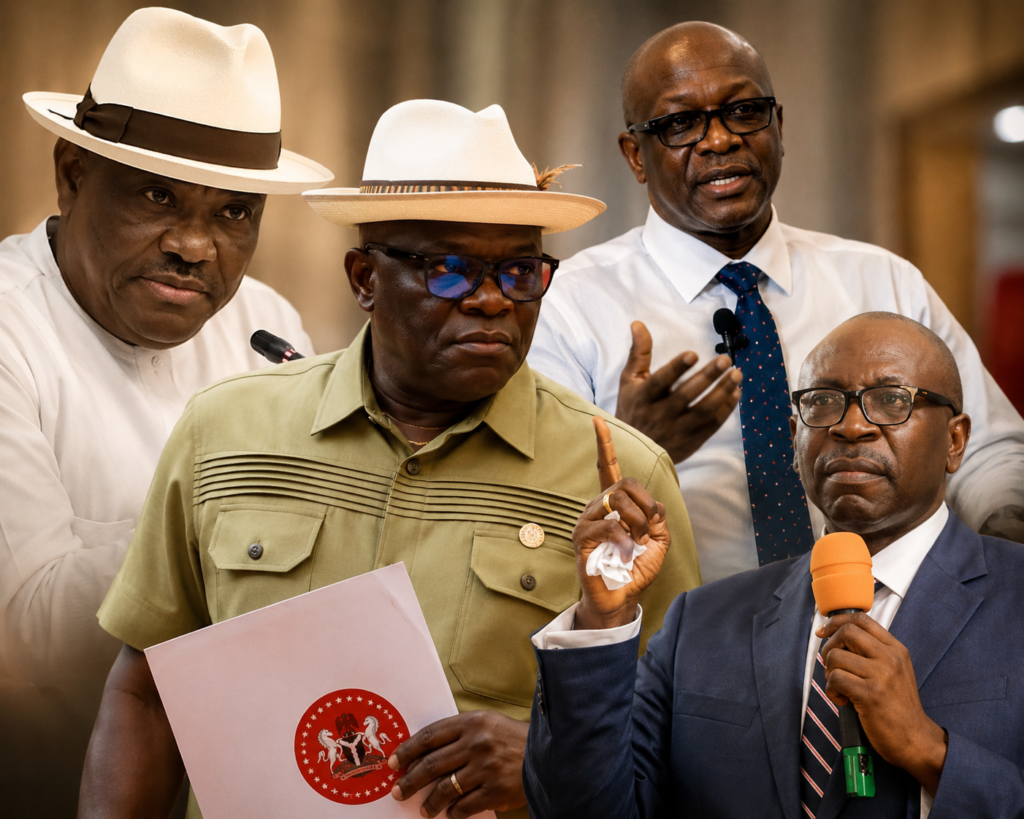
Wike, Imasuen, Ogbeide-Ihama, Ize-Yamu
By Arit Mbeh
The All Progressives Congress (APC) primary election for the Edo South Senatorial District was conducted across several wards in Oredo Local Government Area, with three major aspirants contesting for the party’s ticket.
The contestants were the incumbent senator representing Edo South, Neda Imasuen; former Edo State governorship candidate, Osagie Ize-Iyamu; and former House of Representatives member, Omoregie Ogbeide-Ihama.
The primary, however, ended in controversy after two different results emerged from separate electoral panels.
In the result declared by APC Election Returning Officer, Abubakar Mohammed Kabiru, Ize-Iyamu secured a landslide victory after defeating his rivals across the 77 wards in the seven local government areas that make up Edo South Senatorial District.
According to Kabiru, Ize-Iyamu polled 33,399 votes to emerge winner, while Omoregie Ogbeide-Ihama secured 12,560 votes and Senator Neda Imasuen received 5,107 votes.
Reports from party members and observers indicated a large voter turnout across the district, with APC supporters seen queueing at wards in Oredo, Egor, Ikpoba-Okha, Ovia North-East, Ovia South-West, Uhunmwonde and Orhionmwon local government areas.
The high participation was believed to be linked to the controversies surrounding the campaigns of Ize-Iyamu and Ogbeide-Ihama.
While officials of the Independent National Electoral Commission (INEC) were reportedly present in some wards, they were absent in others.
In a dramatic twist, another result was later announced by the Chairman of the Electoral Committee Panel, Kabiru Ajana, who declared Ogbeide-Ihama winner of the exercise.
According to Ajana, Ogbeide-Ihama scored 27,154 votes to defeat Imasuen, who polled 13,580 votes, while Ize-Iyamu came third with 6,785 votes.
The conflicting declarations have deepened tensions within the APC in Edo South, with several party members alleging abuse of party structures, attempts to impose a preferred candidate, and the deployment of divisive rhetoric during the campaigns.
Days before the May 18, 2026 primary, a group identified as “Concerned Members of the APC in Edo South” issued a statement condemning what they described as a directive allegedly issued by the state APC secretary, Lawrence Okah, mobilising party members across local government areas for a solidarity rally in support of an aspirant.
According to the group, the directive, dated May 16, 2026, assigned mobilisation quotas to various LGAs for a rally scheduled for May 17.
The group argued that the action constituted an abuse of office and undermined internal democracy within the party.
“This action constitutes a clear abuse of office and a breach of party neutrality ahead of the primaries,” the statement read.
“The office of the State Secretary is expected to serve all party members impartially, not to be deployed as a mobilisation tool for individual aspirants.
“Such conduct undermines internal democracy, erodes trust in the party structure, and creates an uneven playing field for other aspirants.”
The rally was eventually abandoned hours before it was scheduled to hold.
Political tensions reportedly escalated further following a meeting between some APC leaders from Edo South and Ize-Iyamu, where he was allegedly urged to step down for Ogbeide-Ihama, who was widely perceived by some party members as the preferred aspirant of influential political figures within the state.
Sources familiar with the meeting claimed the delegation conveyed a request allegedly linked to Governor Monday Okpebholo’s political camp, asking Ize-Iyamu to withdraw from the race.
The move was interpreted by many supporters of Ize-Iyamu as an attempt to pressure him into surrendering his ambition in favour of another candidate.
Ize-Iyamu’s refusal to step down reportedly strengthened his support base and fuelled narratives of resistance against political imposition and perceived ethnic marginalisation within Edo South politics.
Sources alleged that members of the delegation included Deputy Governor Dennis Idahosa; former Deputy Governor Pius Odubu; APC state secretary Lawrence Okah; Lucky Imasuen; Benson Edosonmwan; Senator Matthew Urhoghide; and retired General Charles Airhiavbere.
Observers noted the irony that some of the political figures now urging Ize-Iyamu to step down had earlier encouraged him to contest, reportedly as part of efforts to challenge the second-term ambition of Senator Neda Imasuen.
Beyond allegations of imposition, several party members also blamed what they described as aggressive and divisive campaign tactics from supporters of Ogbeide-Ihama for turning sympathy toward Ize-Iyamu.
According to some APC stakeholders, repeated attacks on Ize-Iyamu by elements within the Ogbeide-Ihama camp created the impression of a coordinated hate campaign that alienated undecided delegates and grassroots supporters.
Some party faithful argued that rather than selling their candidate’s strengths, certain campaigners focused excessively on discrediting opponents, particularly Ize-Iyamu, through inflammatory rhetoric, personal attacks and allegations perceived as disrespectful to influential leaders and sections of Edo South.
Political observers said the strategy may have backfired by portraying Ize-Iyamu as a victim of political persecution, thereby energising his supporters and attracting sympathy from neutral party members.
Following the meeting with party leaders, news of Ize-Iyamu’s refusal to step down quickly spread among supporters, further boosting his image as a candidate resisting political pressure.
One youth supporter described him as “a man who refused to trade his conviction for intimidation.”
Analysts believe the perception of external influence also became a major issue in the contest, particularly allegations surrounding the support Ogbeide-Ihama allegedly enjoyed from the Minister of the Federal Capital Territory, Nyesom Wike.
Former APC chieftain Dan Osa-Ogbegie defended Ogbeide-Ihama’s political alliances, arguing that politics naturally involves consultations, relationships and strategic partnerships.
“The desperate attempt by some interests to weaponise the allegation of Nyesom Wike’s support against Ogbeide-Ihama has failed to gain traction among discerning party members,” Osa-Ogbegie said.
“Politics everywhere involves alliances, consultations, relationships and strategic networks.”
However, concerns over Wike’s perceived influence intensified after Ogbeide-Ihama openly acknowledged seeking the minister’s support during his campaign.
“There is nothing wrong in seeking help,” Ogbeide-Ihama reportedly said.
“If meeting Wike can guarantee me the ticket, it is fine by me.”
His comments sparked criticism from some political commentators and party stakeholders, who warned that portraying the contest as being influenced by outside political forces could alienate Edo South voters.
Political analyst Clifford Obazuwa argued that Edo South voters historically resist perceived external imposition.
“Benin people are historically hospitable, but fiercely allergic to the scent of external imposition,” he wrote.
He further warned that repeatedly invoking Wike’s influence risked damaging both Ogbeide-Ihama’s campaign and the minister’s political reputation in Edo State.
Another PDP stakeholder was also quoted as expressing concern that Ogbeide-Ihama’s repeated references to Wike’s influence created the impression that Edo South politics was being controlled from outside the state.
Despite the controversies, supporters of Ize-Iyamu insist his victory reflects widespread grassroots support and public resistance to alleged political manipulation within the APC.
Whether the former governorship candidate can consolidate that support and withstand the legal and political battles likely to follow remains to be seen in the weeks ahead.