
ADC Faces Uncertainty Ahead of 2027 After Leadership Shake-Up
By Arit Mbeh
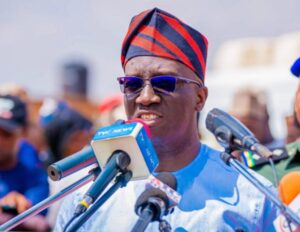
A fresh leadership crisis has erupted within the African Democratic Congress (ADC) after a faction loyal to Dumebi Kachikwu dissolved the National Working Committee (NWC) led by former Senate President David Mark and elected Abdulkadir Bashir as the party’s new national chairman during a special convention held in Abuja on Sunday.
The motion for the dissolution of the Mark-led NWC was moved by the Benue State ADC Chairman, Allias Adiku, and seconded by the Zamfara State Chairman, Kabiru Garuba, before delegates unanimously adopted it through a voice vote.
The convention thereafter approved the dissolution of the former leadership and endorsed a new National Working Committee to oversee the affairs of the party for the next four years. Delegates also ratified the ADC’s amended 2018 constitution as the party’s operational framework.
Abdulkadir Bashir emerged as the new National Chairman, while Johnny Derek was elected Deputy National Chairman and Kennedy Odion became National Secretary. Kingsley Ogah was also elected Chairman of the party’s Board of Trustees.
In his acceptance speech, Bashir called for unity, transparency and inclusive leadership, urging members to work collectively toward rebuilding the party ahead of future elections.
The Katsina-born politician said he had been active in Nigerian politics since 1999 and recalled his role in building the ADC structure across the North-West geopolitical zone.
“I contributed significantly to building the ADC structure in Katsina State and strengthening the party’s presence across the North-West geopolitical zone,” he said.
Bashir blamed the party’s lingering internal crisis on what he described as selfish interests and attempts by some leaders to maintain permanent control of the party structure.
“This is a political party, not a private enterprise. Every political organisation must operate according to established rules, regulations and democratic principles,” he stated.
He maintained that members who resisted injustice within the party remained committed to lawful democratic processes and eventually reclaimed the party structure.
Bashir further disclosed that opposition coalition groups had approached the ADC because of its perceived potential to emerge as a formidable platform capable of challenging the ruling party in future elections.
He appealed to aggrieved members to forgive past grievances and return to the party in the interest of unity and national development.
Political implications for 2027
The latest crisis is likely to deepen uncertainty within the ADC at a critical period when smaller opposition parties are positioning themselves ahead of the 2027 general election.
The dissolution of the Mark-led NWC exposes growing factional divisions within the party and could weaken efforts to build a united opposition coalition capable of challenging the dominance of the ruling All Progressives Congress.
Political observers say the controversy may discourage prospective defectors and influential political figures seeking a stable alternative platform ahead of 2027.
The emergence of parallel leadership claims could also trigger prolonged legal battles over the legitimacy of the party structure, candidate nominations and control of party assets.
For ADC candidates, the internal wrangling may affect grassroots mobilisation, fundraising and voter confidence, especially in states where the party is still struggling to establish a strong political base. Nigerian voters have historically viewed divided opposition parties as less credible and less capable of providing stable governance alternatives.
However, analysts note that if the Bashir-led faction succeeds in reconciling aggrieved members and consolidating party structures nationwide, the ADC could still benefit from growing public dissatisfaction with Nigeria’s major political parties.
Its appeal as a coalition platform for opposition figures may remain attractive, particularly among younger voters and political reform advocates seeking a third-force alternative ahead of 2027.
The outcome of the leadership tussle is therefore expected to play a major role in determining whether the ADC emerges as a serious national contender or remains weakened by internal divisions before the next general election.