
Mass Failures, Accusations of Tribalism Trail Appointment of Permanent Secretaries in Edo State
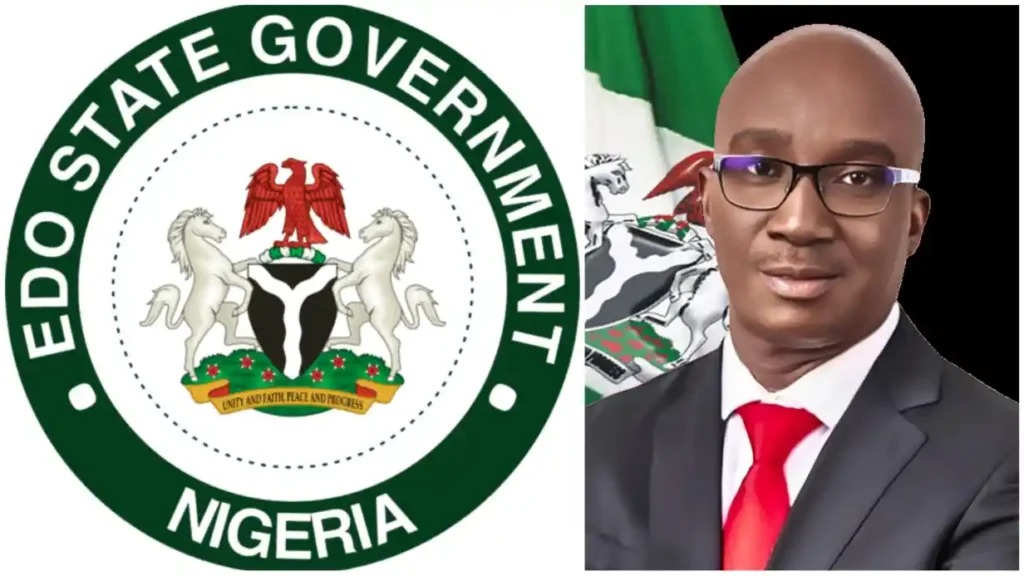
Gov Okpebholo
By Mimi Alekhue
The recent appointment of 20 new Permanent Secretaries in the Edo State Public Service by Governor Monday Okpebholo has generated controversy across the state, particularly among Benins in Edo South Senatorial District, with some critics alleging ethnic imbalance in the appointments.
Some groups from Edo South have protested the appointment of only four Permanent Secretaries from the district, compared to five from Edo North and 11 from Edo Central.
However, the state government said the appointments were part of efforts to strengthen the state’s administrative machinery and improve service delivery, insisting that the successful candidates emerged through a competitive selection process.
The Head of Service, Dr. Anthony Osas Okungbowa, who announced the names of the successful candidates, has defended the process against allegations of imbalance and discrimination against Benins. Responding to questions from Midwest Herald, Okungbowa insisted there was no basis to accuse anyone of wrongdoing, maintaining that the exercise was conducted transparently.
According to him, “The appointments of Permanent Secretaries are traditionally Civil Service appointments. I used the word ‘traditionally’ deliberately because the provisions of Section 208(2)(c) vest the Governor of the State with unfettered discretion in terms of appointments into this very important position in government.
“The implication of this provision is that the Governor can appoint Permanent Secretaries from outside the service and would be entitled to do so.
“However, some civil service scholars (my humble self inclusive) have consistently argued that appointments into Permanent Secretary positions, having been recognised over time as the top echelon of the civil service hierarchy, should be made from within the service in line with established and time-honoured civil service principles, chief among which is merit.
“But there are other principles such as the federal character, which some authors have, in the case of state appointments, extrapolated to what they call ‘state character’. A third important principle is inclusiveness.”
Okungbowa explained that merit was the overriding criterion adopted for the exercise.
“In view of the not-so-good experience we had with the last appointment, we recommended, and the Governor accepted, that merit be the most important consideration in this exercise.
“Accordingly, we agreed to have the candidates write an examination. Because of the need to be conscious of perceptions like the ones we are currently dealing with, government engaged an external body to conduct the examination. As soon as the results reached me, I caused them to be released publicly, taking care not to display the names of those who took the examination alongside their scores.
“Unfortunately, performance was quite poor. The best result was, I think, 53 per cent. Many officers scored below 30 per cent. This has created another challenge, which we are currently trying to address by examining the root causes of the dismal performance.
“Since we needed to fill 20 positions, we were forced to lower the cut-off mark to 42 per cent to get 28 officers for the interview stage, from whom the Governor selected 20 to fill the available positions. The only exception was the visually impaired officer who was included in the interest of inclusiveness.”
The Head of Service maintained that there was no deliberate attempt to favour any part of the state.
“I am certain that no senatorial district was deliberately favoured over the others,” he said.
A cross-section of stakeholders has expressed concern over what they described as the declining quality of the Edo State Civil Service following the poor performance of directors who sat for the examination.
“I must mention, at this point, that at the interview stage, the Governor insisted on merit and rejected all entreaties and appeals to get candidates who did not pass the exam on board. There were some LGAs whose candidates did not pass the exam and it would have been unfair to bring those candidates on board in an appointment process that was merit-driven.”
Following Okungbowa’s revelation, many observers argue that inadequate competency training may have contributed to the poor performance of the candidates. They believe this is the root cause of the mass failure.
However, Okungbowa disagreed, while praising the John Odigie-Oyegun Public Service Academy in Benin City.
“As a matter of fact, at no time in the past has the service undergone training and manpower development better than it has under my leadership. To set the pace properly, the last administration built the John Odigie-Oyegun Public Service Academy to provide a structured training platform for civil servants. The Academy was utilised to its fullest capacity in doing this, and this administration has followed suit.
“The Academy remains one of the best training institutions for civil servants in the country. We have had a few hitches lately, but we have always paid close attention to the training of our officers. So, it isn’t, in my humble opinion, for lack of training that the performance was that dismal.”
He acknowledged there were complaints. “Some complained about their computers and some other issues. So, we are having to rely on data supplied by the Civil Service Commission.
“As a service, we prioritise the use of data in decision-making, and this exercise has provided a veritable database for us to make informed decisions. We will get to the root of the matter.”
A Midwest Herald investigation revealed that some of the newly appointed Permanent Secretaries reportedly scored as low as 32 per cent in the examination, a claim that appears consistent with the Head of Service’s disclosure that the cut-off mark was lowered to accommodate enough candidates for the interview stage.
Many observers argue that 50 per cent is generally regarded as the minimum pass mark, making appointments of candidates who scored 32 per cent difficult to justify. In the wake of the mass failures, a group of retired technocrats in the state believes the examination should have been cancelled and conducted afresh to ensure a level playing field.
However, while defending the decision to proceed with the appointments, Okungbowa said Governor Okpebholo acted within his constitutional powers.
“Overall, His Excellency took the decision to go ahead, and it was at his absolute discretion to do so,” the Head of Service said.
The appointees are Otamere Gina, Irusota Pauline Ighoomo, Bamaiyi Rebecca Osedebamen, Anelu Wilson Oziegbe, Ukpebor Ehiabhi Jonathan, Erhaze Samson, and Sadoh Martins Imonmion. Others are Otamere Enodolomwanyi, Enabulele Abdulfatai Ikponmwonsa, Akhimien Emmanuel Eboreime, Obanor John Osarobo, Aliu Nurudeen Obogai, and Balogun Aiyegbeni Aina. The list also includes Imoisili Edith Amenawon, Momoh-Odihinrin Justina Akhazimeye, Ozigbo Osayande Duke, Eigbiremolen Godson Tunde, Efe-Amenze Agharese Patricia, Ohunyon Ernest Ehikioya, and Omosan Melody Ismaila.