
After Dan Orbih: Who Will Bell The Political Cat in Edo PDP?
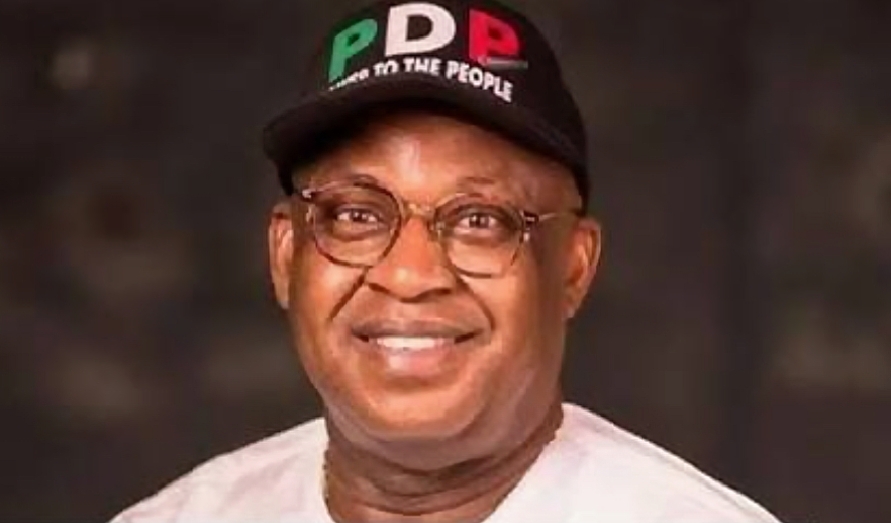
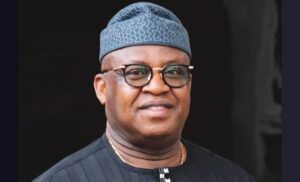
Late Dan Osi Orbih
Editorial Position
The death of Chief Dan Osi Orbih has done more than terminate the political career of one of Edo State’s most enduring opposition figures. It has exposed, with uncomfortable clarity, the frightening leadership vacuum inside the Peoples Democratic Party (PDP) and the existential question confronting the party in a state where its political fortunes have been in steady decline.
For almost three decades, Orbih stood firm, unlike the rolling stone politicians.
Since the return to democratic rule in 1999, he remained one of the few constant features of Edo’s turbulent political landscape. Governors came and went. Political parties changed colours. Politicians crossed ideological and partisan lines with remarkable ease. Alliances were forged in the morning and dismantled before sunset.
Orbih survived them all. Orbih should example.
He was, for better or worse, the institutional memory of the Edo PDP and opposition politics.
His death on August 31, 2026, at the age of 64, has therefore created a vacuum that is unlikely to be filled merely by electing another state chairman. Orbih was a political organiser, strategist, negotiator and combatant whose influence extended beyond the formal structures of the PDP. He was also one of the strongest political allies of rambunctious Nyesom Wike—minister of the Federal Capital Territory, who mourned him as “one of the biggest trees in the political forest of Edo State.”
The tragedy for the PDP is that Orbih did not die at the end of a political journey. He died in the middle of a political project. Before he traveled to England for his daughter’s graduation and probably for medicals, he was midwifing the restructuring of PDP in Edo State towards the 2028 governorship and 2031 presidential elections, since its bruising defeat in the 2024 governorship election.
His eyes were already on 2028 and, beyond that, the 2031 presidential election, believed to be Wike’s sublime ambition. Now, the man who was attempting to rebuild the house is no longer there.
And the house that was divided is now, divided with structural cracks. The question confronting the PDP is therefore brutally simple: Who now has the political weight to bell the cat?
More importantly, who can lead a party whose two dominant political traditions have spent years fighting for control, while some of the very politicians who could have constituted the next generation of leadership have either defected to the APC or migrated into the emerging opposition platforms, the ADC and NDC?
This is where the post-Orbih PDP story becomes more than a succession issue. It becomes a struggle for political survival of his followers and none followers.
Orbih’s political identity was inseparable from what became known as the Legacy PDP—the old structure that considered itself the authentic custodians of the party in Edo. But the arrival of former Governor Godwin Obaseki in the PDP in 2020 changed that equation dramatically.
Obaseki came into the party as a sitting governor after his acrimonious exit from the APC. His entry brought enormous political capital, but it also introduced a new power centre into a party that already had an established hierarchy.
The old PDP structure, represented politically by Orbih and his allies, believed it had built the party and therefore deserved to retain substantial control. The Obaseki camp, on the other hand, came with the machinery of a sitting governor and the confidence that electoral power naturally conferred political authority, and rampaging foot soldiers who lacked emotional intelligence.
What followed was not merely a disagreement over party administration, but a battle for ownership of everything and discarding of agreements. By the time the PDP began preparing for the 2024 governorship election, the fault lines were impossible to conceal.
The Orbih/Wike-aligned Legacy camp and the Obaseki/Asue Ighodalo camp were effectively operating within the same party but from different political realities. The governorship primary that produced Ighodalo prepared PDP for the undertakers.
By election day, the PDP’s internal contradiction had become an electoral liability.
Monday Okpebholo of the APC was declared winner by the Independent National Electoral Commission with 291,667 votes, while Ighodalo received 247,274.
The numbers told one story. The political behaviour within the PDP told another. A party that needed to mobilise every influential elements within its own structure to defend its votes, questioned its candidate and the process that produced him.
The PDP did not merely lose an election. It lost the appearance of a united political organisation. Since then, the wounds never healed. In 2025, the crisis hardened into competing party structures.
The faction aligned with the Obaseki camp produced Tony Aziegbemi as chairman, while the Orbih/Wike-aligned Legacy faction held a parallel congress and produced Nosa Ogieva. The two anointed chairmen have displayed poor leadership experience to retrieve the PDP from precipice, which left Orbih to step into their shoes once again.
The latter congress, attended by 576 delegates drawn from the state’s 192 wards, was presented by the Orbih camp as an attempt to rebuild and reposition the party.
In truth, Orbih was still fighting when he died. Months before his death, he was publicly urging the PDP to rebuild its structure and regain electoral relevance. His death has now transformed that battle into a succession contest. And the first uncomfortable fact confronting those who want to inherit his political space is that, many of the obvious successors are no longer in the PDP.
The natural successor to Orbih is Omoregie Ogbeide-Ihama, a former member of the House of Representatives and one of the most recognisable political figures in Edo South PDP, who has defected to APC.
Ihama’s interest and unfulfilled agreement with Godwin Obaseki caused the division that finally killed the party.
Ordinarily, Ogbeide-Ihama has the attribute that could have made him a credible successor to Orbih: legislative experience, political visibility and an established identity within the old PDP structure.
He could have been a bridge between generations.
He could have been one of the politicians capable of translating the old PDP’s organisational strength into a new political coalition. But not anymore. Many of the leftover members see him as an undertaker who dismembered PDP for person political gain.
In the circumstances created by Orbih’s death, it is not difficult to see why many would regard Ogbeide-Ihama as one of the politicians who could have been a ready replacement for the late PDP warhorse.
But he walked away.
In the build-up to the 2024 governorship election, Ogbeide-Ihama moved towards the APC and was openly associated with Monday Okpebholo’s campaign. At one point, Okpebholo announced him as running mate before the APC replaced him with Dennis Idahosa. Contemporary reports described the move as a major threat to the PDP’s structure because of Ogbeide-Ihama’s standing within the party’s Legacy camp.
In May 2026, Ogbeide-Ihama emerged as the APC’s candidate for the Edo South senatorial district, in an election that had incumbent Senator Neda Imasuen and former governorship candidate Osagie Ize-Iyamu in the party primary. He reportedly received 27,154 votes against Imasuen’s 13,580 and Ize-Iyamu’s 6,785.
The PDP saw this development as more than a defection. To them, it is a political indictment of the party’s failure to retain and nurture its own succession pipeline. A man who might once have been part of the answer to the question of who comes after Orbih is now seeking a Senate seat under the ruling APC.
That is the story of the PDP in miniature. In summary, its leaders are ageing. Its factions are multiplying. Its younger political figures are being recruited by rival parties. And its political territory is being invaded from both sides.
The APC is harvesting defectors; the ADC is attracting former PDP leaders and candidates; the NDC is becoming another destination for politicians who have lost faith in the traditional opposition arrangement.
Like biblical Israelites, in March 2026, PDP leaders in Edo Central led by Chief Clifford Eineh defected to the ADC. The following months brought further movement. Former PDP governorship campaign Director-General Matthew Iduoriyekemwen emerged as the ADC’s Edo South senatorial candidate, while other former PDP-linked politicians secured tickets on the platform.
The following June, three Edo State House of Assembly members—including one who moved from the PDP—joined the NDC, further strengthening the party’s claim to a significant opposition presence in the state.
The message to the PDP could hardly be clearer—its former members are not waiting for the party to resolve its problems, they would rather build new homes.
Today, the PDP must compete with the APC for power while simultaneously fighting the ADC and NDC for the opposition space. The political marketplace has become crowded.
The consequences of the Obaseki years have also become more complicated. The former governor’s political structure, which once gave the PDP enormous organisational power, has not remained intact within the party after his dramatic departure from office.
Majority of his political associates have deserted him and his candidate, Asue Ighodalo shortly after Okpebholo’s emergence as governor. They are search of ‘promise-land’, roaming the political desert of ADC, NDC and APC. Others have simply disappeared from the frontline watching from safe distance like Obaseki himself.
Thus, both wings of the old Edo and new PDP are weakened. Without Orbih, Legacy structure has lost whatever advantage to death.
That is why the search for Orbih’s successor could be fiercer than the battles that produced the Legacy PDP and the rival Obaseki structure that eventually failed Ighodalo.
The coming struggle will not simply determine who controls the PDP secretariat, it could determine who controls the opposition narrative in Edo State.
Whoever emerges will have to deal with difficult challenges of uniting the Legacy camp with the badly damaged Obaseki structure.
Can the person negotiate with Wike without making the Edo PDP appear to be an extension of Wike’s national political machinery?
Can the person engage Obaseki’s former allies without reopening old wounds?
Can the person compete with the APC’s access to government and resources?
And can the person prevent the ADC and NDC from becoming the new homes of every politician dissatisfied with the APC?
Orbih was not powerful merely because he occupied an office. He was powerful because he had accumulated political capital over decades. He knew the people. He knew the wards. He knew the politicians. He knew the factions. He knew how to negotiate. He also knew how to fight.
The person who succeeds him will have to build that kind of political capital from scratch.
And that is why the succession contest could become vicious.
The danger is that the PDP could repeat precisely the mistake that brought it to this point.
Instead of searching for a leader capable of building a coalition, the party could begin another war over which faction gets to own the party.
Another Legacy versus Obaseki battle. Another parallel executive. Another disputed congress. Another primary that produces a candidate without producing unity and another election fought as much against internal enemies as against the opposition.
If that happens, the PDP’s 2028 ambition could be over before the campaign begins.
The 2028 governorship election will be the first serious test. But the real test begins now.
The PDP must decide whether it wants to remain a collection of historical factions or become a modern opposition party.
The recent movements demonstrate how fluid the terrain has become. Former PDP figures are moving to the ADC; some ADC politicians are moving to the NDC; and politicians from both PDP and ADC have also entered the APC.
Politics, in other words, has become a marketplace of opportunity without contiguous ideology. Today, the party that cannot offer political opportunity will lose its politicians. The party that cannot resolve its internal contradictions will lose both. On the flip side, the party that cannot offer a compelling vision will lose its voters.
There will be no easy inheritance for Orbih’s successor. There is no obvious Orbih waiting in the wings. Ogbeide-Ihama has gone to the APC, so too his hope of becoming the governor of Edo State may hang in the balance.
Other former PDP figures are scattered across the ADC and NDC. The old Obaseki political machine has fractured. The Legacy structure has lost Orbih—its principal political anchor.
And the ruling APC is sitting comfortably in government, actively receiving defectors and may harvest more with Orbih’s demise.
This is why the succession struggle will not be an ordinary party contest. It will be a battle for the soul, direction and survival of the Edo PDP.
PDP will need someone who can engage Wike without being owned by Wike. Someone who can engage Obaseki’s political family without becoming an Obaseki proxy. Someone who can face the APC without being consumed by hatred of the ruling party.
And someone who can accept that the ADC and NDC opposition has deprived PDP of exclusivity of opposition territory. However, Edo politics has always produced improbable political figures. The question is whether another Orbih will emerge now, because the political cat is loose.
Dan Orbih carried the bell for nearly three decades. Now the bell has fallen silent. The PDP must find someone strong enough to pick it up.
For the Edo PDP, the age of Orbih is over. The age of succession has begun. And this time, the battle is not merely about who leads the party—it is about whether there will still be a party worth leading when the battle is over.