
Atiku’s Road to Aso Rock: The Mathematics and Sociology of a Credible 2027 Pathway
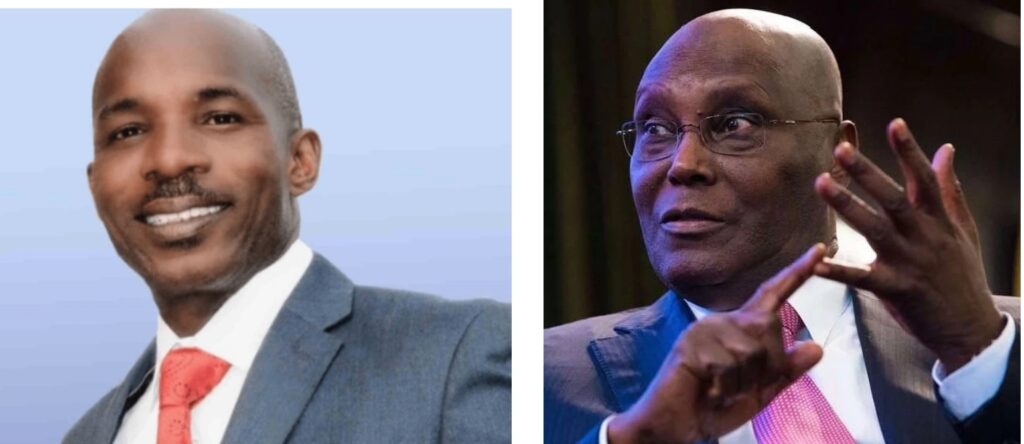
Obaseki-Atiku
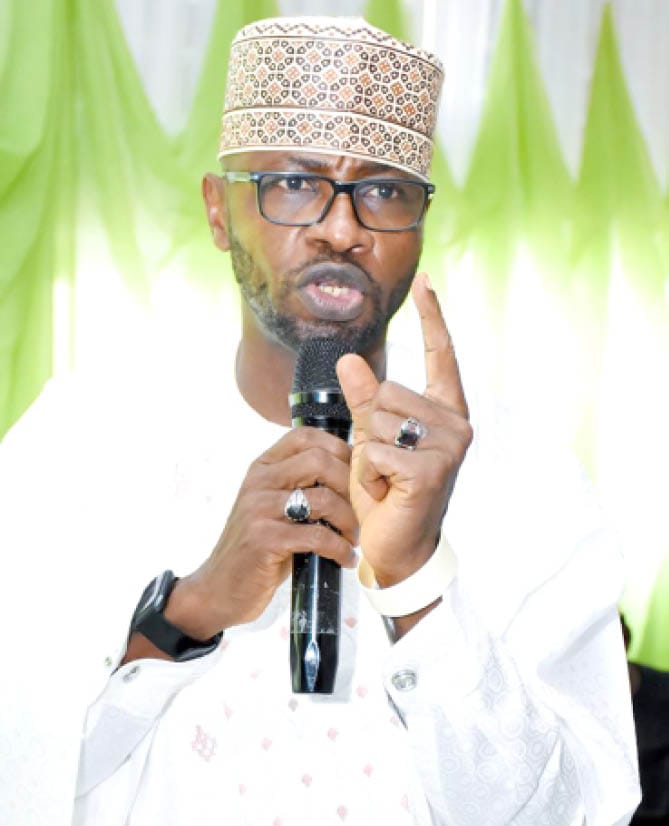
By Dr. Pedro Obaseki
Elections are counted in numbers. But they are created in society. Long before ballots are cast, political choices are shaped in homes, markets, farms, offices, churches, mosques, motor parks and on mobile phones. Citizens do not vote as isolated figures on a spreadsheet. They vote from memory, identity, hope, disappointment and lived experience.
That is why Atiku Abubakar’s pathway to the Presidency in 2027 must be understood in two dimensions: the mathematics of electoral possibility and the sociology of political persuasion.
An Atiku victory is not inevitable. But it is credible, measurable and politically attainable.
The proper starting point is 2023. Bola Tinubu was declared elected with 8,794,726 votes, while Atiku received 6,984,520. The difference was 1,810,206 votes. Atiku therefore approaches the next contest not from political obscurity, but from an established foundation of almost seven million votes. That deficit mattered. But it was not an electoral mountain.
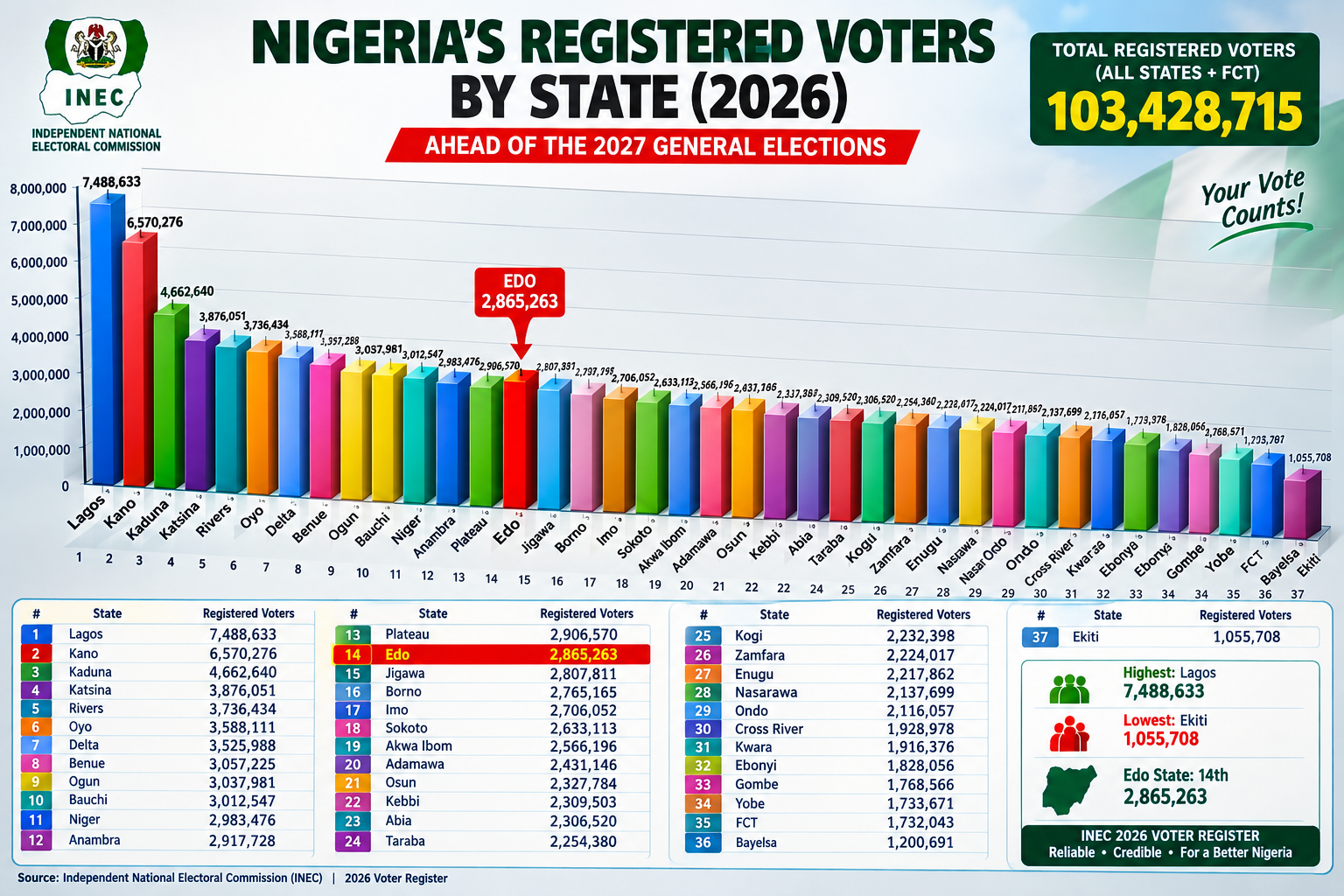
Atiku does not require a miracle. He requires disciplined expansion: retaining his core vote, growing where he is already competitive and persuading a strategically distributed share of Nigerians who voted differently—or did not vote at all. That final category may prove decisive. Only 26.7 per cent of registered voters participated in the 2023 presidential election. Nearly three out of every four stayed away.
The largest available political constituency in Nigeria may therefore be what I call the “Constituency of the Disappointed”: citizens who registered but stayed home, became cynical, felt unsafe or ceased to believe that one ballot could matter.
Our opportunity lies not only in moving votes between candidates. It lies in restoring confidence among Nigerians who have withdrawn from democracy itself. But crude arithmetic must be resisted.
No candidate owns those who previously voted for him. No political party possesses permanent title to any constituency. Governors do not own their states, and political leaders cannot transfer citizens between electoral columns as though voters were delegates at a convention. Every citizen must be persuaded afresh.
Political Alliances Are Negotiated Among Leaders. Electoral Alignments Are Formed Among The People.
This is why the Atiku–Amaechi ticket possesses strategic and sociological significance. Atiku brings a substantial Northern foundation, national recognition, federal experience and relationships across the Federation. Rotimi Amaechi brings Southern and Christian balance, executive experience and a potentially important bridge into the South-South. The ADC has formally submitted both men as its presidential and vice-presidential candidates.
A running mate does not automatically deliver a region. But a presidential ticket communicates meaning. It tells citizens how a candidate understands the country he seeks to govern.
The regional pathway is clear: consolidate the Northeast, compete strongly across the North Central and win decisively in the Northwest; recover substantial support in the South-South, secure meaningful constitutional spread in the Southwest and engage the Southeast with respect—not entitlement.
Nigeria elects Presidents through both arithmetic and geography. A candidate must secure the highest national vote and at least one-quarter of the votes in not fewer than two-thirds of the states and the Federal Capital Territory.
The North provides electoral gravity. The South provides national balance. Neither is sufficient without the other.
A deliberately optimistic permutation illustrates the attainability of the pathway.
Suppose Atiku retains approximately 6.7 million of his 2023 voters, allowing for natural attrition. Suppose he then persuades 900,000 citizens who voted for the APC in 2023, attracts 1.4 million voters from other opposition constituencies, and mobilises another 900,000 Nigerians who did not participate in the previous election. That produces approximately 9.9 million votes—about 1.1 million more than the winning total recorded in 2023.
This is not a forecast. Nor do we assume that 9.9 million votes will necessarily be sufficient in 2027. Turnout may rise, political conditions may change and every candidate will seek to enlarge his own constituency. The permutation establishes a narrower but important point: Atiku’s pathway does not depend upon the wholesale transfer of any single candidate’s electorate.
It can be constructed through four measurable sources: retention of his established base; persuasion of disaffected former APC voters; selective gains across other opposition constituencies; and mobilisation of Nigerians who previously stayed away. We do not require every dissatisfied Nigerian. We require a strategically distributed share of them.
The other task is sociological.
Atiku does not require introduction. His familiarity is the platform upon which trust and national confidence can be rebuilt. His opponents will present repeated candidacies as yesterday’s ambition. We present his experience as preparation for tomorrow’s government.
Atiku possesses the disposition, national reach and economic understanding to transform familiarity into trust, experience into reassurance and a long political journey into a compelling national purpose.
Voters Do Not Elect Résumés. They Elect Futures.
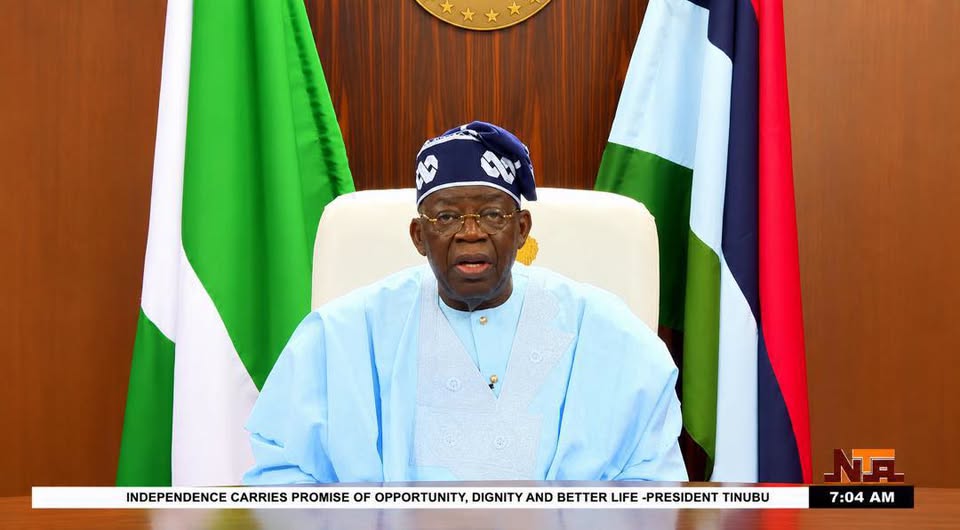
President Tinubu has framed his re-election campaign around continuity and the consolidation of his administration’s reforms. Our answer cannot rest merely upon criticism. It must offer a more believable proposition for security, prosperity, inclusion, restructuring and national renewal.
We recognise that hardship alone will not elect an opposition candidate. Dissatisfaction may weaken an incumbent, but confidence in an alternative must still be earned.
The ADC is more than a coalition of prominent political figures. It has become a national meeting point for Nigerians determined to construct a credible alternative government. Across the party, our candidates constitute the grassroots architecture of the presidential campaign. Every candidate is a presidential organiser. Every supporter is a messenger of the national alignment we are building. Because a campaign that speaks only to its believers is not campaigning. It is rehearsing.
Our case for Atiku does not rest upon entitlement, longevity of ambition or the assumption that hardship will automatically defeat an incumbent. Rather, it rests more upon an emerging national alignment capable of converting Northern strength into national reach, Southern balance into legitimacy, public dissatisfaction into confidence, organisation into turnout and lawful votes into a protected democratic mandate.
Thus, the Atiku pathway is real. It is measurable. And we are building it.
Atiku does not require an electoral miracle.
He requires a new national alignment—and together, we possess the capacity and discipline to construct it.
-Dr. Pedro Obaseki is a filmmaker, playwright and scholar, a former African Performance Consultant at the Kennedy Center for the Performing Arts, and President of the Filmmakers Cooperative of Nigeria. He has directed three statewide election campaigns in Edo State and served as National Director of Research and Strategy to the 2023 PDP Presidential Campaign Council, and Presidential Media and Campaign Consultant to Atiku Abubakar in 2023.