
“I Acted Under Provocation, Forgive Me” — Oshiomhole Pleads as Senate Distances Itself from NNPCL Criticism
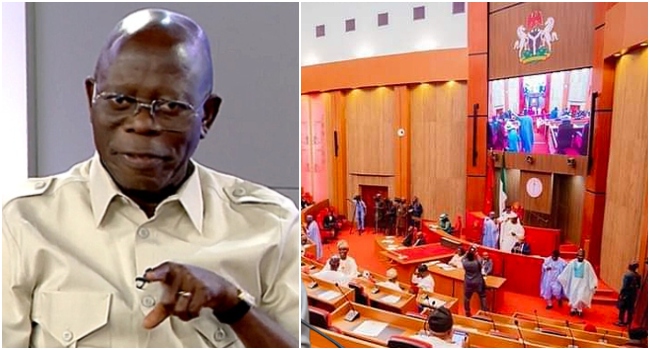
Oshiomhole
By Arit Mbeh
Senator Adams Oshiomhole has indicated his willingness to apologise to the Senate after coming under pressure for describing officials of the Nigerian National Petroleum Company Limited (NNPCL) as “criminals and thieves” during a heated debate over accountability in the oil sector.
The Senate on Thursday formally distanced itself from the remarks, insisting that Oshiomhole’s comments represented his personal opinion and not the position of the National Assembly.
However, the controversy has once again drawn attention to longstanding concerns about transparency, corruption, and financial accountability within Nigeria’s petroleum industry.
The Senate’s intervention came shortly after the Senate Committee on Public Accounts reportedly considered issuing a warrant of arrest against former NNPCL Group Chief Executive Officer Mele Kyari for allegedly failing to honour invitations regarding inquiries into financial irregularities and audit concerns.
While several senators condemned Oshiomhole’s language, critics argue that the focus on his choice of words risks overshadowing more fundamental questions about public accountability. For years,
Nigerians have watched successive investigations into the oil sector generate headlines but produce few meaningful consequences, despite repeated allegations of missing funds, opaque transactions, and weak oversight.
During plenary, Senate leaders emphasised legislative decorum and due process, warning lawmakers against making statements that could damage the reputation of public institutions.
Yet many observers note that public confidence in those institutions has already been eroded by persistent corruption scandals and the perception that politically connected officials are rarely held accountable.
Defending himself, Oshiomhole said he reacted after lawmakers were allegedly accused by NNPCL officials of seeking favours and recommending relatives for employment within the company.
“I acted under provocation because distinguished members were being attacked without any proof of the allegations being made,” Oshiomhole said.
“If it is the view of the Senate that I should apologise, I have no problem with that.”
The former Edo State governor maintained that his comments were intended to defend the integrity of the Senate, arguing that lawmakers had been unfairly portrayed while attempting to scrutinise public finances.
The dispute unfolds against the backdrop of serious concerns raised by the Auditor-General regarding approximately ₦210 trillion in questioned financial transactions linked to the national oil company.
The figure has intensified public demands for transparency, especially in a country where widespread poverty, unemployment, and failing infrastructure coexist with vast oil wealth.
For many Nigerians, the real issue is not whether Oshiomhole’s remarks were too harsh, but whether those entrusted with managing the nation’s resources can convincingly account for public funds.
The controversy highlights a broader challenge facing Nigeria: institutions often move quickly to defend reputations, yet investigations into alleged corruption frequently proceed slowly, leaving citizens with more questions than answers.
As lawmakers debate language and procedure, Nigerians continue to demand something more substantial—credible investigations, transparent audits, and accountability for anyone found to have mismanaged public resources, regardless of status or political connections.