
Senate Clears Tinubu’s Ambassadorial Nominee Amid Sexual Harassment Claims, Oshiomhole Objects
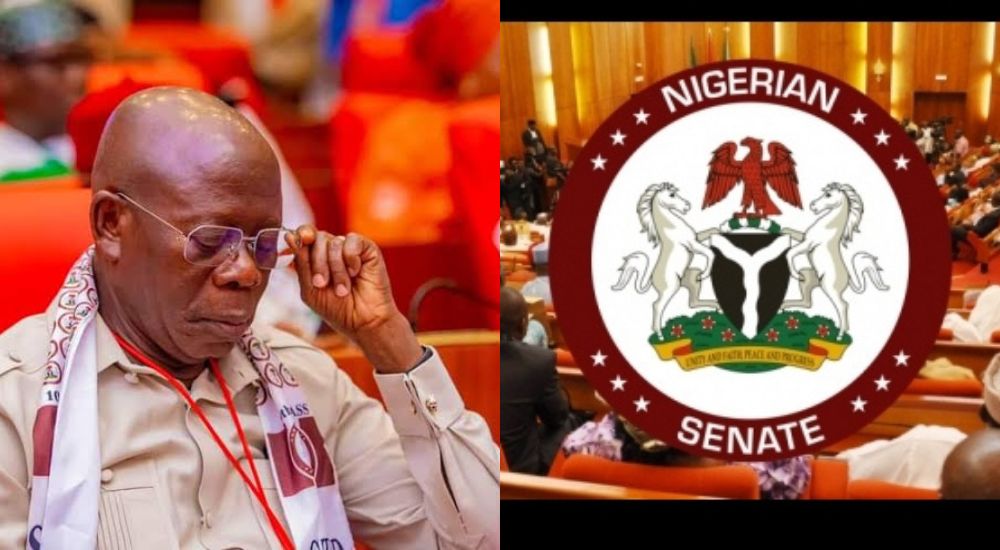
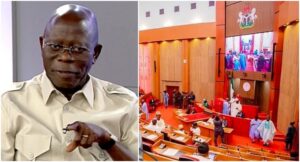
Senator Oshiomhole
By Mimi Alekhue
Despite strong objections from some lawmakers over unresolved sexual harassment allegations, the Senate on Thursday confirmed President Bola Tinubu’s ambassadorial nominee, Prof. Abayomi Fasina, triggering a heated debate over due process, accountability and the treatment of sexual misconduct allegations.
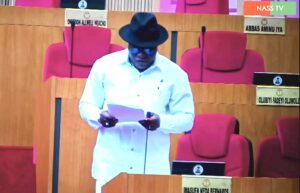
The confirmation followed a stormy plenary session during which senators clashed over whether Fasina should be cleared while court cases relating to the allegations are reportedly still pending.
The controversy erupted after the Senate Committee on Foreign Affairs presented its report recommending Fasina’s confirmation. The committee, chaired by Senator Sani Bello and presented by Senator Simon Lalong, maintained that investigations conducted by the Federal University Oye-Ekiti (FUOYE) Governing Council and the Nigeria Police found no evidence to support the allegations against the nominee.
However, Senator Cyril Fasuyi (APC, Ekiti North) opposed the recommendation, insisting that two women had accused Fasina of sexual harassment during his tenure as Vice-Chancellor of FUOYE.
Fasuyi told the Senate that one of the complainants had personally approached him, alleging that justice had not been served. He urged the Senate to suspend the confirmation process and invite the petitioner to appear before lawmakers.
Several senators backed his position, arguing that it would be more prudent to await the outcome of the court proceedings before taking a final decision.
Joining the opposition, Senator Adams Oshiomhole urged the Senate to tread carefully, stressing that the issue went beyond legal technicalities and touched on public confidence and the protection of women.
“Nigerian women have brought to the attention of this Senate that the professor in question has been accused by two women, not just orally, and these issues are pending before different courts.”
Oshiomhole acknowledged the constitutional presumption of innocence but argued that the Senate also had a responsibility to act with sensitivity.
“I think the general view is that nobody says he is guilty; he is presumed to be innocent until proven guilty. But, as a matter of sensitivity, for the Senate to endorse a man who faces cases like that would amount to being insensitive to the feelings of women because it’s not just one woman; there are two women making different allegations.”
He maintained that delaying the confirmation would not amount to a declaration of guilt but would protect the integrity of both the Senate and the judicial process.
“So, I thought that in matters like this, it would be more prudent to wait and ask the man to clear himself before the court.”
Those backing the nomination, however, insisted that the Senate could not substitute allegations for evidence.
Senate Chief Whip Mohammed Monguno reminded lawmakers that Section 36(5) of the 1999 Constitution guarantees every citizen the presumption of innocence until proven guilty and cited the Senate Standing Rules against debating matters before the courts.
“A man is presumed innocent until the contrary is proved. We cannot halt our constitutional responsibility simply because of allegations,” Monguno said.
Senator Abdul Ningi also defended the committee’s recommendation, urging lawmakers to respect the Senate’s committee system and warning against destroying the reputation of a distinguished academic over allegations yet to be proven.
He questioned why the complainants did not appear before the committee during the screening exercise despite the opportunity to do so.
As the debate intensified, Senate President Godswill Akpabio cautioned senators against discussing issues already before competent authorities, warning that the Senate should avoid prejudicing ongoing judicial proceedings.
The Senate subsequently confirmed Fasina as ambassador-designate through a voice vote.
The confirmation has since drawn mixed reactions. While supporters argue that the Senate acted in line with the constitutional principle of presumption of innocence and relied on the findings of investigative authorities, critics contend that the decision sends an unsettling message to women alleging sexual harassment and raises broader concerns about accountability in public office.