
Oluku Fire Tragedy: Firefighters’ Delay, Dangerous Petrol Scooping Raises Casualty Fears
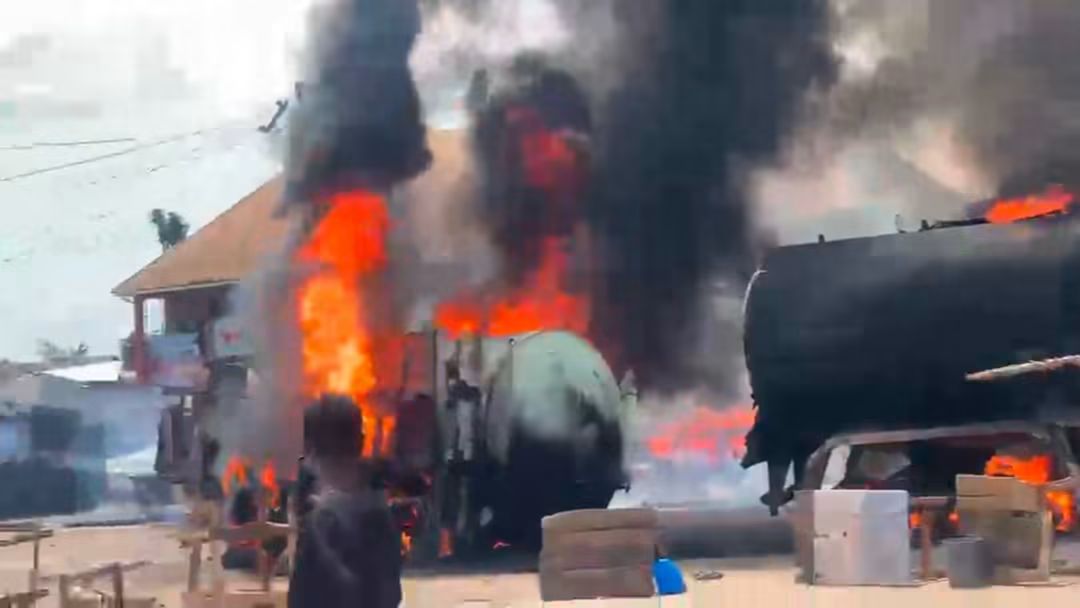
The Burning Truck
By Reporter
Tragedy struck Oluku, along the Benin-Lagos Expressway in Ovia North-East Local Government Area of Edo State, on Thursday, October 15, 2026, when a petrol tanker that fell on the highway exploded, triggering a devastating inferno that engulfed nearby shops, vehicles and market stalls.
The incident, which reportedly occurred hours after the tanker overturned and spilled its contents onto the road and adjoining drainage channels, left several people with severe burns and destroyed property worth millions of naira.
Eyewitness accounts indicated that the tanker fell in the morning, attracting residents and passers-by who rushed to scoop the spilled petrol despite the grave danger posed by the highly inflammable product.
The situation reportedly turned catastrophic at about 1 p.m. when the spilled fuel ignited, sending flames racing through the area and leaving people scrambling for safety.
The fire spread rapidly to shops around Oluku Market, consuming goods, business premises and vehicles caught in the inferno. Traders watched helplessly as their investments and sources of livelihood went up in flames.
Reports from the scene indicated that several victims sustained varying degrees of burns and were rushed to the University of Benin Teaching Hospital (UBTH) for emergency medical attention.
The hospital activated its emergency response, with its Chief Medical Director, Professor Idia Ize-Iyamu, coordinating medical teams across the accident and emergency and burns units to stabilise the injured.
Personnel of the Edo State Fire Service, the Federal Fire Service, security agencies and other emergency responders were also involved in efforts to contain the fire and secure the affected area.
The tragedy was further compounded by the angry reaction of some residents, who reportedly prevented men of the fire service from gaining access to the scene by throwing stones at their vehicle in frustration over what they perceived as the late arrival of the emergency responders.
The hostile reception reportedly hampered the firefighters’ efforts to reach the affected area and commence firefighting operations at a critical moment when the inferno was spreading and victims desperately needed assistance.
The incident highlights the growing frustration among residents over emergency response delays during disasters. However, preventing firefighters from accessing an inferno could worsen the situation, endanger more lives and increase the destruction of property.
The development has renewed calls for improved emergency response systems, better coordination among relevant agencies and public awareness of the need to cooperate with first responders during emergencies.
Although initial reports raised fears of multiple fatalities, the Edo State Sector Commander of the Federal Road Safety Corps, Preye Ezekiel Bedford, said late Thursday that no death had been officially recorded by his command at that time. He confirmed that 10 casualties had been reported, while efforts to establish the full extent of the incident continued.
However, other media reports cited eyewitness accounts alleging that some people had died in the inferno. The final death toll remained unconfirmed at the time of reporting.
The disaster has once again drawn attention to the persistent and dangerous practice of scooping fuel from fallen tankers, a practice that has repeatedly resulted in devastating fires and loss of lives across Nigeria.
One eyewitness, who said he was among those scooping fuel before the explosion, recounted how a soldier warned him about the danger of the situation.
According to the survivor, he escaped being caught in the flames after the soldier drew his attention to the risk of ignition. Moments later, the tanker reportedly burst into flames, forcing people in the vicinity to flee for their lives.
The tragedy also raised concerns about the vulnerability of roadside businesses and markets located close to major highways, where fuel spills can quickly turn into disasters with devastating consequences.
Chairman of Ovia North-East Local Government Area, Orobosa Eriamiatoe, and a Benin traditional chief, Chief Osamede, popularly known as Bob Izua, reportedly visited the scene to assess the damage and sympathise with affected traders and residents.
As investigations and efforts to determine the full casualty figures continued, the incident served as a grim reminder that fuel spilled from an overturned tanker is not an opportunity to obtain free petroleum but a potentially deadly hazard.
Residents have been urged to stay away from fallen tankers, avoid collecting spilled fuel and alert the relevant emergency agencies immediately whenever such accidents occur.
For the affected families, traders and motorists, the Oluku inferno represents a painful tragedy whose human and economic consequences may take considerable time to overcome.
Reports published on October 15 gave conflicting accounts of the death toll. The FRSC sector commander said no deaths had been officially recorded by his command at the time of his update, while other reports cited eyewitnesses who feared multiple fatalities.