
Flamingos Make History, Beat Japan to Win Nigeria’s First U-17 Women’s World Cup Title
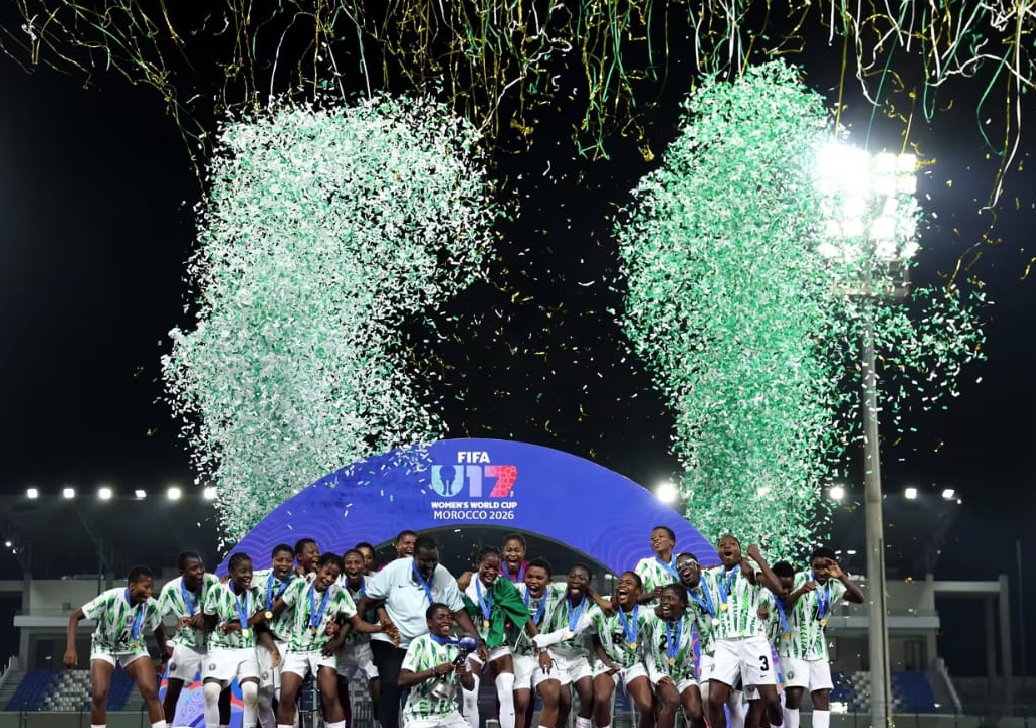
Nigeria’s U-17 women’s national team, the Flamingos, have made history by defeating Japan to win their first FIFA U-17 Women’s World Cup title, becoming the first African nation to lift the prestigious trophy.
A second-half brace from Oluebube Umejiaku inspired Nigeria to a memorable victory over Japan in the final played in Rabat, Morocco, on Sunday, November 8, 2026.
The triumph represents a historic breakthrough for Nigerian women’s football and the African continent, which had never previously won the FIFA U-17 Women’s World Cup.
Nigeria started the encounter on the front foot, displaying attacking intent and putting the Japanese defence under considerable pressure.
Awawu Bashiru and Umejiaku both came close to opening the scoring, with their efforts narrowly missing the target.
Umejiaku subsequently struck the crossbar with a powerful header after Japan goalkeeper Kou Kadowaki failed to deal properly with a dangerous free-kick into the penalty area.
The breakthrough eventually came when Bashiru sent a dropping ball towards goal. Kadowaki appeared to have the situation under control but allowed the ball to slip through her gloves and into the net, handing Nigeria the lead.
The Flamingos extended their advantage through Umejiaku, who latched on to an excellent long pass from Esther Stephen, controlled the ball with her left foot and delicately lobbed it over the advancing Japanese goalkeeper.
Japan attempted to fight back, with Wara Shimizu narrowly missing the target after Nigeria goalkeeper Jane Ijirigho failed to make a clean clearance.
Umejiaku also came close to extending Nigeria’s lead, but Kadowaki produced an impressive foot save to deny the Nigerian forward.
Japan eventually reduced the deficit with ten minutes remaining when substitute Anri Ito headed a corner back across goal, allowing Fuki Ito to volley the ball into the net.
Despite Japan’s late pressure, Nigeria held on to secure a historic victory and spark celebrations among players, officials and supporters.
Speaking after the match, Umejiaku expressed delight at the historic achievement, thanking God and acknowledging the difficult journey the team had endured.
She credited the coaches’ instructions and the players’ determination and mutual encouragement for their success.
Japan coach Sadayoshi Shirai acknowledged Nigeria’s strength, particularly their speed and physical power, while praising his players for fighting until the final whistle.
He said Japan might have had a better chance of winning if they had scored earlier, but urged his players to take pride in their performances throughout the tournament.
Nigeria’s triumph in Rabat is a landmark moment for African football, establishing the Flamingos as world champions and ending the continent’s long wait for a FIFA U-17 Women’s World Cup title.