David Hundeyin: Journalism as a Weapon Against Power

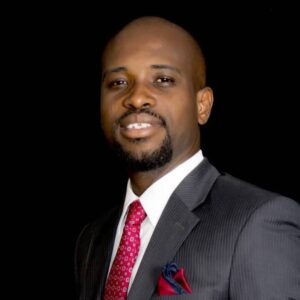
David Hundeyin
By Orobosa Omo-Ojo JP
In Nigerian journalism, where access to power can sometimes be as valuable as the story itself, David Hundeyin has built a career around doing something different: challenging power rather than courting it.
He is not the traditional newsroom journalist. He is outspoken, combative, highly visible on social media and seemingly comfortable operating at the intersection of investigative journalism, political commentary and digital activism.
To his supporters, Hundeyin represents a new generation of African journalists—bold, technologically savvy and unwilling to treat powerful people or institutions as untouchable. To his critics, his style can sometimes appear partisan, confrontational or unnecessarily provocative.
But whichever side of that divide one occupies, one fact is difficult to ignore: Hundeyin has become one of the most recognisable names in Nigeria’s new-media journalism.
Hundeyin studied mass communication at Igbinedion University before moving to the United Kingdom, where he studied creative writing at the University of Hull and graduated in 2011. He subsequently returned to Nigeria and began building a career that would eventually take him into journalism, broadcasting, satire and investigative reporting.
His professional journey has included work across several media platforms, while his writing has appeared in international outlets including CNN, Al Jazeera, The Africa Report and The Washington Post. He also worked as a satirist on The Other News, Nigeria’s answer to The Daily Show.
That combination of literary writing, satire and journalism would later become central to his distinctive voice.
Hundeyin does not simply present himself as a reporter who collects information and submits copy to an editor. He has cultivated a public persona around investigation itself—following trails, challenging official narratives and using digital platforms to take his findings directly to readers.
Hundeyin’s own description of his journalism is revealing. On his Substack profile, he describes himself as a “one-man hurricane” engaged in a relentless journalistic battle with some of West Africa’s most powerful individuals, organisations and governments.
The description is deliberately dramatic, but it captures something important about his brand.
Like late Nnamdi Azikiwe of West African Pilot and Dele Giwa, his journalism is built around confrontation. Whether the subject is politics, business, government policy, terrorism, financial misconduct or alleged wrongdoing by influential institutions, Hundeyin frequently adopts the posture of an investigator challenging an establishment that he believes has something to hide.
His investigations have included stories involving the Nigerian financial sector, technology companies, government officials and political figures. His published work at West Africa Weekly, for instance, includes investigations into Flutterwave, alleged banking fraud, Chinese loan-shark networks and controversies involving public institutions.
That willingness to enter difficult territory has earned him both recognition and enemies.
At the heart of Hundeyin’s journalism is a philosophy that sees Journalism as a Weapon Against Power. His attitude can be summed up simply: Power Must be Interrogated.
His reporting frequently begins with documents, digital footprints, corporate records, public statements or other pieces of evidence and then attempts to construct a larger narrative.
That approach helped establish his reputation before he founded West Africa Weekly.
In 2021, he won the People Journalism Prize for Africa for his analysis of proposed legislation in Nigeria’s House of Representatives during the COVID-19 lockdown.
He was subsequently selected as Africa’s representative among writers and journalists chosen for Substack’s inaugural Local programme. His work has also received recognition in data journalism circles.
These accolades helped transform him from a controversial young journalist into an internationally recognised investigative reporter.
The creation of West Africa Weekly marked an important stage in Hundeyin’s evolution.
Rather than simply writing for established publications, he created his own platform and newsroom ecosystem.
The publication describes itself as his attempt to manage and curate a publication of his own after years of investigative reporting and controversy.
Traditional journalism often places reporters within editorial hierarchies. A journalist may have to convince an editor, publisher or proprietor before a major investigation reaches the public.
With West Africa Weekly, Hundeyin has been able to build an audience around his own editorial priorities.
The result is journalism that often feels more personal, more argumentative and more immediate than conventional newspaper reporting.
Hundeyin became particularly prominent during the political battles surrounding Nigeria’s 2023 presidential election. He was then an ‘Obedient’.
His investigations and commentary concerning Bola Ahmed Tinubu generated enormous attention online and placed him directly in one of Nigeria’s most politically charged debates.
His reporting about Tinubu became a major part of his public identity, attracting both supporters who viewed his work as necessary scrutiny and critics who questioned his approach and conclusions.
This is perhaps where the Hundeyin phenomenon becomes more complicated.
Investigative journalism is expected to be adversarial. But when a journalist becomes personally associated with a political narrative, questions about neutrality inevitably follow.
Hundeyin’s supporters argue that powerful politicians should not be protected simply because an investigation is politically inconvenient.
His critics, meanwhile, argue that his aggressive style sometimes makes it difficult to separate investigative reporting from political advocacy.
That tension has followed him throughout his career.
Because investigative journalism is rarely comfortable, Hundeyin has repeatedly portrayed his career as one involving personal risk, intimidation and confrontation.
His own account of his experiences eventually became the basis for his book Breaking Point: A Journalist’s Quest for Salvation in Nigeria’s Chaos, published in January 2024.
The book chronicles the period between 2021 and 2023 through his eyes and documents the dangers, conflicts and experiences that accompanied his journalism during those years.
His account also includes his experience of leaving Nigeria and living in exile. On his personal website, Hundeyin says he currently lives in exile under asylum protection.
For a journalist, exile represents more than physical distance from home.
It can mean losing the everyday access that makes reporting possible. It can mean conducting interviews remotely, developing sources from afar and observing one’s own country through screens rather than streets.
Yet, paradoxically, the distance may also reinforce his independence.
Perhaps Hundeyin’s most significant contribution is not any single investigation. But has a new language of journalism—confrontational.
It is the language he has introduced into Nigerian digital journalism.
He writes for an internet generation.
His stories can combine conventional reporting with humour, sarcasm, literary techniques, screenshots, social-media material and strong personal commentary. Profiles of his work have noted how he deliberately blurs the boundary between journalism and literary writing.
This has made his work highly shareable.
In an era where many Nigerians consume news first through X, YouTube, Instagram, WhatsApp and newsletters rather than printed newspapers, Hundeyin understands the power of narrative.
He does not merely ask: What happened?
He also asks: How do I tell this story so that people will stop scrolling and pay attention?
That is an important skill in the digital age.
But the same qualities that have made Hundeyin influential have also made him controversial. He is sometimes referred to as a controversial journalist.
His confrontational language, strong political positions and willingness to publicly challenge other journalists, politicians and institutions have frequently generated backlash.
That controversy should not automatically invalidate his journalism—especially in a country where politicians hide under Nigeria’s corrupt judiciary. Nor should his popularity automatically validate every claim he makes.
The proper test of investigative journalism remains evidence.
Documents must be authentic.
Sources must be properly evaluated.
Claims must be independently verified.
Allegations must be distinguished from established facts.
And powerful subjects must be given a fair opportunity to respond.
That standard is particularly important for journalists who operate with a large social-media following because a disputed claim can reach hundreds of thousands of people before the subject has an opportunity to respond.
For Hundeyin, therefore, influence comes with an unusually heavy responsibility.
Hundeyin has gradually become something larger than a conventional reporter.
He is an author, broadcaster, publisher, commentator, digital media personality and above all, civil rights advocate. He ran away from Nigeria to seek asylum in Ghana after participating in the deadly EndSARS protest.
His books—including The Jungle and Breaking Point—extend his journalism beyond individual investigations into personal narrative and political reflection.
His work has also helped demonstrate that African journalists can build international audiences without necessarily depending on foreign newsrooms to tell African stories.
That may ultimately prove to be his most enduring contribution.
There is a temptation to judge David Hundeyin entirely through his loudest moments—the angry tweets, the controversial investigations, the political battles and the viral exchanges.
But doing so risks missing the larger story. Hundeyin doesn’t really care.
Behind the controversy is a journalist who has deliberately chosen a difficult path.
He has chosen investigative journalism at a time when journalism itself is under economic and political pressure.
He has chosen digital publishing when traditional media organisations are struggling to adapt.
He has chosen to confront powerful interests when many journalists prefer cautious language.
And he has chosen to make himself part of the story.
That last choice is perhaps his greatest strength and his greatest vulnerability.
When a journalist becomes a brand, the public begins to judge not only the evidence but also the personality delivering it.
David Hundeyin has embraced that reality. He has complicated legacies.
It is still too early to determine what Hundeyin’s ultimate legacy in Nigerian journalism will be.
He is young enough to have many years ahead of him, and the media landscape itself is changing rapidly.
But his influence is already undeniable.
He has demonstrated that a determined journalist with digital tools, investigative skills and a strong voice can build an audience far beyond the traditional newsroom.
He has also demonstrated the dangers of that model: polarisation, personal attacks, questions about objectivity and the enormous responsibility that comes with turning allegations into viral narratives.
In the end, David Hundeyin may be remembered neither simply as a hero nor as a provocateur.
He may instead be remembered as one of the journalists who helped force Nigerian journalism into a new era—an era in which the reporter is no longer merely the person behind the byline, but also the publisher, broadcaster, investigator, commentator and, sometimes, the story itself.
And perhaps that is the most fitting description of Hundeyin:
A journalist who refused to remain in the background.