
Diplomatic Sojourn: President Tinubu, First Lady, and a Royal Reception in the United Kingdom
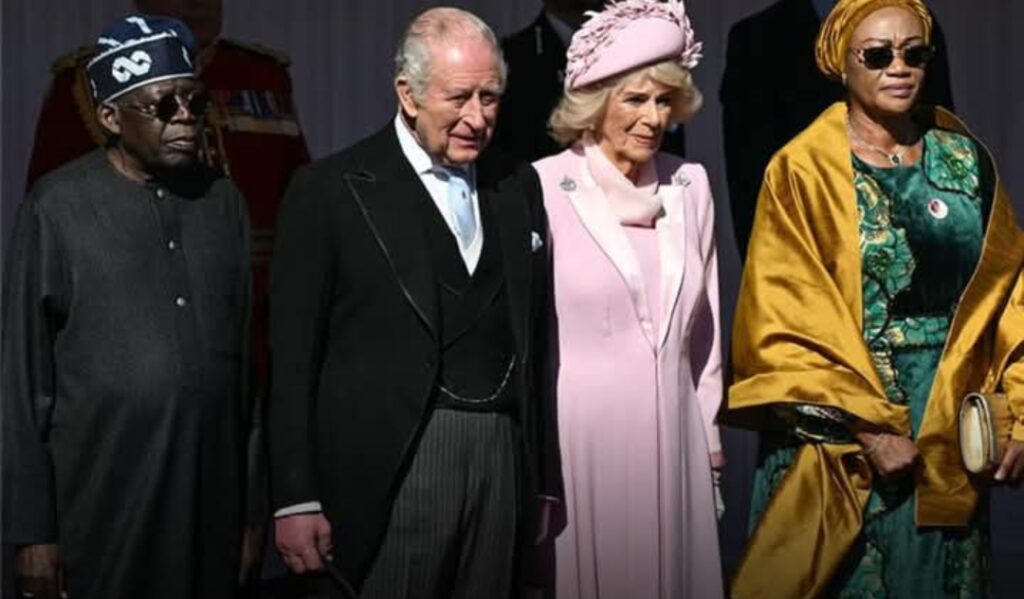
President Tinubu and First Lady Oluremi with King Charles and his Queen
By Editorial Board
In an era where global partnerships define national progress, President Bola Ahmed Tinubu’s recent visit to the United Kingdom—accompanied by the First Lady—emerged as more than a ceremonial trip.
It was a carefully orchestrated diplomatic engagement aimed at strengthening Nigeria’s international alliances, attracting investment, and reshaping perceptions of the country on the global stage.
From the moment the presidential aircraft touched down in London, the visit signaled intent. This was not merely about optics; it was about positioning Nigeria as a nation ready for serious economic collaboration.
Meetings with British government officials, business leaders, and members of the Nigerian diaspora formed the backbone of the trip, each engagement reinforcing a central message: Nigeria is open for business and reform.
A defining highlight of the visit was the reception hosted by His Majesty, King Charles III.
Held in the grandeur of royal surroundings, the meeting carried both symbolic and diplomatic significance. It reflected the enduring ties between Nigeria and the United Kingdom—ties rooted in history but evolving toward a future of mutual respect and strategic cooperation.
The encounter with the monarch added a layer of prestige to the visit, signaling the importance the United Kingdom places on its relationship with Nigeria.
At the heart of President Tinubu’s discussions were economic revitalization and investor confidence.
With Nigeria navigating complex fiscal challenges, the President used the platform to outline his administration’s reform agenda—highlighting efforts to stabilize the currency, improve revenue generation, and create a more transparent business environment.
British investors, long familiar with Nigeria’s vast potential, were urged to look beyond past uncertainties and engage with renewed optimism.
Equally significant was the First Lady’s role throughout the visit.
Her engagements, often less publicized but deeply impactful, focused on social development, healthcare advocacy, and strengthening cultural ties. By connecting with Nigerian communities in the UK and participating in charitable and diplomatic events, she underscored the human dimension of diplomacy—briding nations not just through policy, but through people.
The visit also carried symbolic weight. The United Kingdom, with its historical ties to Nigeria, remains a key partner in trade, education, and security.
By choosing London as a destination for high-level engagement—and being received at the highest level of the British monarchy—the Tinubu administration signaled continuity in diplomatic relations while also pushing for a modernized partnership rooted in mutual benefit rather than legacy dynamics.
Beyond boardrooms and official meetings, the President’s interaction with the Nigerian diaspora stood out as a defining moment. Recognizing their contributions through remittances, expertise, and advocacy, he called on them to play a more active role in national development. The message resonated strongly: Nigeria’s growth is a shared responsibility, transcending borders.
Critically, the visit comes at a time when global attention is increasingly shifting toward Africa’s economic potential. Nigeria, as the continent’s largest economy and most populous nation, occupies a pivotal position. President Tinubu’s presence in the UK was therefore not just about bilateral relations—it was about asserting Nigeria’s leadership role in shaping Africa’s future within the global economy.
While challenges remain on the domestic front, the visit offered a glimpse into the administration’s broader strategy: proactive engagement, economic diplomacy, and narrative rebranding.
It is a recognition that in today’s interconnected world, national progress is deeply intertwined with global perception and partnership.
As the delegation returns home, the true measure of success will lie in the outcomes—investment commitments, strengthened ties, and tangible benefits for Nigerians.
Yet, beyond immediate results, the visit has already achieved something significant: it has repositioned Nigeria in conversations that matter, projecting a nation determined to move forward with purpose and clarity.
In diplomacy, as in leadership, presence matters.
And in London—crowned by a royal reception—President Tinubu and the First Lady ensured that Nigeria’s presence was both seen and felt.