
2027, Wike’s Rainbow Coalition, APC Governors and the First Law of Power
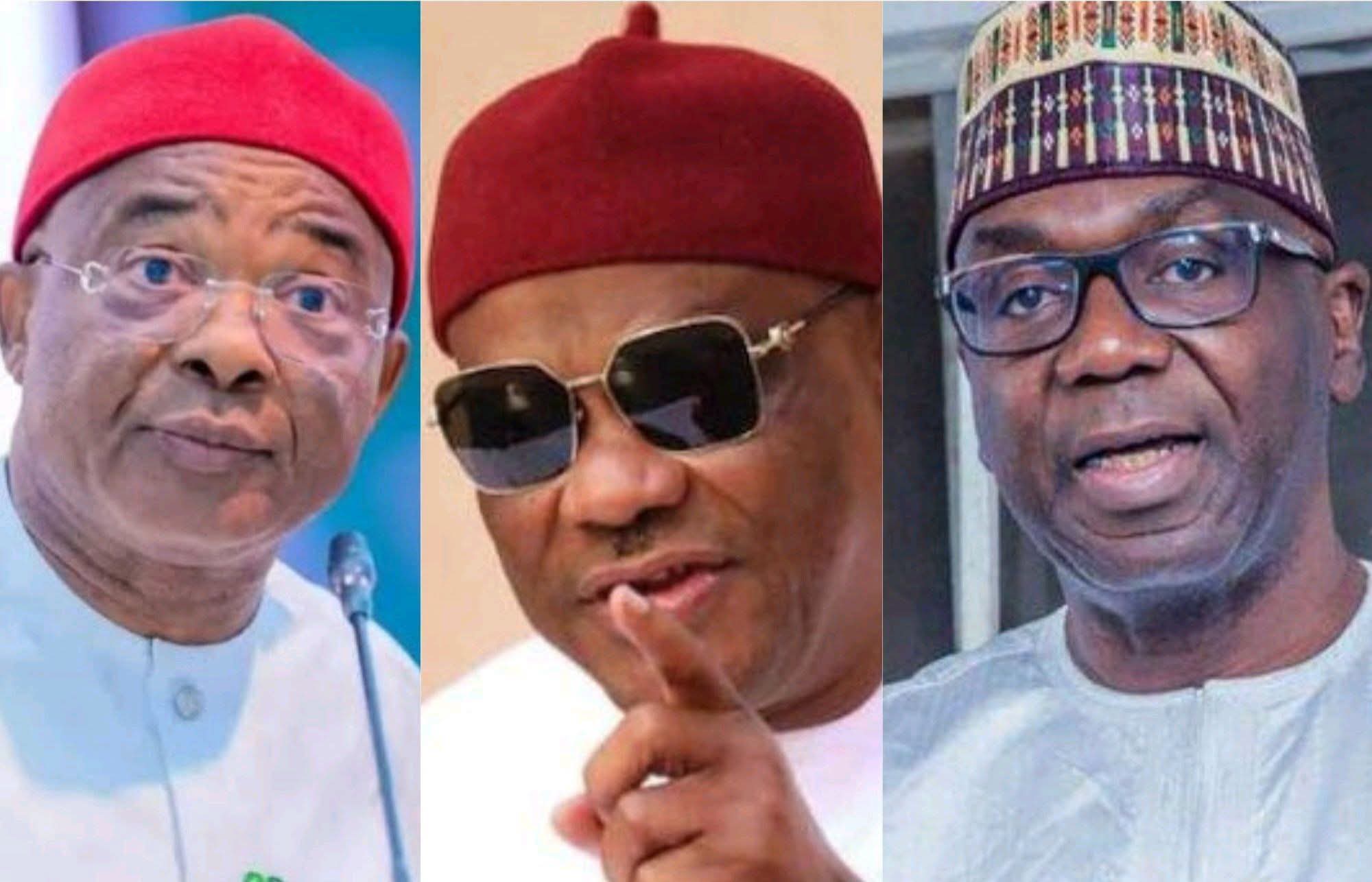
Uzodima-Wike-AbdulRazaq
By Editorial Board
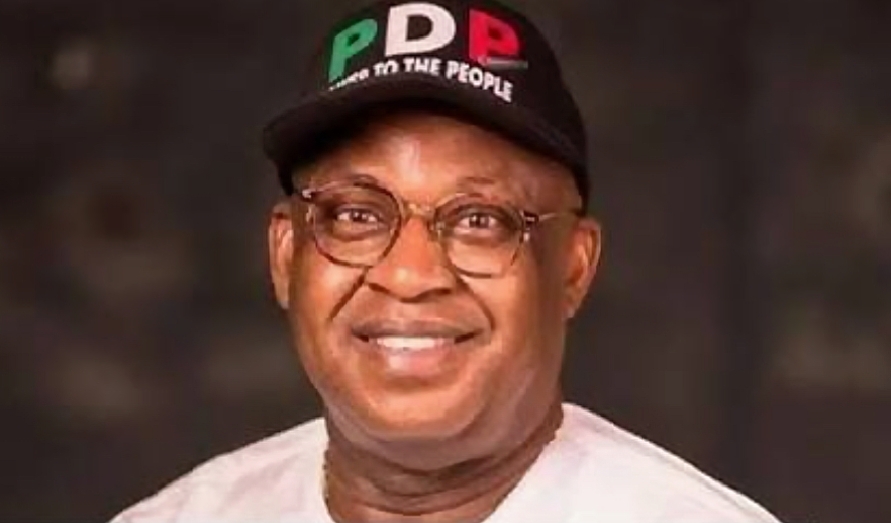
The collision is no longer hidden. Nyesom Wike is building his Rainbow Political Coalition around President Bola Ahmed Tinubu’s 2027 re-election bid and probably his presidential ambition, while the APC governors are drawing a line around the party’s political machinery. Both camps say they support Tinubu. But they are increasingly divided over who should control the machinery of that support.
That is the contradiction at the heart of the emerging 2027 Wike’s political drama.
Wike, the Minister of the Federal Capital Territory and a prominent Peoples Democratic Party (PDP) figure, insists that his proposed Rainbow Coalition is designed to mobilise support for Tinubu without requiring him to join the APC or abandon his political identity. He maintains that politicians can support Tinubu for president while remaining free to pursue their interests in governorship and legislative elections.
Yet beneath that argument lies a more ambitious political calculation. If the Rainbow Coalition gains sufficient traction after Tinubu’s election, Wike could emerge not merely as a supporter of the President but as the central broker of a broad, cross-party political platform. Such a platform could provide him with the influence, networks and national visibility required to pursue his own presidential ambition in the post-Tinubu era.
The APC governors see a danger in that arrangement. For them, the 2027 election is not only about the presidency. It is also about defending the party’s candidates and political structures across the states and at the National Assembly. A coalition that rallies support for Tinubu while remaining independent of the APC could, from their perspective, become a parallel political machine—and, after the election, a launchpad for a new presidential project.
On September 15, the APC Governors’ Forum rejected such an arrangement, saying its members would not endorse alliances that could weaken the party, undermine its candidates or create conflicting interests within the APC.
Thus, a strange political situation has emerged: two forces supporting the same presidential candidate are now wrestling over the structure through which that support should be delivered—and over who may inherit the political momentum created by it.
This is not merely a disagreement over campaign strategy. It is a contest between personal political influence and institutional political authority.
And it brings into sharp focus the first law in Robert Greene’s The 48 Laws of Power: “Never Outshine the Master.”
The law rests on a basic proposition: within a hierarchy of power, an individual must be careful not to allow his influence to become so pronounced that it appears to compete with the authority of the established structure.
That proposition speaks directly to the Wike phenomenon.
Wike does not need to be an APC member to remain politically relevant to an APC administration. He has demonstrated that he can maintain his PDP identity while supporting Tinubu and cultivating relationships across party lines.
But the same independence that makes him politically useful can also make him difficult to accommodate within a rigid party hierarchy.
More importantly, the Rainbow Coalition could give that independence an organised national expression. If it becomes a durable political force on the strength of its support for Tinubu, Wike may seek to convert that traction into a platform for negotiating power after the President’s election—and eventually into a vehicle for his own presidential aspiration.
The issue, therefore, is not that Wike supports Tinubu. He does. The issue is that he wants to organise that support on terms that preserve his political independence and could position him for a larger national contest once the Tinubu era moves toward succession.
The APC governors, meanwhile, want the ruling party’s machinery to remain the principal vehicle for the President’s re-election and for the party’s candidates at other levels.
That is where the collision occurs. Wike’s political network represents influence that does not fit neatly inside the APC structure. The governors represent a formal structure that cannot easily accommodate an independent political network operating alongside it—especially one that could later become a platform for challenging the party’s internal succession calculations.
Neither side needs to declare war for the tension to become consequential. All that is required is for two centres of influence to begin competing for political space.
The Rainbow Coalition has therefore become more than a vehicle for supporting Tinubu. It has become a test of how much independent political influence the ruling party is prepared to accommodate around its presidential candidate—and whether the coalition’s traction after the election could propel Wike from kingmaker to presidential contender.
And the APC governors’ response is equally revealing. Their resistance suggests that, for them, loyalty to the President cannot be separated entirely from loyalty to the party structure that produced and supports his candidacy. They may also fear that a coalition tolerated for Tinubu’s immediate political advantage could become the foundation of Wike’s own national ambition tomorrow.
This is the real significance of the confrontation. Nigeria’s political history is filled with alliances built around personalities, interests and electoral calculations. But the most durable political structures are those capable of accommodating powerful individuals without allowing competing centres of authority to overwhelm the organisation.
That is precisely where the first law of power becomes relevant, Never Outshine the Master.
Applied to the present political moment, the question is not whether Wike should be influential or whether the APC governors should defend their party. The question is whether individual political influence and institutional authority can coexist when both are attempting to command the same political space—and whether Tinubu’s supporters are willing to help build a coalition that may eventually produce its own presidential challenger.
As 2027 approaches, that question will become increasingly difficult to avoid. Because the most consequential political battle may not initially be between Tinubu and his opponents.
It may be within the broader coalition supporting him—over who has the influence to organise the coalition, who controls its machinery and, ultimately, whether the traction of the Rainbow Coalition after Tinubu’s election will become the foundation of Wike’s own presidential ambition.