
African Aviation Ministers Adopt Lomé Declaration to Fast-Track Single African Air Transport Market
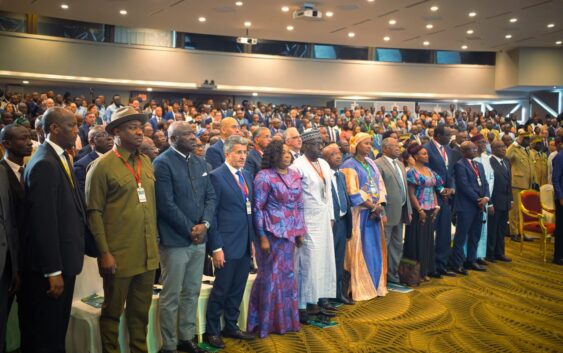
Some Ministers of Aviation from Africa in Lomé, Togo
By Staff Writer
Lomé, Togo – African ministers responsible for transport, tourism, trade and finance have adopted the Lomé Ministerial Declaration and Implementation Matrix on Accelerating Accessible, Connected, Affordable and Sustainable Air Transport in Africa, reaffirming the continent’s commitment to creating a fully integrated African aviation market and unlocking the economic benefits of enhanced air connectivity.
The landmark declaration was adopted during the African Air Transport Convention and Expo 2026 (AATCE 2026), organised by the African Civil Aviation Commission (AFCAC) and hosted by the Government of the Republic of Togo in Lomé. The event brought together ministers, regulators, airline executives, airport operators, development finance institutions, investors and aviation experts from across Africa and beyond.
As the Champion State of the Single African Air Transport Market (SAATM), Togo hosted the convention under the patronage of the President of the Council of the Republic of Togo, who serves as SAATM Champion President. The event was organised in collaboration with the African Union Commission (AUC), the African Continental Free Trade Area (AfCFTA) Secretariat and AUDA-NEPAD.
Through the Lomé Declaration, ministers reaffirmed that aviation remains a critical driver of continental integration and economic transformation. They emphasized that affordable and efficient air transport is essential for boosting intra-African trade, tourism, investment flows, industrialisation, regional value chains and people-to-people exchanges. The declaration comes at a time when African leaders are increasingly looking to aviation as a strategic tool for supporting economic diversification, regional integration and the successful implementation of the AfCFTA.
Despite Africa accounting for nearly 18 percent of the world’s population, the continent continues to handle only a small share of global air traffic.
Limited connectivity, restrictive bilateral agreements, high operating costs and fragmented regulatory frameworks have historically constrained the growth of African aviation.
Ministers therefore stressed the need to move beyond policy commitments and focus on measurable implementation outcomes that can transform the sector.
The declaration reaffirms the full and effective implementation of the Yamoussoukro Decision, adopted in 1999 to liberalise African air transport markets, and reinforces support for SAATM, launched by the African Union in 2018 as one of Agenda 2063’s flagship projects.
Ministers committed to accelerating implementation at national, regional and continental levels through the removal of restrictive market access barriers, liberalisation of air services, alignment of air service agreements with SAATM principles and improvement of administrative processes related to airline designation, authorisation and route commencement.
Industry experts have long noted that many African travellers are often forced to transit through Europe or the Middle East to reach destinations within Africa, leading to longer travel times and significantly higher costs. The implementation matrix adopted in Lomé seeks to address these inefficiencies by promoting coordinated reforms that expand direct air links and improve connectivity between African countries.
The ministers also recognised AFCAC as the Executing Agency of the Yamoussoukro Decision and SAATM and reaffirmed its central role in coordinating aviation liberalisation efforts across the continent. They called for strengthened institutional capacity and sustainable financing to enable AFCAC to better support Member States, monitor implementation progress and advance Africa’s aviation priorities.
One of the major outcomes of the convention was the launch of the AFCAC Solidarity Commitment 2026–2028, a resource mobilisation initiative aimed at strengthening AFCAC’s capacity to implement its mandate and accelerate SAATM implementation.
The initiative will mobilise financial resources, technical assistance, capacity-building programmes, digital tools and project-based support through a transparent, accountable and results-oriented framework.
A major focus of the declaration is reducing the cost of air transport across Africa. Ministers acknowledged that high aviation taxes, airport charges, regulatory fees and operational bottlenecks continue to make African airfares among the highest in the world.
These costs suppress passenger demand, weaken route viability and limit aviation’s contribution to economic growth, trade and tourism.
To address this challenge, ministers endorsed the Continental Harmonized Policy Framework on Aviation Taxes, Charges and Fees as a guiding instrument for transparent, predictable and growth-oriented approaches to aviation pricing.
They committed to promoting coordinated action among transport, finance, tourism and aviation authorities to rationalise excessive charges, improve transparency and consultation and enhance affordability while safeguarding the sustainability of aviation services.
The declaration also highlights aviation’s strategic role in supporting the African Continental Free Trade Area. Ministers committed to promoting air cargo development, corridor-based route development and priority intra-African cargo corridors aligned with AfCFTA value chains and regional economic priorities.
Stronger collaboration among airports, airlines, cargo operators, regulators, trade authorities, development partners and financial institutions is expected to support sustainable route development, logistics efficiency, cargo infrastructure expansion and secondary-city connectivity.
Recognising the importance of seamless mobility, ministers committed to improving visa openness, passenger facilitation, cargo clearance procedures, digital travel systems and border management.
These reforms are intended to reduce travel barriers, improve passenger experiences and support the movement of people and goods across the continent in line with SAATM and AfCFTA objectives.
The declaration also underscores the importance of modern aviation infrastructure in achieving Africa’s connectivity goals. Ministers called for increased investment in airports, air navigation systems, cargo terminals, digital infrastructure, safety and security systems and climate-resilient aviation assets.
They encouraged governments, development finance institutions and private investors to collaborate on preparing and financing bankable aviation projects capable of supporting long-term sector growth.
Sustainability and climate resilience were also identified as key priorities. Ministers committed to supporting Africa’s participation in the development, production, financing and deployment of Sustainable Aviation Fuels (SAF), lower-carbon aviation fuels and other cleaner energy solutions.
They highlighted the need for supportive policy frameworks, feedstock development strategies, certification alignment, infrastructure planning and innovative financing mechanisms that can help position Africa as an emerging player in the global sustainable aviation fuel market.
The declaration further promotes digital transformation and innovation across Africa’s aviation sector. Ministers pledged to support aviation data systems, smart technologies, operational modernisation, technology adoption and innovation partnerships.
They also called for greater investment in human capital development, including programmes that support the next generation of aviation professionals, increase the participation of women and youth and strengthen partnerships among training institutions, regulators and industry stakeholders.
At the same time, ministers reaffirmed that the growth and liberalisation of African air transport must be supported by strong safety, security and regulatory oversight frameworks.
They committed to strengthening safety and security oversight, enhancing regulatory cooperation, building institutional capacity, implementing international standards and improving resilience against emerging threats, including cybersecurity challenges and operational disruptions.
To ensure accountability and measurable progress, the declaration mandates AFCAC, working with the African Union Commission, AfCFTA Secretariat, AUDA-NEPAD, Regional Economic Communities,
Member States and development partners, to coordinate implementation and monitor progress. AFCAC will also develop a post-Lomé roadmap outlining priority actions, timelines, resource requirements and reporting mechanisms.
The declaration further invites development finance institutions, international partners, industry associations, airlines, airports, air navigation service providers, private investors, technology providers and training institutions to support implementation efforts.
Ministers emphasised the need for stronger coordination among stakeholders to avoid fragmentation, improve programme alignment and ensure resources are directed toward measurable outcomes.
The ministers expressed appreciation to the President of the Council of the Republic of Togo, the Government and the people of Togo for hosting the African Air Transport Convention and Expo 2026 and for their continued leadership in advancing African aviation.
They also commended AFCAC, the African Union Commission, the AfCFTA Secretariat, AUDA-NEPAD, UNECA, Regional Economic Communities, development partners and industry stakeholders for their contributions to the success of the event.
The adoption of the Lomé Ministerial Declaration marks a significant milestone in Africa’s efforts to build a more integrated, competitive, affordable, safe, secure and sustainable air transport market.
By combining policy reforms, infrastructure development, market liberalisation, sustainability initiatives and institutional strengthening, the declaration provides a practical framework for accelerating SAATM implementation, reducing travel costs, improving connectivity and positioning aviation as a powerful catalyst for continental integration, trade expansion and economic transformation.