When Will Reforms Come To Our Railways ?
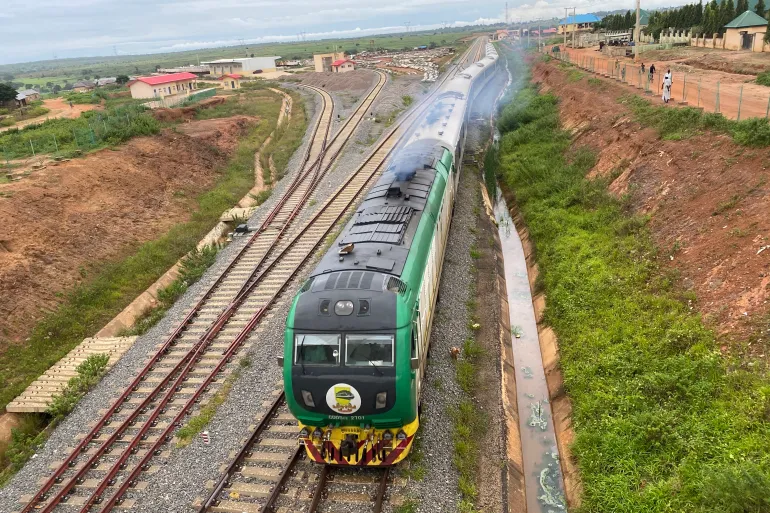
By Victor Ogiemwonyi
Conversations.stubstack.com
The recent holiday travel season in Nigeria has once again exposed the massive deficits in our transportation infrastructure. Currently, air travel is the only safe option where airports exist. However, airlines are exploiting this by gouging customers.
There is no justification for a ₦300,000 one-way fare for a 30-minute flight from Benin to Lagos. As usual, our regulators seem more interested in collecting fees and playing “police” than protecting the public.
Railways are the safest form of mass transportation known to man, yet they remain a dream in Nigeria. Successive governments have neglected this vital infrastructure. Paradoxically, the history of Nigerian railways is over a century old.
Colonial masters laid tracks to evacuate produce and coal to the ports; tragically, very little has changed since then. The few tracks they laid remain the backbone of the current system.
THE FAILURE OF MODERNISATION
The only serious attempt at modernisation came from the Jonathan administration. Their National Railway Plan won awards as one of the best in Africa and began with the Abuja-Kaduna line. The Buhari administration followed with attempts that significantly increased our national debt through Chinese loans but yielded little results. Our current railways are not modern.
In some cases, we have spent as much on outdated systems as it would cost to build high-speed rail. In China, modern rail has transformed lives.
Nigeria will not have a true railway system until a farmer can leave Maiduguri in the morning, sell his products in Lagos, and return home the same day.
STOP FUNDING RAILS WITH BUDGETS
The current approach to funding is wrong. Railways are expensive undertakings that should not be managed through national budgets.
Those who insist on using budgets to fund railway development, are often more interested in awarding contracts than building infrastructure.
Railways are commercial projects that can pay for themselves. Nigeria possesses the necessary attributes for success: vast land and a huge population. We do not need more plans; we need the right incentives to concession various routes to the private sector.
THE TELCOM BLUEPRINT FOR SUCCESS.
We already have a working model. Our modern telecom infrastructure did not cost the government a kobo. Instead, it generated millions of dollars in revenue. It is run entirely by the private sector and does not rely on government loans.
This success was possible because Chief Ernest Ndukwe and the NCC team conducted a transparent auction for GSM licenses. Each license sold for $285 million. NITEL was awarded a free License.
The later attempt by Bureau of Public Enterprises ( BPE ) to privatize NITEL was a disaster fueled by bureaucracy. When the winning bidder missed a payment deadline by 90 days due to financing delays, the BPE refused to be flexible.
They seized the $100 million deposit and scuttled the deal. This rigidness destroyed NITEL, and we are still paying for that mistake 20 years later.
THE WAY FORWARD IS CONCESSIONS.
For railways to thrive, the government must get out of the way. The Nigerian Railway Corporation (NRC) should become a regulator, not an operator. The NRC lacks the capacity to run a modern railway, but they possess the institutional memory to provide technical oversight.
Concessioning the railways is the last major economic transaction available to Nigeria. It will transform our transport infrastructure and unleash a massive value chain. The money to build these lines exists in the private sector; the government simply needs to create a transparent framework to attract it.
UNLOCKING THE ECONOMIC CORRIDOR.
To attract the necessary investment, the government should provide two key incentives:
Economic Railway Corridors:
Grant concessionaires one kilometer of land on both sides of the tracks. This land can be developed into housing, hotels, and rest areas. This will also attract Advertisers that will provide revenues for the concessionaires.
This would create self-sustaining communities and take pressure off our roads by moving heavy cargo to the rails. We can also avoid the new phenomenon of explosion of petrol Tankers all over on our roads, taking 10s of lives in some cases.
Those who say Nigeria is uninvestable, and therefore will not attract foreign investors are wrong. The recent reforms in our foreign exchange market, and the promise by the government to ensure their investments as safe, will bring them.
The government must take responsibility for land acquisition compensation and grant tax holidays until the companies become profitable.
Foreign investors know that railways are long-term, stable assets. Despite current security challenges, people must travel. Rail is the safest mode of transport, even in difficult times. Even during war, Rail transport continue to work.
A transparent plan could be executed to start building, within a year by a committee of capable professionals.
Railway development is too important to delay. Further hesitation will only make land acquisition more expensive.
We must act now to provide Nigerians with safe, affordable, and modern transport.