
Trump Signals Willingness to Talk With Iran in Sudden Diplomatic Shift
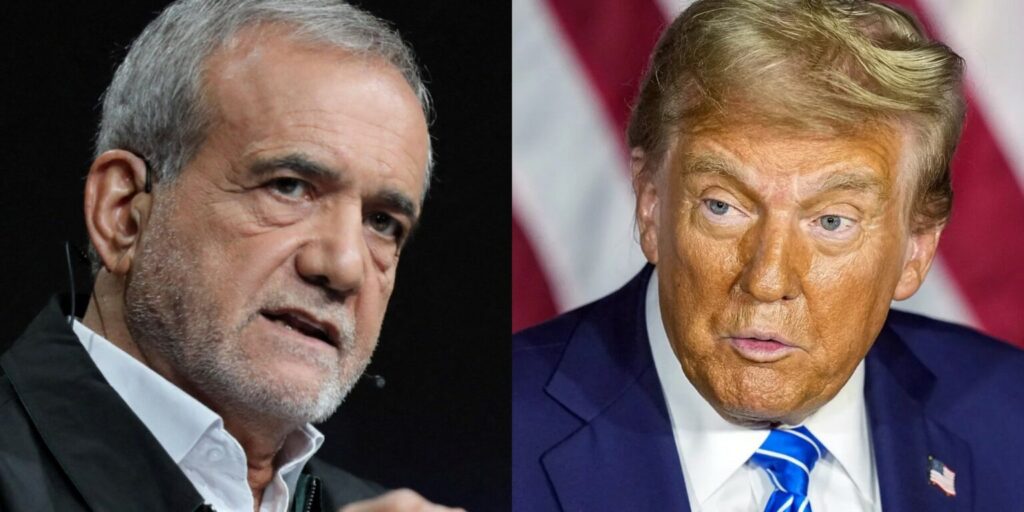
US President Trump with Iranian President Masoud Pezeskhian
By Reporter
Washington, D.C. — In a surprising shift after months of escalating rhetoric, Donald Trump signaled this week that he is prepared to open talks with Iran, marking a potentially significant turn in the long-strained relationship between the two countries.
Speaking to reporters, Trump said Iranian officials had indicated an interest in dialogue and that he was willing to engage. “They want to talk, and I’ve agreed to talk,” he said, while declining to provide details about when or where negotiations might take place.
The statement follows a period of heightened tensions between Washington and Tehran, including disputes over Iran’s nuclear activities, regional proxy conflicts, and economic sanctions.
The Trump administration had previously taken a hard-line stance, emphasizing “maximum pressure” through sanctions and diplomatic isolation.
Foreign policy analysts described Trump’s remarks as a potential tactical recalibration rather than a wholesale policy reversal.
Throughout his political career, Trump has often paired confrontational rhetoric with sudden overtures for negotiation — a strategy he has framed as deal-making from a position of strength.
“It’s consistent with his approach,” said one Washington-based Middle East analyst. “Escalate pressure, then offer talks. The question is whether both sides see enough benefit to sustain meaningful negotiations.”
Iranian officials have not immediately confirmed the contours of any planned discussions. However, Tehran has previously indicated it would consider diplomacy if certain sanctions were eased or if talks were conducted without preconditions.
The possibility of renewed dialogue comes at a critical moment for regional stability. Tensions involving U.S. allies in the Gulf, ongoing conflicts involving Iranian-backed groups, and concerns over nuclear enrichment have all raised fears of broader confrontation.
European governments, many of whom supported the 2015 nuclear accord that Trump withdrew from during his presidency, cautiously welcomed any signal of diplomacy. “Dialogue is always preferable to escalation,” one European diplomat said, speaking on condition of anonymity.
Markets reacted modestly to the news, with oil prices dipping slightly amid hopes that negotiations could ease geopolitical risk in the region.
Domestically, the move could carry political implications. Trump has long argued that previous administrations mishandled relations with Iran, and he has repeatedly said he could secure a “better deal” than the 2015 agreement.
Critics, however, argue that abrupt shifts in strategy risk undermining credibility. “If talks are serious, that’s positive,” said one congressional opponent. “But diplomacy requires consistency and clarity.”
For now, details remain sparse. No formal framework, agenda, or timeline has been announced. Still, the president’s acknowledgment that he is open to direct communication represents a notable moment in a relationship defined by decades of hostility.
Whether the overture evolves into substantive negotiations — or proves to be another brief diplomatic flare-up — may depend on the demands both sides are willing to put on the table in the weeks ahead.