
Reclaiming Value, Shaping Rules: Nigeria’s Vision for Cocoa Sovereignty in a Fragmented Trade Order
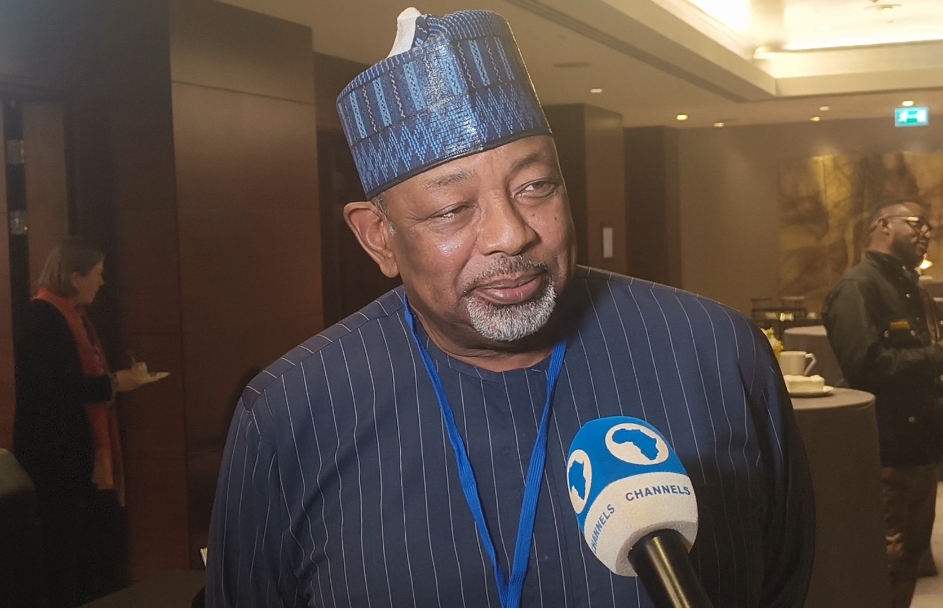
Abubakar Kyari
By Senator Abubakar Kyari, Minister of Agriculture and Food Security—Nigeria
The foresight and careful planning behind this forum could not be more timely. At a moment when global trade dynamics and sustainability standards are rapidly evolving, this gathering provides a critical platform for partnership, dialogue, cultural exchange, and the strengthening of bilateral trade relationships.
I therefore extend my sincere appreciation to the organizers for convening this important forum, as we come together to shape the present and the future of cocoa, a crop that has long underpinned economies and livelihoods, particularly across Africa.
HRM Oba Dokun Thompson, you brought us together at a critical moment and made this consequential forum possible. We salute you.
Nigeria’s cocoa sector stands on a foundation of natural advantage: fertile soils, suitable agro-ecological zones, and a deeply rooted farming tradition. However, climate variability, pest and disease outbreaks, and productivity gaps continue to constrain output and farmer incomes.
Permit me to state clearly that Nigeria must reclaim the value of its cocoa. This requires deliberate investment in climate-smart agriculture, including the adoption of sustainable practices that enhance crop resilience and mitigate the impacts of climate change.
It also requires a strong focus on improving farmer livelihoods through targeted training, access to finance, and stronger market linkages, while promoting environmentally responsible production practices that preserve our natural ecosystems. In this context, agriculture remains central to our collective survival as a nation, driving job creation, income generation, and food and nutrition security.
Nigeria is making significant strides in green compliance and financial innovation, driven by its commitment to sustainable development and climate resilience.
The country’s green financing market is gaining traction through collaboration between the European Union, Germany, and the Federal Government of Nigeria to advance the green economy.
In parallel, the Nigerian government and financial institutions are launching initiatives to support sustainable finance, including the NGBMDP Bootcamp and a new carbon market framework aimed at attracting up to 25 billion dollars to support Nigeria’s green transition and climate objectives.
Nigeria’s active participation in international forums and partnerships further underscores its commitment to global sustainability standards and best practices, while companies across sectors increasingly adopt Environmental, Social and Governance principles.
Taken together, these developments reflect Nigeria’s growing leadership in green compliance and financial innovation, positioning the country for a more environmentally responsible, competitive, and climate-resilient future.
Nigeria is proud to be taking a leading role among Global South producers in advancing fairness and agency in trade law, particularly through its active engagement with the African Continental Free Trade Area (AfCFTA).
By leveraging AfCFTA, Nigeria is strengthening its economic ties across the continent, expanding intra African trade, and enhancing its global competitiveness. This proactive approach positions Nigeria as a key player in shaping the global trade agenda and driving economic development in Africa.
It is worthy of note that Nigeria is well positioned to lead in regulatory compliance, carbon-smart cocoa production, and youth inclusion, driven by a set of targeted policy initiatives.
Nigeria has enacted the Climate Change Act, strengthening the National Council on Climate Change to ensure the effective implementation of climate policies across sectors, and has articulated a clear pathway to net-zero emissions by 2060 through its Energy Transition Plan.
In addition, the Government of Nigeria has committed to compliance with the European Union Deforestation Regulation (EUDR) to support sustainable cocoa production, while the National Cocoa Management Committee is implementing the National Cocoa Development Plan with a focus on modern farming practices and value chain development.
Farmers’ associations in Nigeria continue to emphasise the importance of youth inclusion in cocoa farming and entrepreneurship, promoting intergenerational knowledge transfer.
In parallel, relevant organisations are working to educate and equip young people with the skills required for climate-resilient agriculture and sustainable development. Taken together, these efforts position Nigeria to lead in just compliance while advancing sustainable development and climate resilience.
As part of Nigeria’s commitment to responsible and sustainable agricultural trade, the Federal Government has established the National Task Force on EUDR Compliance, co-chaired by the Honourable Minister of Industry, Trade and Investment and myself.
The Task Force is designed to strengthen the capacity of agricultural businesses, trade organisations, and farmers to comply with EUDR requirements, with a primary emphasis on developing national frameworks, infrastructure, and traceability systems that support longterm sustainability and market access.
The National Task Force has produced a White Paper on the European Union Deforestation Regulation (EUDR). This White Paper identifies and analyses the key legal, technical, and economic challenges associated with implementing EUDR compliance across Nigeria’s agricultural export value chains, specifically cocoa, rubber, oil palm, soya beans, and leather products.
These commodities are central to Nigeria’s non-oil export economy, accounting for over one billion dollars in annual market exposure to the European Union.
The White Paper demonstrates that Nigeria can convert EUDR compliance from a regulatory obligation into a competitive advantage through the establishment of a national traceability system anchored on public–private partnerships, the use of NASRDA’s geospatial capabilities, and the adoption of proven regional models, while advancing innovative financing solutions enabled by artificial intelligence and blockchain technology.
Within the border trade framework, Nigeria is reinforcing its commitment to regional trade sovereignty through the AfCFTA agreement, while engaging in constructive dialogue with international partners like the EU and the Comprehensive and Progressive Agreement for Trans-Pacific Partnership (CPTPP).
You may note, some of the key developments Nigeria has gazetted its Provisional Schedule of Tariff Concessions, becoming the 23rd country to do so and is working to implement the agreement, which aims to boost intra-trade by 53.3% by 2025.
Also, AfCFTA is expected to increase Nigeria’s exports, promote industrialization, and create jobs with the potential to lift 30 million Africans out of extreme poverty by 2030. Moreso, Nigeria is engaging in dialogue with the EU to Strengthen economic ties, address trade barrier and explore new opportunities for cooperation,
Our President, His Excellency, Bola Ahmed Tinubu, GCFR, has issued a clear mandate for agriculture to drive economic growth, job creation, and poverty reduction across Nigeria. Acting on this mandate, the Federal Government of Nigeria will continue to support sustainable development initiatives, promote responsible foreign investment, and advance efforts to increase productivity, expand trade, and deepen economic activity across the agricultural sector.
One key sector where we are advancing these objectives today is the cocoa sector. Our objective is to ensure that Nigeria regains its rightful position among the world’s leading cocoa-producing countries.
Ladies and gentlemen, I encourage this forum to translate today’s deliberations into a practical action plan and a clear communiqué that will promote self-sufficiency, inclusive development, and poverty reduction through sustained economic growth and regional integration.
Senator Abubakar Kyari, Hon. Minister of Agriculture and Food Security at the International Cocoa and Chocolate Forum, ICCF 2026 in London, United Kingdon on 27th –28th January, 2026.