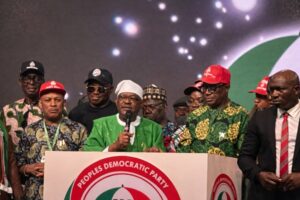

Governor Okpebholo: 365 Days of Charting a New Course in Edo

Gov Okpebholo-The Harvest
By Orobosa Omo-Ojo
When Senator Monday Okpebholo took the oath of office as Governor of Edo State, expectations were high and understandably so. One year on, his administration has ticked the boxes to mark 365 days in office amidst a mix of policy resets and reversals, institutional rebuilding, and a clear attempt to chart a new developmental course for the state.
After 365 days, the Okpebholo administration is presenting itself as a government in motion, seeking to steer the state amid complex and challenging infrastructural decay—and whether this course delivers lasting transformation will depend on consistency, inclusiveness, and the ability to translate vision into tangible outcomes for the people of Edo State who are so anxiously waiting for Governor Okpebholo to reinvent the state.
365 days on, the administration says it has moved Edo State from policy inertia to execution mode. But while long-term impact will be measured over time, the last 365 days showed key indicators of direction, scale, and intent.
Governor Okpebholo’s government shows sign of focusing on structure, discipline, and delivery sequencing, and early indicators, suggest an administration laying foundations deliberately. Okpebholo seems sure that credibility in governance is earned not by announcements, but by consistency.
On a broader scale, year one has laid the framework—year two will test the results recorded so far. This is where the capacity of the technocrats in government will become the policy drivers .
At inception, Okpebholo signalled a departure from picturistic—visually charming, quaint government. He set the tone during his inaugural address by announcing to anchore his tenure on 5-Point Agenda of security, infrastructure renewal, economic inclusion, and social stability.
In the past year, he has deliberately focused on these priorities which is shaping the rhythm of governance in Edo, defining both the administration’s achievements and the debates around its performance.
One of the earliest focus areas of the Okpebholo administration has been security. Faced with concerns over cultism, kidnapping, and rural banditry, the government moved to strengthen collaboration between state-owned security outfits and federal agencies. He has made some investments in logistics, intelligence-sharing, and community policing structures to become his central focus to secure Edo State.
While security challenges persist, residents in several parts of the state argue that there has been a noticeable improvement in response time and coordination.
For the government, the message has been consistent: development cannot thrive in an atmosphere of fear.
There is a delibrate infrastructure renewal plan by the administration which defined the administration’s first year and should become the hanging-fruit.
The governor embarked on a review of ongoing projects, prioritising completion over proliferation. Key selected road projects across the state capital and other senatorial districts have either been completed or revived, and gradually easing mobility and boosting commercial activity.
Urban renewal efforts, particularly in flood-prone areas, have also received remedial attention. It is cheering that drainage rehabilitation and environmental sanitation campaigns have been framed as both public health and economic imperatives, especially during the rainy season.
On the economic front, the Okpebholo government has emphasised support for small and medium-scale enterprises, agriculture, and skills development. Initiatives aimed at empowering artisans, farmers, and young entrepreneurs were rolled out, with access to credit and training forming the backbone of these programmes.
Agriculture, long touted as Edo’s economic lifeline, also saw renewed policy attention. The administration’s push for value-chain development seeks not only to increase production, but also to ensure that farmers benefit from processing and market access.
After a heated and combative electioneering campaign and election, politics in the first year has been rather ‘fisticuffs’ and political watchers have suggested the acrimony had negative effects on the deliverables.
On the flip side, Governor Okpebholo has worked to stabilise the bureaucracy, restore confidence in public institutions, and foster a more predictable policy environment. His leadership style, described by many as consultative, involves engagements with traditional rulers, civil society groups, and the ‘everyday people’.
This approach, supporters argue, has helped to lower political temperature within the All Progressives Congress (APC) and refocus discourse on governance outcomes rather than partisan rivalry.
With high expectations, education and healthcare have remained key components of the present administration’s agenda and rehabilitation of some selected schools, employment of more teachers, and health facilities, alongside efforts to improve staff welfare and service delivery, have been highlighted as steps toward strengthening human capital development.
Though systemic challenges remain, the government can achieve the 5-Point Agenda with incremental reforms after laying the groundwork for more sustainable improvements in the coming years.
Governor Okpebholo has entered his second year in office, expectations are rising. For many Edo residents, the next phase will be judged less by policy pronouncements and more by measurable impact: the number of jobs created, roads completed, schools improved, and lives made safer.