Benchmarking Power and Performance: Inside Julius Ihonvbere’s Legislative Record

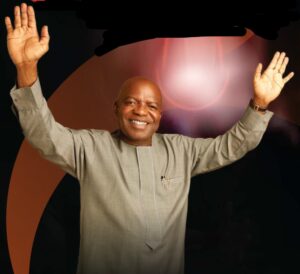
Hon. Prof Julius Ihonvbere, Leader, Federal House of Representatives
By Rachael Iroghama (Abuja, Bureau)
Today in Nigeria’s Federal House of Representatives, power is often loud, chaotic and transactional. But occasionally, it is quiet, procedural and deeply consequential.
Prof. Julius Ihonvbere, the legislator from Owan Federal Federal Constituency sits firmly in the latter category—a lawmaker whose influence is undeniable, yet whose record demands rigorous interrogation rather than ceremonial praise.
As House Leader of the 10th Assembly, Ihonvbere is not just another ranking member; he is one of the system’s principal gatekeepers. He controls the flow of government business, manages legislative sequencing, and determines which bills live, stall or quietly die on the Order Paper.

In a legislature where symbolism often substitutes for substance, this role places him at the nerve centre of Nigeria’s law-making machinery.
The question, therefore, is not whether Ihonvbere is powerful—but how that power has been deployed, measured, and felt by his constituents.

The House Leader’s office is arguably more influential than many ministerial portfolios. Ihonvbere decides legislative tempo, manages caucus discipline, and brokers compromises between executive interests and parliamentary resistance. This makes him central to both legislative efficiency and legislative bottlenecks.

Critics argue that such concentration of influence risks turning the House into an echo chamber for executive priorities. Supporters counter that without disciplined leadership, the House would descend into gridlock.

Ihonvbere’s tenure thus far reflects this—smoother plenary processes, fewer chaotic sessions, and also, a legislature increasingly driven by broad member initiative.
This development applauds Ihonvbere’s effort of ensuring procedural order that has managed the disorder on the floor of the Green Chambers.
The metrics shows that Ihonvbere has performed strongly in Bills and Motions. He has sponsored and led multiple bills, particularly in the education and institutional reform space. But an investigative benchmark demands more than bill counts—it asks how many bills progress beyond first and second readings, how many survived committee purgatory, and how many ultimately become enforceable law.

Here, the record is encouraging. Several of Ihonvbere’s bills address legitimate structural gaps—technical education reform, institutional governance, legislative infrastructure.
Oversight is the constitutional weapon of the legislature. Ihonvbere’s approach has been notably fair and objective. As former Chairman of the Basic Education Committee, he has prioritised policy engagement and bureaucratic correction over headline-grabbing confrontations.

While this technocratic style appeals to reformists, it also attracts criticism. Nigeria’s education sector remains in crisis—millions of out-of-school children, collapsing infrastructure, chronic underfunding.
The tempting question lingers: did quiet oversight achieve enough in a system that often responds only to pressure and public exposure?

This is the core of Ihonvbere’s career—whether intellectual governance is sufficient in a political economy resistant to reform. However, he has managed to maneuver the murky Nigeria’s political water and escaped scandals.
In Owan Federal Constituency, Ihonvbere has executed empowerment schemes, medical outreaches and educational interventions. These initiatives are well-publicised and politically valuable.

For a lawmaker whose brand rests on intellectual rigor, this represents a weak flank—one that invites constituency applause.
Ihonvbere’s greatest asset—his academic pedigree—is also his greatest risk. Nigeria’s legislature is not a seminar room; it is a battleground of interests, patronage and executive dominance. Intellectual coherence does not automatically translate into institutional change, especially when there are fewer like minds in the hallow chambers.
Yet, it must be acknowledged that Ihonvbere has resisted the worst impulses of parliamentary opportunism. He has avoided populist grandstanding, ethnic agitation bills, and viral but hollow motions.
His legislative interventions are often well researched and reflective of the nation’s desire but in Nigeria, intelligence can be can be seen as revolutionary.
The Verdict: Power Well-Held, Impact Felt!
By any serious benchmark—leadership rank, agenda-setting capacity, policy coherence—Prof. Julius Ihonvbere is among the most powerful lawmakers in the 10th Assembly. And he has used this power proportionately to promote good leadership in Owan Federal Constituency and Nigeria at large.
The unresolved question is not competence, but conversion—how effectively legislative and executive authorities have converted into measurable national outcomes—laws enforced, institutions strengthened, lives materially changed.
In an era when Nigeria’s democracy is strained by cynicism and elite capture, Ihonvbere represents a different model of politics: cerebral, restrained, decent, institution-focused. Whether that model is sufficient for Nigeria’s crisis-ridden reality remains an open, and urgent, question.
One thing, however, is clear: Julius Ihonvbere’s legislative record deserves applause not lazy criticisms.