
APC Draws Red Line with Nyesom Wike
By Chiedu Abbey
The public clash between the Minister of the Federal Capital Territory, Nyesom Wike, and the National Secretary of the All Progressives Congress (APC), Senator Ajibola Basiru, is more than a war of words.
It is a stress test of power, loyalty, and limits within President Bola Tinubu’s governing coalition, and the President’s studied silence may be the loudest statement of all. Silence as strategy.
In Nigerian power politics, silence from the Presidency is rarely accidental. When allies come under fire, presidents often step in swiftly through aides, party leaders, or coded statements to draw boundaries.
Tinubu has done none of this. There has been no rebuke of Basiru, no reassurance for Wike, and no call for restraint. That vacuum matters.
By refusing to intervene, Tinubu has effectively allowed the APC hierarchy to assert itself against a powerful outsider who sits in cabinet but remains politically unaffiliated with the party. The message is subtle but unmistakable: Wike’s value to the administration does not supersede party supremacy.
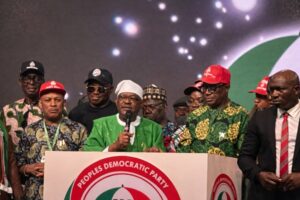
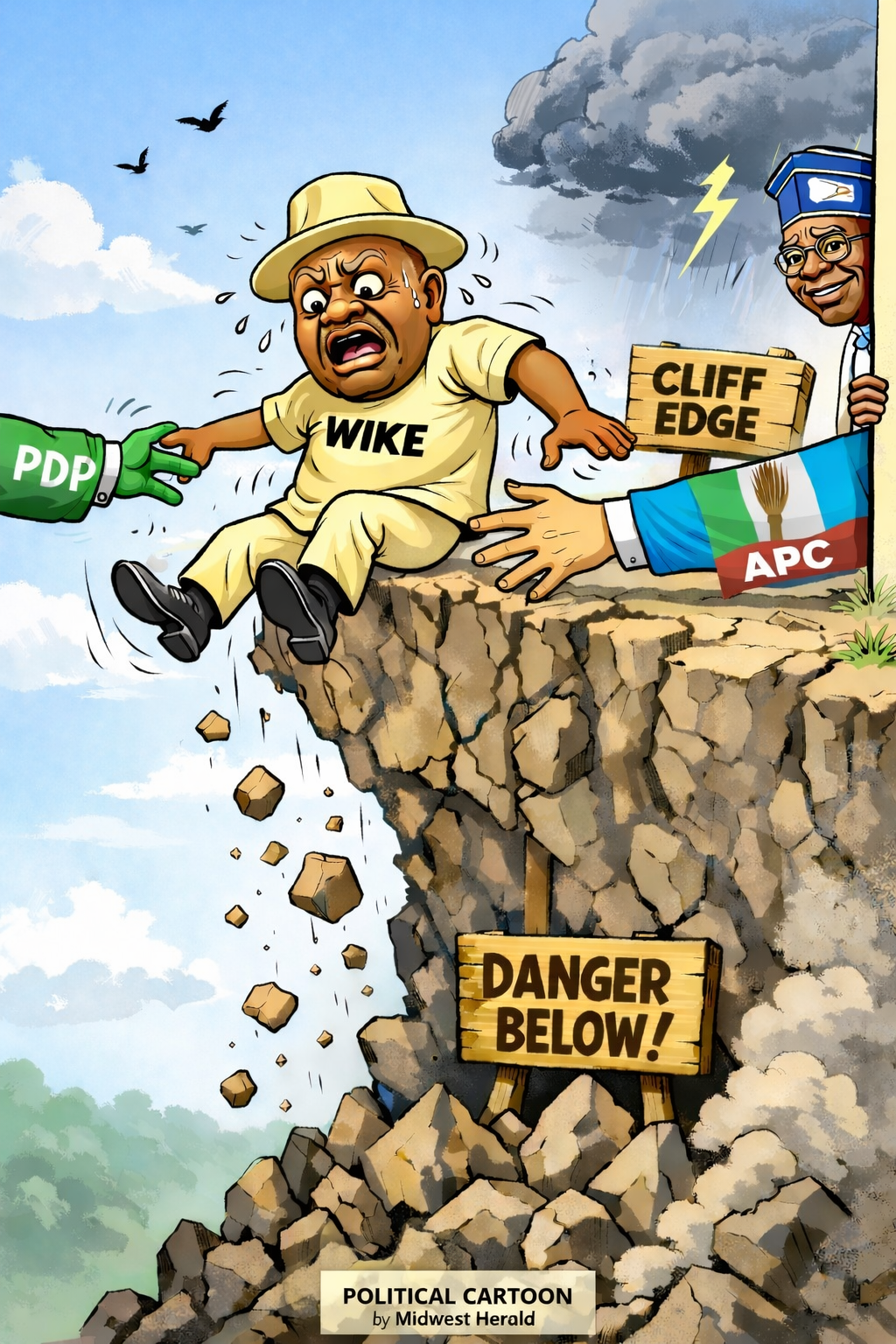
The paradox of power without shelter seems Wike’s current predicament. Chased out of the Peoples Democratic Party (PDP), APC goons have decided to throw him under the fast-moving bus.
Wike stands out as one of the most visible and assertive ministers in Tinubu’s cabinet—yet he lacks the institutional shelter that comes with party membership.
His influence has been seen by APC members as transactional, and not structural but anchored in anti-party electoral support, political bravado, and perceived proximity to power—which has earned him envy across political space.
Basiru’s insistence that Wike “lacks locus standi” to interfere in APC affairs is therefore not merely procedural; it is existential. It strips Wike of the informal authority he has exercised since joining the federal cabinet and now presents him as a guest in a house whose rules he does not control.
Without presidential cover, Wike’s guest status becomes politically dangerous.
At the state level, Wike’s confrontational style thrived on dominance and deterrence. His declaration of Rivers State as a “no-go area” reflects a politics built on territorial control. But Wike has failed to understand that national politics operates differently.
Power at the centre is diffused, layered, and institutionalised. Basiru’s refusal to be intimidated and his public reminder that the APC structure outranks individual ministers has signaled that Wike’s familiar tactics may have diminished in Abuja.
Threats that once shaped outcomes in Rivers now collide with party organs, national officers, and constitutional authority.
The APC’s response is also strategic. By pushing back publicly, the party is reclaiming control over its South-South flank and reinforcing the principle that no individual, regardless of proximity to the President, can operate above party discipline.
This matters ahead of future electoral cycles. The APC appears determined to prevent the emergence of parallel power centres—especially those rooted in opposition party culture—within its governing framework. Or if you like, those that strolled into the party at the wake of elections.
Basiru’s warning that Wike must not “bring the spirit of the PDP into the APC” is an ideological line-drawing exercise. For Tinubu, the standoff offers leverage for him to do away with Wike whose continued closeness may cause disaffection within the party structure and governors.
By staying silent, he preserves optionality as he may not be seen to have neither alienated Wike or outrightly weakened the party leadership. Instead, his silence allows both sides to recalibrate under uncertainty, why reinforcing his position as the ultimate arbiter.
This approach also tests Wike’s loyalty. Will he adapt to party discipline and keep quiet? Will he formalize his political alignment with APC? Or will he double down on confrontation? Each choice carries consequences.
Wike now faces narrowing options which includes—de-escalation, accepting the limits of his role and avoiding party entanglements; formal alignment with recognized APC structure in Rivers State, seeking APC membership to regain political footing; avoid confrontation with APC leaders at the state and national levels. On the contrary, he will be risking isolation within government and political marginalization.
In the present circumstance, the ropes are tightening round Wike, not because he has lost power outright, but because the system he operates within is reminding him where real authority resides.
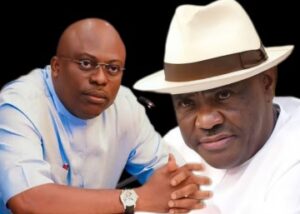
To survive, Wike must accept his political godson—Governor Siminalayi Fubara as his leader in Rivers State APC. The option is political purgatory.
But as the strongman of Rivers politics looks at all his cards, political watchers wait to see if any ‘agreement’ he has with the APC national leader—Tinubu will restore his glory and those of his supporters in Rivers and elsewhere. Especially as their strength relies on “Agreement is Agreement” refrain.