
PDP Convention: Appeal Court Verdict on Anyanwu Deepens Crisis, Raises INEC Recognition Risks for Pro-Wike Convention
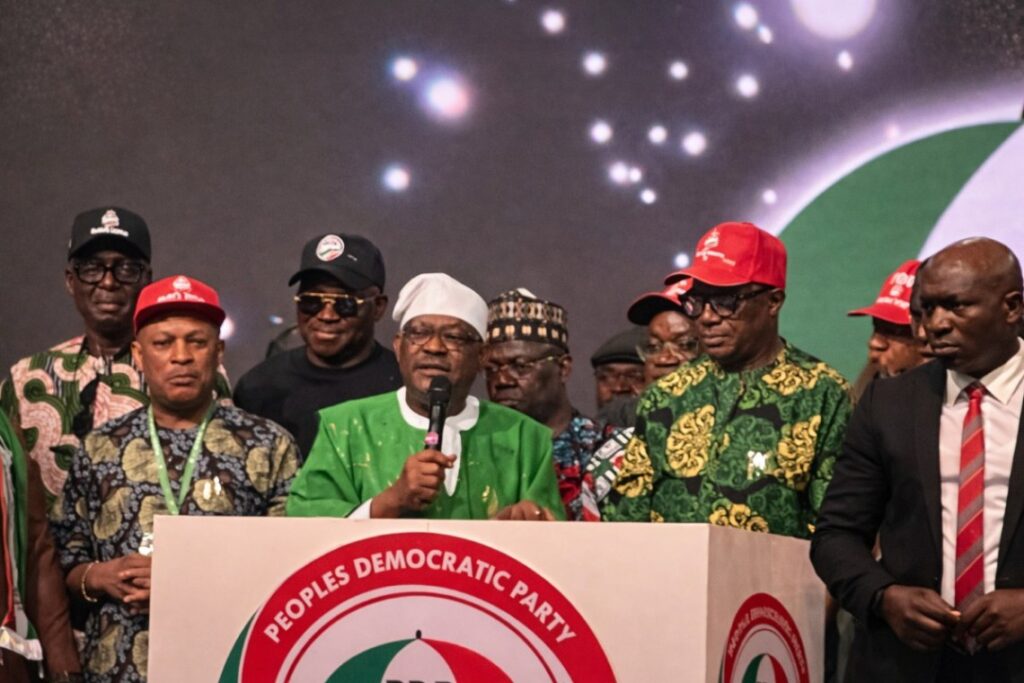
Wike at the factional convention
By Political (Desk Abuja)
The legal storm surrounding the Peoples Democratic Party (PDP) has intensified less than 12 hours after the pro-Wike factional convention, as new concerns have emerged over the implications of a Court of Appeal ruling on Samuel Anyanwu—particularly his role in communicating party decisions to the electoral umpire—The Independent National Electoral Commission (INEC).
What initially appeared as an internal party dispute has now evolved into a potentially fatal procedural flaw that could invalidate the pro-Nyesom Wike PDP convention, as the Appeal Court Ruling still looms large.
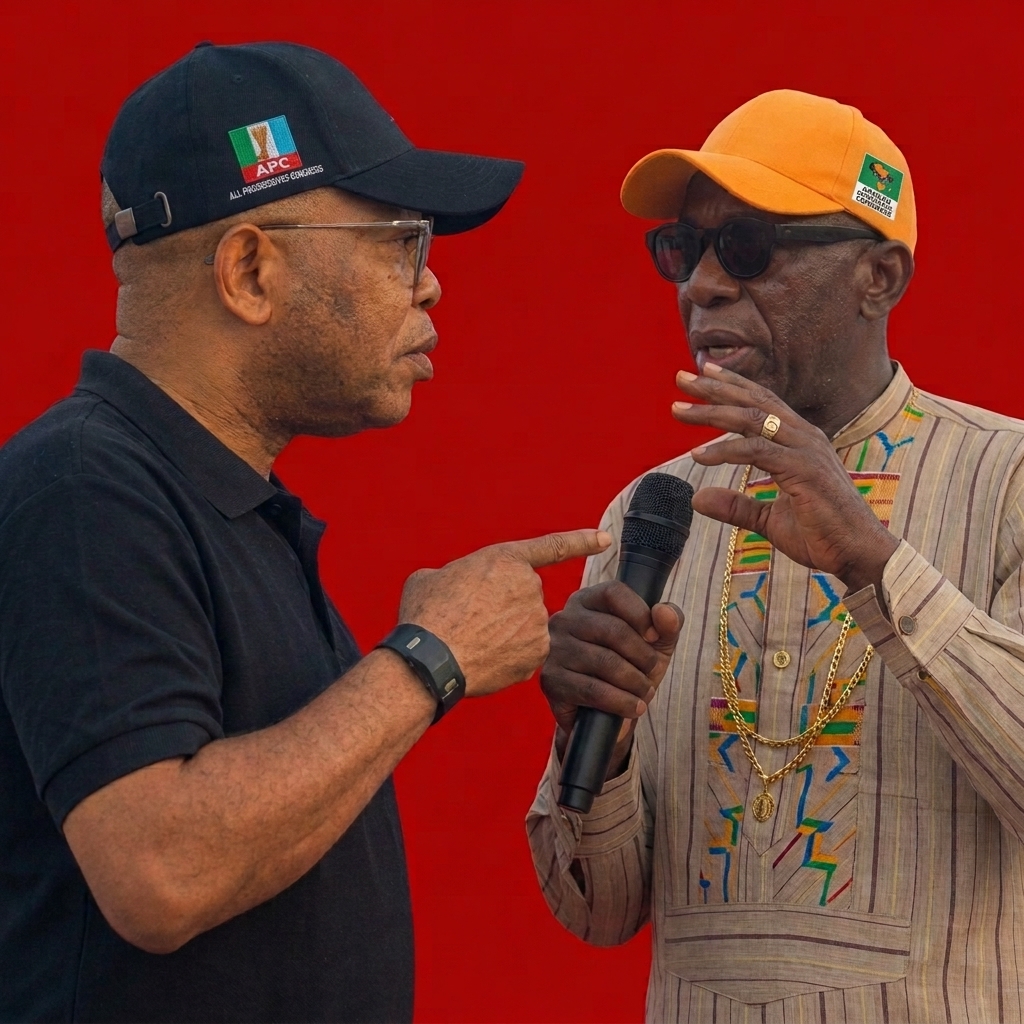
The Court of Appeal judgment affirming the suspension of Samuel Anyanwu remains the legal anchor of the latest and fetal crisis. By validating his suspension, the court effectively raises a critical question — Can a suspended National Secretary legally perform statutory duties on behalf of the party?
The National Secretary plays a pivotal statutory role in party administration—especially in dealings with the INEC. A procedural trap under Nigeria’s electoral framework, is that, for any convention or major party activity to be legally recognized,
formal notices must be sent to INEC.
Such notices are typically jointly signed by the National Chairman and National Secretary. This requirement is not a mere formality—it is a condition for legality.
The emerging danger stems from ‘invalid communication’,
If Anyanwu, whose suspension has judicial backing, signed or authorized the notice of convention. Then, a serious legal vulnerability would arise.
The consequences of these violation is that INEC may reject the outcome of the convention.
INEC could determine that the notice was not properly executed by a legally recognized officer and herefore, the convention itself is procedurally defective.
Now, the anti-Wike faction can explore some grounds for total nullification and use such as strong legal weapon.
They can argue that the entire process is invalid—not just because of participation—but because of faulty statutory communication.
In electoral law, improper notice alone can nullify a convention, regardless of turnout or consensus.
There is also the risk of ‘non-recognition’ of party leadership even if the convention holds politically. INEC may refuse to recognize the new leadership—this would affect candidate nominations, party primaries and ballot access in future elections.
In summary, the latest challenge exposes PDP to litigation including injunctions.
Rival factions could secure any of these options:
Court injunctions stopping implementation of convention decisions; or Orders compelling INEC to disregard submissions signed by Anyanwu.
The legal precedents of process over politics shows that
Nigerian courts have repeatedly emphasized that,
strict compliance with procedure is mandatory. Even minor technical breaches—especially involving INEC communication—can invalidate major political exercises and this places the Wike-backed convention in a precarious position.
Wike Camp’s has a dilemma. The situation creates a strategic bind. Accepting the court ruling weakens their internal structure
Ignoring it risks external invalidation by INEC or the courts.
So far, the camp has leaned toward political assertion over legal caution—but the consequences may be far-reaching, especially the circumstances of the communication from the party to the Independent National Electoral Commission (INEC).
What now emerges is a striking reality: The fate of the entire convention may hinge not on delegates or votes—but on who signed the letter to INEC.
If Samuel Anyanwu is ultimately deemed unauthorized to act, then: The notice becomes defective; The convention becomes challengeable and The leadership becomes uncertain.
The PDP has now moved from Internal Crisis to Institutional Risk with the involvement of a court-affirmed suspended National Secretary in statutory communications which introduces a new and dangerous dimension to the crisis.
What began as a factional struggle has now crossed into institutional legality, where:
Courts interpret authority
INEC enforces compliance
And technicalities can overturn political realities
As the battle heads toward the Supreme Court, the PDP faces not just division—but the real possibility of formal derecognition of a major faction’s leadership.
And in Nigerian politics, that is a risk no party can afford.